

China TBM Export Curbs Hit India Infrastructure | Supply Risk for Sellers
- Restricts TBM and spare-parts supply for India's Himalayan projects, shifting sourcing toward Indian and non-China B2B suppliers
Overview
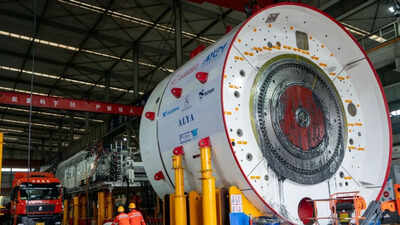
China is tightening export controls on tunnel-boring machines (TBMs) and high-altitude concrete spraying equipment, including components and spare parts, a move that directly threatens India's Himalayan road and rail build-out. Reports from Bloomberg indicate the curbs take effect later in the month of the November 2, 2026 article date, though the exact scope and effective date remain unconfirmed in the source. For cross-border sellers, the signal is supply-chain and industrial-sourcing risk rather than direct consumer demand, but the downstream effects reach machinery parts, industrial B2B marketplaces, and Indian manufacturing sourcing. China holds an estimated 70% share of the global TBM market, and China Railway Engineering Equipment Group supplies machinery to 36 countries, so a restriction of this scale reshapes sourcing for construction equipment buyers worldwide. The operational impact is most acute for heavy-wear machinery already in service, since component curbs can stall maintenance even where complete machines are still shippable. Industry data shows that replacement of Chinese TBMs with Herrenknecht (Germany), US, or Japanese alternatives typically carries higher unit cost and longer lead times, often stretching delivery windows well beyond 6 to 12 months. Specifically for sellers, the India angle matters: the government's proposed 1.2 billion incentive scheme for TBM, firefighting, and elevator manufacturers, which is expected to attract about 1.8 billion in fresh investment over seven years, creates a window for suppliers of Indian-made machine parts, fasteners, hydraulic components, and spare-parts distribution. Similar historical restrictions on strategic goods have driven buyers to diversify toward second-source suppliers within 12 to 24 months. Sellers operating on B2B platforms such as Alibaba.com, Made-in-China, or IndiaMART should review HS-code exposure for construction machinery (commonly HS 8430 and related parts codes) and verify end-use and end-user documentation before shipping to sensitive destinations. Monitor official Chinese Ministry of Commerce announcements and Indian DGFT notices for the final rule text and effective date. Looking ahead, the restrictions may accelerate non-China supply-chain investment in India and Southeast Asia, making early partnerships with Indian component makers a practical hedge against further export-control volatility.
Questions 4
Which sellers could gain from India's TBM supply shortage?
Indian component makers and suppliers of hydraulic parts, fasteners, and spare parts are best positioned to benefit. The proposed 1.2 billion incentive scheme for TBM and related manufacturers, expected to attract about 1.8 billion in fresh investment over seven years, signals a multi-year demand window. Sellers should build partnerships with Indian manufacturers early, since local production scale remains behind China's, as Larsen & Toubro has cautioned.
Do China's new TBM export curbs affect cross-border e-commerce sellers directly?
The curbs target heavy industrial equipment, so direct consumer e-commerce impact is limited. The reported restrictions cover complete tunnel-boring machines, high-altitude concrete spraying machines, and their components, with the scope and exact effective date not fully specified in the source. Sellers on B2B platforms like Alibaba.com or IndiaMART that deal in construction machinery parts should verify HS-code exposure and end-use documentation before shipping to sensitive destinations.