
Intelligent Transport Systems: Global Supply Chain Revolution
- 8.1% CAGR Driving $102B Market Transformation by 2035
Overview
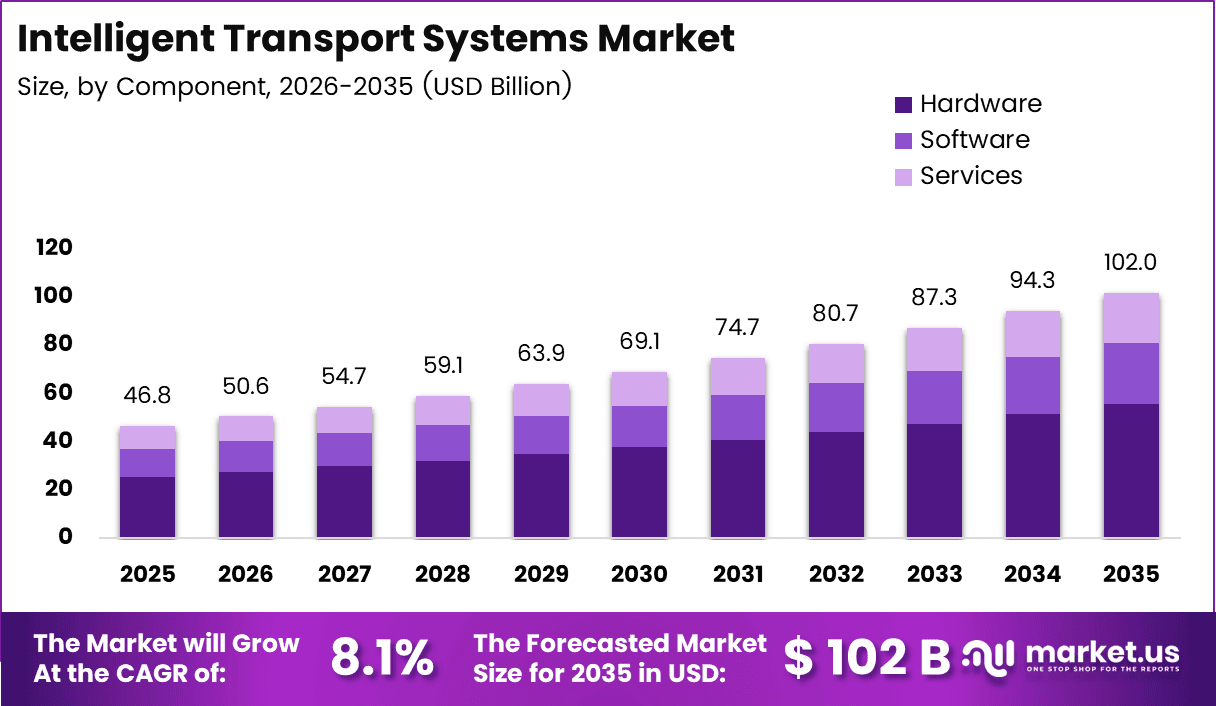
The Intelligent Transport Systems (ITS) market represents a critical inflection point for global supply chain infrastructure, offering unprecedented opportunities for cross-border sellers and logistics innovators. With a projected market expansion from USD 46.8 billion in 2025 to USD 102 billion by 2035, the ITS ecosystem is fundamentally reshaping how goods move, track, and optimize transportation networks.
Strategic Implications for E-Commerce Logistics: The 8.1% CAGR signals massive technological disruption in supply chain management. Hardware components dominating at 54.6% (sensors, cameras, roadside infrastructure) indicate a massive investment in real-time tracking and efficiency technologies. For cross-border sellers, this translates into more predictable, transparent, and cost-effective shipping routes.
Regional Logistics Transformation: North America's leadership with a 44.9% market share (USD 21 billion) suggests concentrated innovation in transportation technologies. The 127 mergers and acquisitions in 2023 demonstrate sustained strategic interest, creating new logistics optimization opportunities for sellers willing to leverage advanced tracking and routing technologies.
Supply Chain Risk Mitigation: The World Health Organization's data on 1.3 million annual road crash deaths underscores the critical need for intelligent transport solutions. For e-commerce sellers, this means potential for reduced shipping risks, more reliable delivery windows, and enhanced route optimization across complex international logistics networks.
Sustainability and Efficiency Drivers: With the transport sector contributing 23% of global energy-related CO2 emissions, intelligent transport systems represent not just a technological upgrade but a sustainability imperative. Sellers can expect increasing pressure to adopt more efficient, traceable, and environmentally conscious shipping strategies.
Questions 5
What sustainability benefits do Intelligent Transport Systems offer?
ITS can help reduce the transport sector's 23% contribution to global CO2 emissions by optimizing routes, reducing congestion, and enabling more efficient transportation networks. This supports both environmental goals and potential cost savings for logistics providers.
How fast is the Intelligent Transport Systems market growing?
The market is projected to grow at an 8.1% CAGR, expanding from USD 46.8 billion in 2025 to USD 102 billion by 2035. This robust growth indicates significant technological investment and transformation in transportation infrastructure.