





Steam's Playtime Paradox: Why Gamers Are Stuck in the Past
- Revealing the shocking trend of player engagement that challenges game developers' strategies



























Overview
In a stunning revelation that sends shockwaves through the digital gaming ecosystem, Steam's 2025 Replay data exposes a critical market dysfunction: players are overwhelmingly committed to established games, leaving new releases struggling for attention. The data paints a stark picture of gaming consumption patterns that fundamentally challenges how game developers and publishers approach content creation.
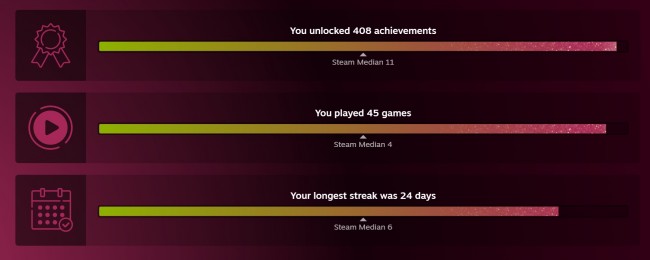
The most striking finding is the microscopic 14% of playtime dedicated to new games in 2025, with a staggering 84% of player engagement concentrated on titles released between 1-8+ years ago. This isn't just a statistical anomaly—it's a structural shift in digital entertainment consumption. The median Steam user now plays just 4 games annually, suggesting an unprecedented level of game loyalty and resistance to novelty.
Popular long-standing titles like DOTA 2, PUBG, and Counter-Strike 2 dominate this landscape, revealing a profound psychological preference for familiar experiences. For game developers, this signals a critical strategic pivot: instead of constantly producing new titles, the focus must shift to creating deeply engaging, long-term experiences that can sustain player interest for years, even decades.
The Steam Replay feature itself is a masterclass in data-driven personalization, transforming user statistics into an engaging narrative. By providing detailed insights into individual gaming habits, Steam is not just a platform but a mirror reflecting broader digital consumption trends. This approach goes beyond gaming—it represents a broader shift in how digital platforms can create value through personalized, retrospective experiences.
For the digital entertainment industry, this trend is both a warning and an opportunity. The days of treating games as disposable, quickly-replaced products are over. Success now demands creating universes, not just games—experiences so compelling that players will return year after year, making each title an enduring digital destination rather than a fleeting entertainment moment.
Questions 3
Why are gamers spending so little time on new games?
The data suggests gamers prefer familiar, well-established game experiences. With only 14% of playtime on new releases, players are gravitating towards games they know, like DOTA 2 and PUBG, which offer consistent, refined gameplay experiences over constantly learning new game mechanics.
How significant is the trend of playing only 4 games per year?
The 4-game median represents a fundamental change in gaming consumption. It indicates that players are becoming more selective, investing deeper time and emotional commitment into fewer games, which requires developers to create more comprehensive, evolving game experiences.