


The $1.25 Billion Lottery Dream: Decoding America's Massive Jackpot Phenomenon
- Exploring Consumer Psychology and Financial Aspiration in an Era of Astronomical Lottery Odds










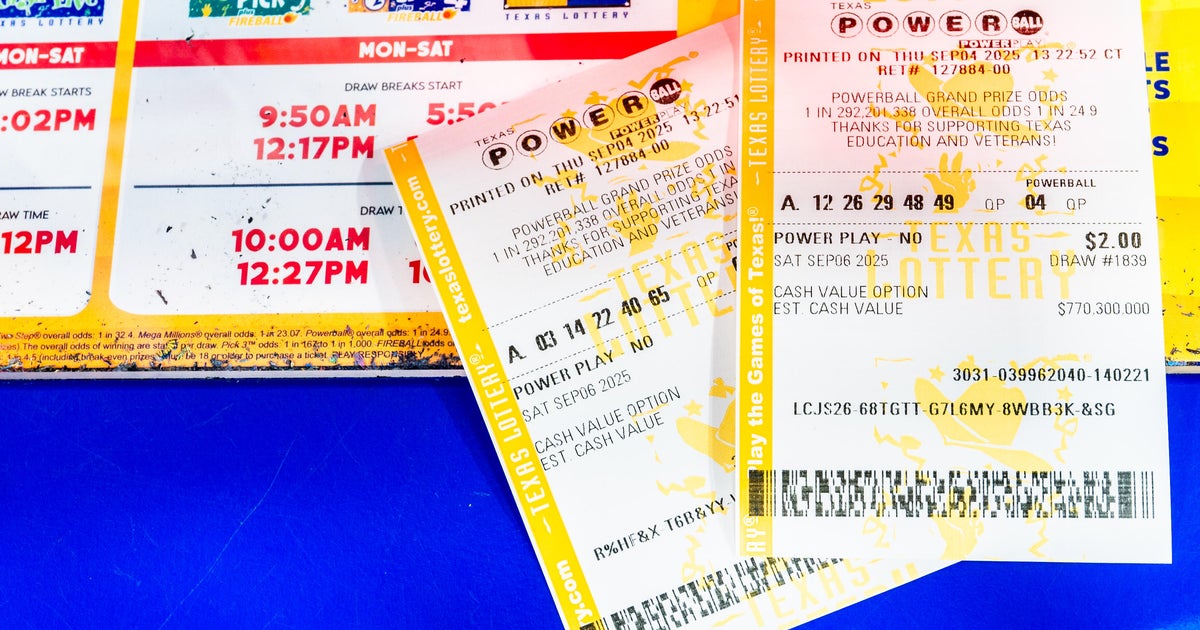

Overview
The Powerball lottery has transformed from a simple game of chance into a complex social and financial phenomenon that reveals deep insights into American consumer psychology and economic dreams. With a staggering $1.25 billion jackpot capturing national imagination, the lottery represents more than just a potential windfall—it's a powerful lens into collective financial aspirations and economic hope.
The astronomical odds of winning (1 in 292.2 million) paradoxically fuel rather than discourage participation, highlighting a fascinating psychological mechanism where improbability becomes part of the attraction. Local residents like Nataly Garcia Flores and Carl Saunders exemplify this dynamic, openly sharing elaborate fantasies of how they would spend potential winnings—from purchasing homes to traveling worldwide—despite knowing the near-impossibility of success.
Structurally, the lottery's design has evolved to maximize engagement. The multi-tiered payout options (immediate lump sum of $572.1 million vs. 29-year annuity with 5% annual increases) provide strategic financial flexibility that appeals to different risk profiles. The fact that 43 consecutive drawings have passed without a winner has only heightened anticipation, creating a rolling jackpot effect that drives increased ticket sales and media attention.
Economically, this lottery represents a microcosm of broader financial hope. The $2 ticket price becomes an affordable entry point for millions to momentarily imagine transcending economic constraints. The timing—just nine days before Christmas—strategically leverages a period of heightened emotional and financial reflection for many Americans.
The historical context is equally compelling. This jackpot sits as the sixth-largest in Powerball history, following a record $2.04 billion prize in 2022. Such massive numbers serve not just as potential winnings but as cultural markers of extraordinary financial possibility, however remote.
Ultimately, the Powerball phenomenon reveals more about human aspiration than pure mathematical probability. It demonstrates how Americans use collective imagination to temporarily escape economic limitations, transforming a $2 ticket into a portal of unlimited potential.
Questions 3
Why do people continue buying lottery tickets despite extremely low odds of winning?
The lottery represents more than a mathematical probability—it's a psychological mechanism of hope. For a minimal $2 investment, participants can momentarily imagine transcending their current economic circumstances, which provides significant emotional value beyond the actual winning potential.
What financial strategies do lottery winners typically consider?
Winners have two primary options: a lump sum (currently $572.1 million) or an annuity with 29 annual payments increasing 5% yearly. Smart winners often consult financial advisors to manage tax implications, invest strategically, and create long-term wealth preservation plans.