
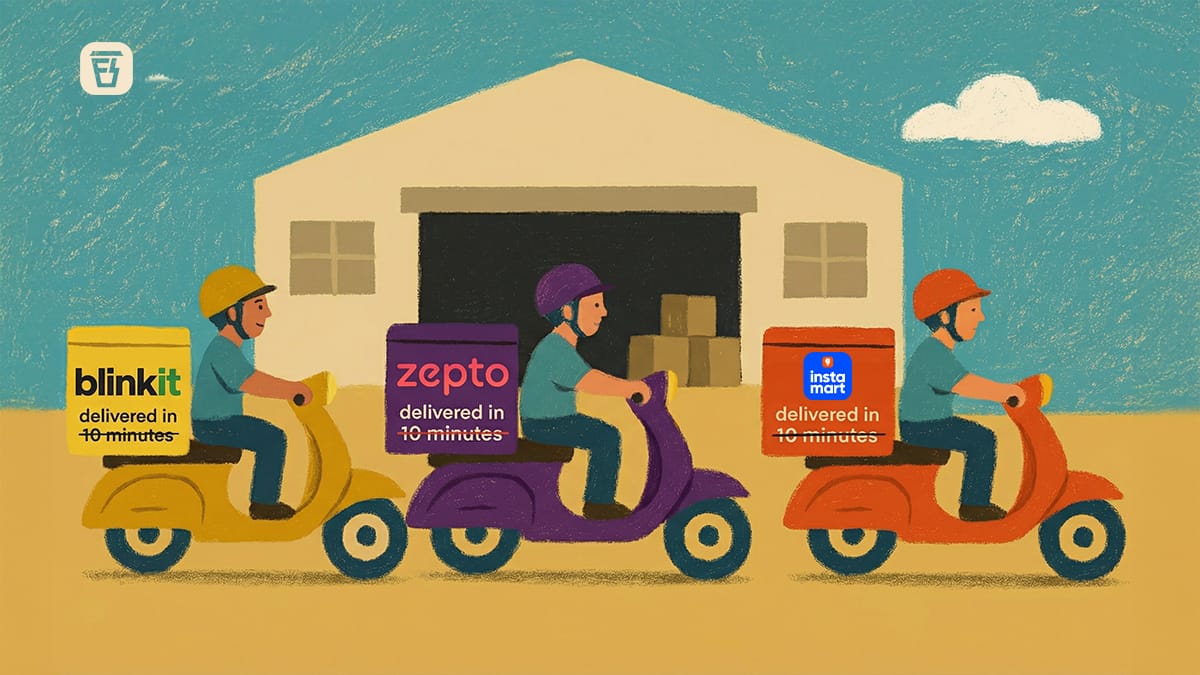
Quick Commerce Shifts | Delivery Promises Redefined
- Impacts 50K+ E-commerce Sellers in Rapid Delivery Ecosystem
Overview
The Indian quick commerce landscape is experiencing a transformative regulatory shift that signals a maturation of the rapid delivery ecosystem. The removal of 10-minute delivery promises represents a critical inflection point for e-commerce platforms and sellers, highlighting the evolving dynamics between worker welfare, operational efficiency, and consumer expectations.
Strategic Implications for E-commerce Sellers: The regulatory intervention by the Union Labour Ministry mandates a more sustainable approach to delivery promises. While the 10-minute delivery badge disappears, the underlying fast delivery model remains largely unchanged. Actual delivery times typically range between 15-20 minutes, suggesting minimal operational disruption for sellers. This change reflects a broader trend of prioritizing worker welfare and realistic service commitments over aggressive marketing tactics.
Platform Adaptation Strategies: Platforms like Blinkit are demonstrating resilience by pivoting to inventory-led models, with Net Order Value consistently increasing quarter-on-quarter. The success is increasingly tied to inventory control and pricing strategies rather than hyperbolic delivery promises. Sellers must now focus on more sophisticated marketing approaches that go beyond time-based guarantees, potentially increasing reliance on targeted discounts and value-added services.
Consumer Behavior Insights: The regulatory change disrupts the 'hyperbolic discounting' effect, challenging platforms to develop more nuanced strategies for retaining impulsive buyers. E-commerce sellers must now emphasize consistent, reliable fulfillment over ultra-fast delivery promises, rebuilding consumer trust through predictable and transparent service models.
Key Takeaway: Adaptability is crucial. While the delivery time badge changes, the core expectation of rapid, consistent delivery remains paramount for maintaining customer satisfaction and competitive edge in the quick commerce ecosystem.
Questions 5
How should e-commerce sellers respond to these changes?
Sellers should invest in robust inventory management, optimize logistics networks, develop more sophisticated marketing approaches, and focus on providing consistent, reliable service that builds long-term customer trust.
What are the key regulatory changes affecting quick commerce platforms in India?
The Union Labour Ministry has mandated the removal of 10-minute delivery promises, addressing worker welfare concerns. Platforms must now provide more realistic delivery timeframes, typically 15-20 minutes, while maintaining operational efficiency.