
Global Food Ingredient Supply Chains Transformed by Health and Innovation Trends
- Manufacturers reimagine ingredient sourcing and production amid rising consumer demand for specialized nutrition
Overview
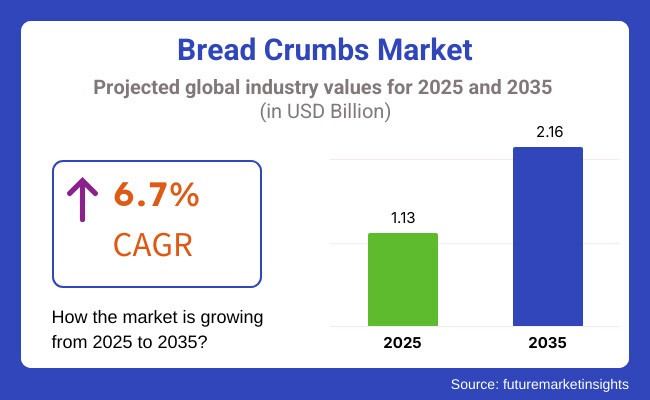
The global supply chain landscape is experiencing a profound transformation driven by evolving consumer preferences and innovative manufacturing strategies. The bread crumbs market serves as a microcosm of broader supply chain disruption, projected to grow from USD 1.13 billion in 2025 to USD 2.16 billion by 2035, representing a significant 6.7% compound annual growth rate.
Strategic Ingredient Sourcing Shifts: Manufacturers are fundamentally reimagining supply chain approaches by diversifying ingredient sources. Traditional wheat-based production is giving way to more complex, nutritionally sophisticated alternatives. Companies like Newly Weds Foods, McCormick & Company, and Pinnacle Foods are pioneering ingredient sourcing from rice, quinoa, almond, and chickpea flours, signaling a major supply chain reconfiguration toward more flexible, health-conscious production models.
Regional Supply Dynamics: The supply chain transformation reveals distinct regional strategies. North America leads with strong fast food and home baker demand, while Europe focuses on innovative clean-label products. The Asia-Pacific region emerges as the fastest-growing market, driven by rising disposable incomes and rapidly changing dietary habits. This geographic diversification introduces new supply chain complexity, requiring manufacturers to develop more adaptive, localized sourcing and production strategies.
Resilience and Innovation: Despite challenges like raw material price volatility and potential supply chain disruptions, manufacturers are turning challenges into opportunities. The focus has shifted toward developing premium, functional ingredients enriched with protein, fiber, and vitamins. Sustainability and circular economy initiatives, coupled with AI-driven production optimization, are becoming critical supply chain differentiators. This approach transforms traditional linear supply models into more dynamic, responsive ecosystems that can quickly adapt to changing market demands.
Questions 3
Which regions are driving innovation in food ingredient supply chains?
North America leads in market demand, Europe focuses on clean-label innovations, and Asia-Pacific shows the fastest growth. Each region presents unique opportunities for manufacturers to develop localized, specialized supply chain strategies that cater to specific market needs.
How are supply chains adapting to changing consumer health preferences?
Manufacturers are diversifying ingredient sources, moving from traditional wheat-based products to alternative flours like quinoa, almond, and chickpea. This allows for creating more nutritionally complex, health-oriented products that meet evolving consumer demands for functional and specialized nutrition.