
Global Agricultural Supply Chain Transformation | 2026 Market Shifts
- 8-12% Sustainability Trend Reshaping Fertilizer Markets Worldwide
Overview
The global agricultural supply chain is experiencing a profound metamorphosis in 2026, driven by complex geopolitical, economic, and sustainability forces that present critical opportunities for cross-border sellers and logistics professionals.
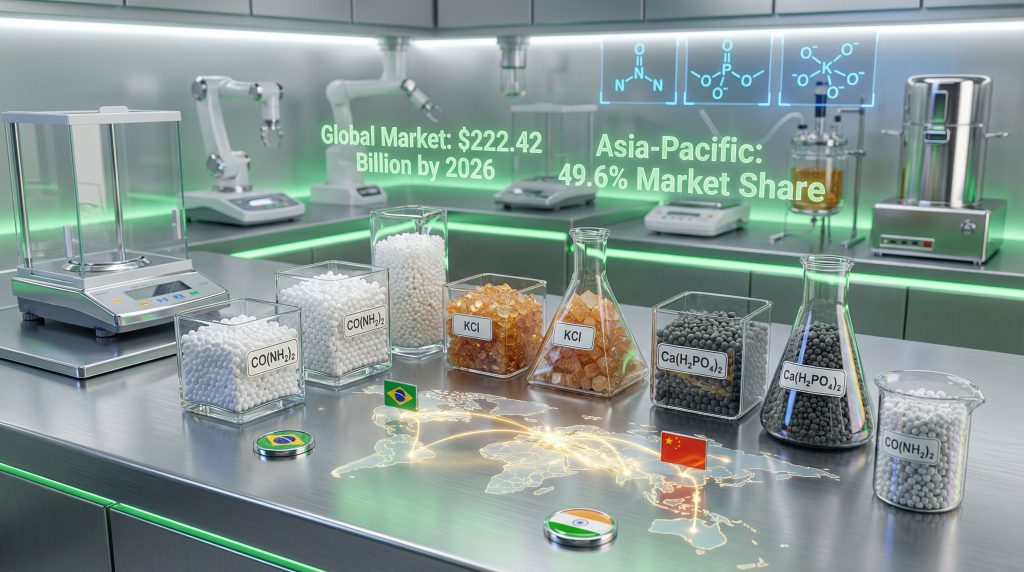
Strategic Supply Chain Reconfiguration is emerging as the defining trend, with three key regional dynamics reshaping agricultural input markets. In the Asia-Pacific region, representing 49.6% of global fertilizer consumption, market volatility is creating unprecedented sourcing opportunities. China's potential export restrictions on high-content phosphates and India's agricultural intensification are generating substantial market pressures, with the region's market valuation standing at $110.43 billion.
European Markets Signal Transformative Sustainability Initiatives, most notably through the Carbon Border Adjustment Mechanism (CBAM). This regulatory framework is imposing 5-15% cost increases on high-carbon-intensity fertilizer imports, simultaneously accelerating organic and bio-based fertilizer adoption at 8-12% annually. For cross-border sellers, this represents a critical market adaptation signal, demanding sophisticated supply chain strategies that prioritize low-carbon inputs and sustainable agricultural technologies.
Latin American Adaptation Mechanisms reveal complex market resilience, particularly in Brazil. Sophisticated substitution strategies are evident in fertilizer import patterns, with Single Super Phosphate imports reaching a record 3.2 million tonnes in 2025—a remarkable 20% year-over-year increase. These dynamics underscore the need for agile, data-driven supply chain management that can rapidly respond to regional market constraints and opportunities.
The convergence of these regional trends demands that international agricultural stakeholders develop more nuanced, technology-enabled supply chain approaches that balance economic efficiency, sustainability requirements, and geopolitical risk mitigation.
Questions 5
How are geopolitical forces impacting agricultural supply chains in 2026?
Geopolitical dynamics are driving significant market transformations, with regions like Asia-Pacific experiencing export restrictions, sustainability initiatives in Europe imposing carbon costs, and Latin American markets developing sophisticated adaptation strategies. These forces are compelling sellers to develop more agile, technology-enabled supply chain approaches.
How are Latin American markets adapting to global supply constraints?
Brazilian markets demonstrate sophisticated adaptation through strategic import substitution. Single Super Phosphate imports reached a record 3.2 million tonnes in 2025, a 20% year-over-year increase, showcasing resilience and complex market response mechanisms.