
Regulatory Compliance Transforms Nutraceutical Excipients Market
- Emerging quality standards create new competitive landscape for dietary supplement manufacturers
Overview
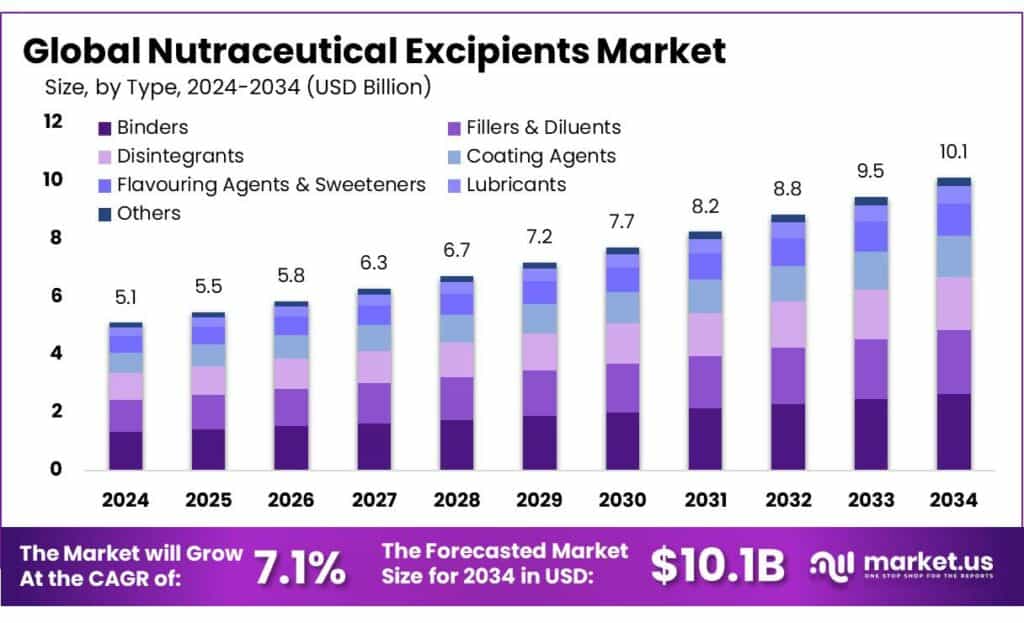
The nutraceutical excipients market is experiencing a profound transformation driven by regulatory compliance, revealing how stringent quality standards are reshaping an entire industry ecosystem. With the market projected to double from USD 5.1 Billion to USD 10.1 Billion by 2034, compliance has become a critical competitive differentiator rather than a mere administrative requirement.
Regulatory frameworks like the FDA's dietary supplement cGMP and India's FSSAI Nutra Regulations are fundamentally restructuring market dynamics. These standards are pushing manufacturers towards more traceable and well-characterized excipients, effectively creating a compliance-driven winnowing effect. The data is clear: manufacturers must invest in quality characterization or risk market elimination.
Compliance barriers are emerging as strategic moats in the nutraceutical space. The market segments most impacted include binders and solubility enhancers, which now require sophisticated quality documentation. With dry excipients dominating 72.8% of market share, companies that can rapidly demonstrate regulatory conformance will gain significant competitive advantages. The U.S. dietary supplement industry's substantial economic impact—estimated at $159 billion in 2023—underscores the high stakes of meeting these evolving standards.
The strategic implications are profound. Manufacturers are no longer competing solely on product performance but on their ability to transparently demonstrate regulatory adherence. This shift is driving investments in better taste-masking, moisture barriers, and shelf-life support technologies. Companies that view compliance as a strategic opportunity rather than a bureaucratic burden will be best positioned to capture market share in this rapidly evolving landscape.
Questions 3
Which market segments are most impacted by new compliance requirements?
Binders and solubility enhancers are particularly affected, with manufacturers needing to provide more detailed quality documentation. Dry excipients, which represent 72.8% of market share, are experiencing the most significant compliance-driven transformations.
What competitive advantages emerge from strong compliance strategies?
Companies that can quickly and transparently demonstrate regulatory conformance gain significant market advantages. This includes faster market entry, increased consumer trust, and the ability to capture market share from less compliant competitors.