



AI's Genesis Mission Unleashes Scientific Supercomputing Revolution
- Strategic AI Partnerships Redefine National Research Capabilities




























/AI%20(artificial%20intelligence)/Hands%20of%20robot%20and%20human%20touching%20on%20big%20data%20network%20connection%20by%20PopTika%20via%20Shutterstock.jpg)








Overview
The Genesis Mission represents a pivotal moment in America's technological leadership, where cutting-edge artificial intelligence converges with national scientific infrastructure to unlock unprecedented research capabilities. By bringing together AI powerhouses like Anthropic, OpenAI, and infrastructure providers like CoreWeave, the U.S. Department of Energy is orchestrating a transformative approach to scientific discovery.
At the core of this strategic initiative is a recognition that AI can dramatically accelerate research cycles. Anthropic's collaboration, for instance, will help researchers analyze fifty years of accumulated data, potentially uncovering patterns that have remained hidden through traditional analytical methods. The mission spans critical domains including energy, biological sciences, and pandemic prevention, signaling a comprehensive approach to national technological advancement.
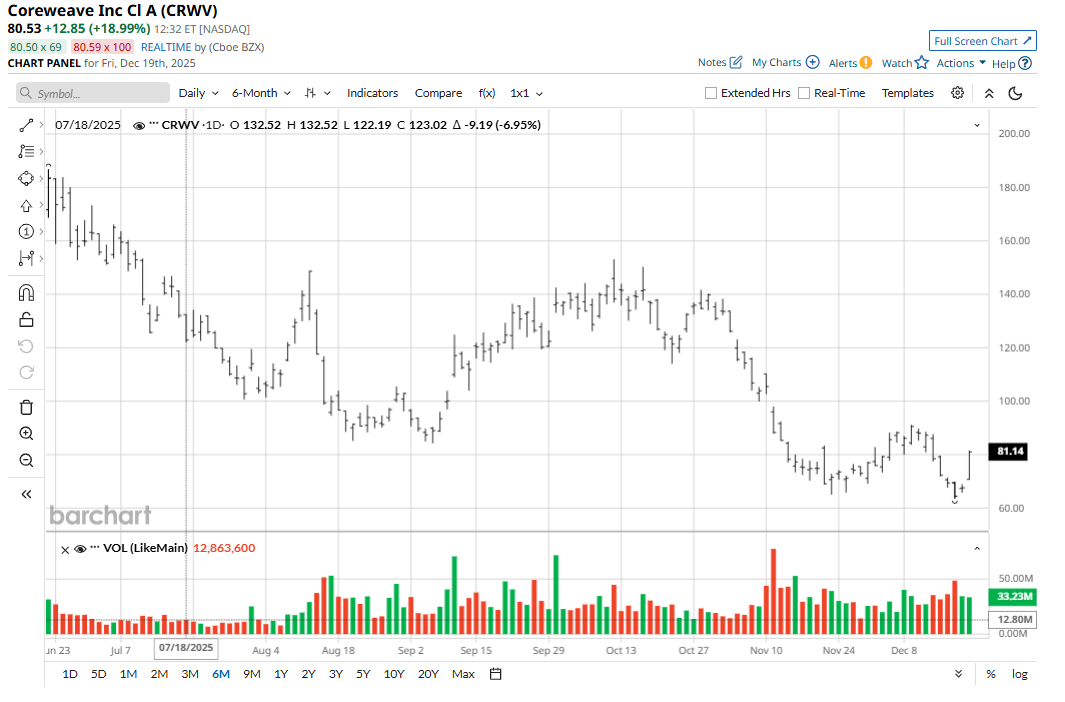
The Genesis Mission is more than a research partnership—it's a calculated geopolitical move in the global AI competition. By integrating advanced AI reasoning with America's extensive national laboratory network, the initiative aims to maintain technological superiority. CoreWeave's 23% stock surge following its selection as a mission partner underscores the market's recognition of this strategic significance.
Key differentiators include specialized AI tools like context protocol servers, advanced reasoning models deployed on supercomputers, and targeted applications such as nuclear risk classification and drug discovery acceleration. The collaboration emphasizes not just computational power, but intelligent, domain-specific AI agents capable of supporting complex scientific challenges.
Looking forward, the mission positions 2026 as a potential "Year of Science", with AI serving as a critical accelerant for research innovation. For technology and scientific communities, this represents a watershed moment where artificial intelligence transitions from a theoretical tool to a fundamental research infrastructure.
Questions 3
What makes the Genesis Mission unique in scientific research?
The Genesis Mission uniquely combines AI technologies from multiple companies like Anthropic and OpenAI with the Department of Energy's national laboratories, creating specialized AI tools for scientific research across domains like energy, biology, and pandemic prevention.
How will AI transform scientific research through this initiative?
AI will accelerate research by analyzing decades of accumulated data, developing domain-specific AI agents, deploying advanced reasoning models on supercomputers, and potentially uncovering research patterns that were previously undetectable through traditional methods.