
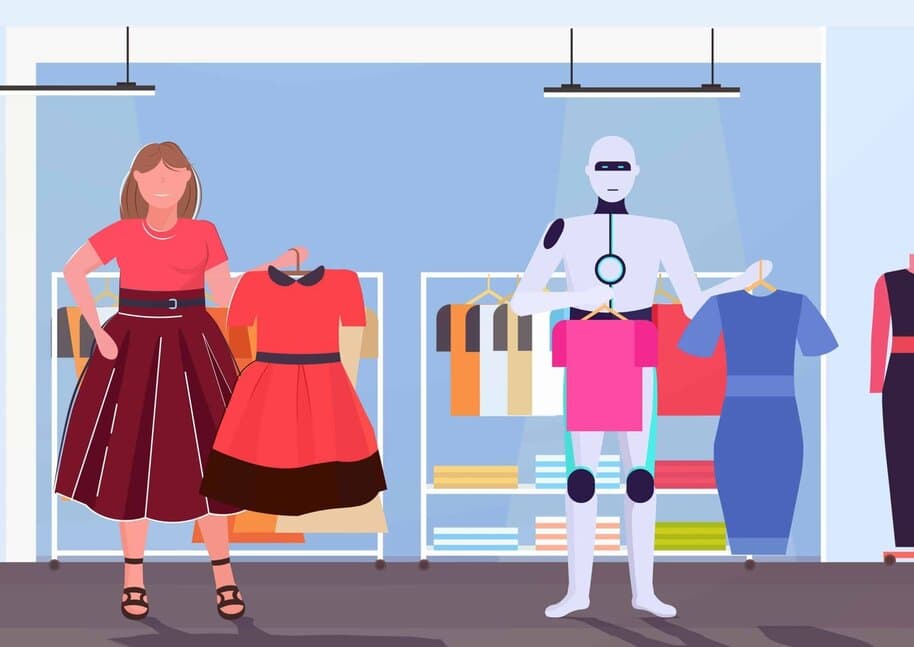
AI Reshapes Retail Work: The Rise of Technological Skill Transformation
- Workforce evolution accelerates as AI redefines entry-level job requirements and service delivery
Overview
The intersection of artificial intelligence and retail workforce dynamics reveals a profound technological metamorphosis that extends far beyond simple automation. At the core of this transformation lies a critical insight: AI is not replacing workers, but fundamentally redesigning job roles and skill requirements.
Workforce Technological Adaptation emerges as the most significant trend, with 40% of retail workers expressing anxiety about potential job displacement. However, contrary to widespread fears, industry experts like Scott Benedict suggest a more nuanced reality—task redistribution rather than wholesale elimination. The emerging paradigm indicates that entry-level positions will increasingly demand sophisticated technological competencies, effectively elevating minimum skill thresholds for retail employment.
The strategic implications are profound. Retailers are not just implementing AI as a cost-cutting measure, but as a mechanism to dramatically improve service standards. Customer-facing AI projects demonstrate substantial return on investment, suggesting a calculated approach to technological integration. The Teneo report highlights that these implementations aim to address persistent customer frustrations like product location and inventory management, transforming potentially mundane interactions into more intelligent, responsive experiences.
Employment data provides additional context: While 91,954 retail jobs were lost in 2025, these reductions appear more connected to broader economic factors than direct AI implementation. This suggests a measured, strategic approach to technological adoption rather than abrupt workforce disruption. The underlying message is clear—technological skills are becoming the new currency in retail employment.
For workers and organizations alike, the message is unambiguous: continuous learning, technological adaptability, and a willingness to collaborate with AI systems will define success in the emerging retail landscape. The future belongs to those who can seamlessly integrate human creativity with artificial intelligence's computational power.
Questions 3
How will AI specifically change entry-level retail jobs?
AI will transform entry-level roles by requiring more technological skills, shifting from traditional customer service to technology-assisted service delivery. Workers will need to understand AI tools, manage automated systems, and provide higher-level customer interactions that complement AI capabilities.
What technological skills will be most valuable in future retail jobs?
Key skills will include AI system management, data interpretation, technological troubleshooting, customer experience optimization, and the ability to work seamlessly alongside AI tools. Adaptability and continuous learning will be crucial for career longevity.