
Digital Micro-Enterprises Reshape India's Supply Chain Landscape
- Social commerce emerges as a transformative force for women-led logistics and distribution networks
Overview
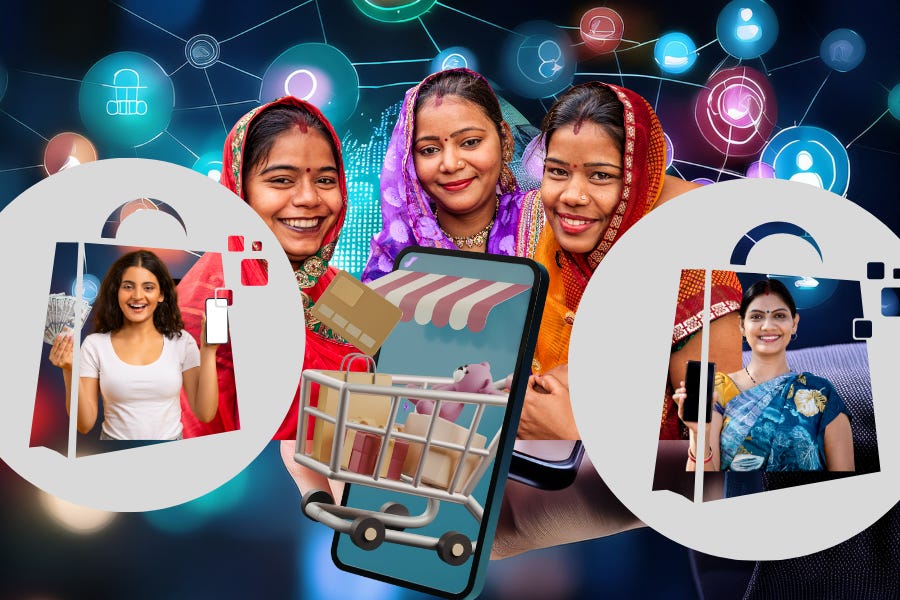
The emergence of social commerce in India represents a critical inflection point for supply chain dynamics, revealing how digital platforms are democratizing entrepreneurial access and fundamentally restructuring distribution networks. With over one million women entrepreneurs leveraging social media platforms like WhatsApp and Instagram, a new decentralized logistics ecosystem is taking shape, challenging traditional supply chain models.
Strategic Transformation of Distribution Channels The current landscape demonstrates a profound shift in how products reach consumers. By enabling women to create micro-enterprises with minimal capital investment, social commerce platforms are essentially creating a distributed, flexible supply chain infrastructure. Only 4 in 10 Indian women are economically active, but social commerce provides an alternative entry point that bypasses traditional economic barriers. This model transforms individual sellers into nimble, hyper-local distribution nodes, creating a more adaptive and responsive supply chain network.
Regulatory and Operational Challenges However, this emerging ecosystem faces significant challenges. The current informal nature of these micro-enterprises exposes critical vulnerabilities in supply chain resilience. Lack of legal protections against payment fraud, data misuse, and digital harassment threatens the sustainability of this innovative distribution model. The urgent need for regulatory frameworks that provide visibility and protection to these informal sellers becomes paramount for long-term scalability.
Future Supply Chain Architecture The integration of these micro-enterprises into the formal digital economy represents more than an economic opportunity—it's a fundamental reimagining of supply chain infrastructure. Platforms like Amazon Saheli and Flipkart Samarth are not just marketplaces but emerging supply chain orchestration systems that leverage social networks as distribution channels. This approach suggests a future where supply chains are more decentralized, women-led, and digitally mediated.
Strategic implications are profound: companies must now view social commerce not as a marginal channel, but as a critical component of next-generation supply chain strategy. The ability to rapidly mobilize distributed, digitally-enabled sellers could become a key competitive advantage in emerging markets.
Questions 3
What makes women-led social commerce a strategic supply chain innovation?
By enabling women with minimal capital to become sellers, these platforms create a highly flexible, low-overhead distribution network. This model allows rapid market penetration, leverages existing social networks for distribution, and provides economic opportunities in regions with traditional employment barriers.
How are social commerce platforms transforming supply chain models in India?
Social commerce platforms are creating a decentralized distribution network by empowering women entrepreneurs to become micro-sellers. This approach transforms individual sellers into flexible, local distribution nodes, enabling faster, more adaptive product movement compared to traditional centralized supply chains.