



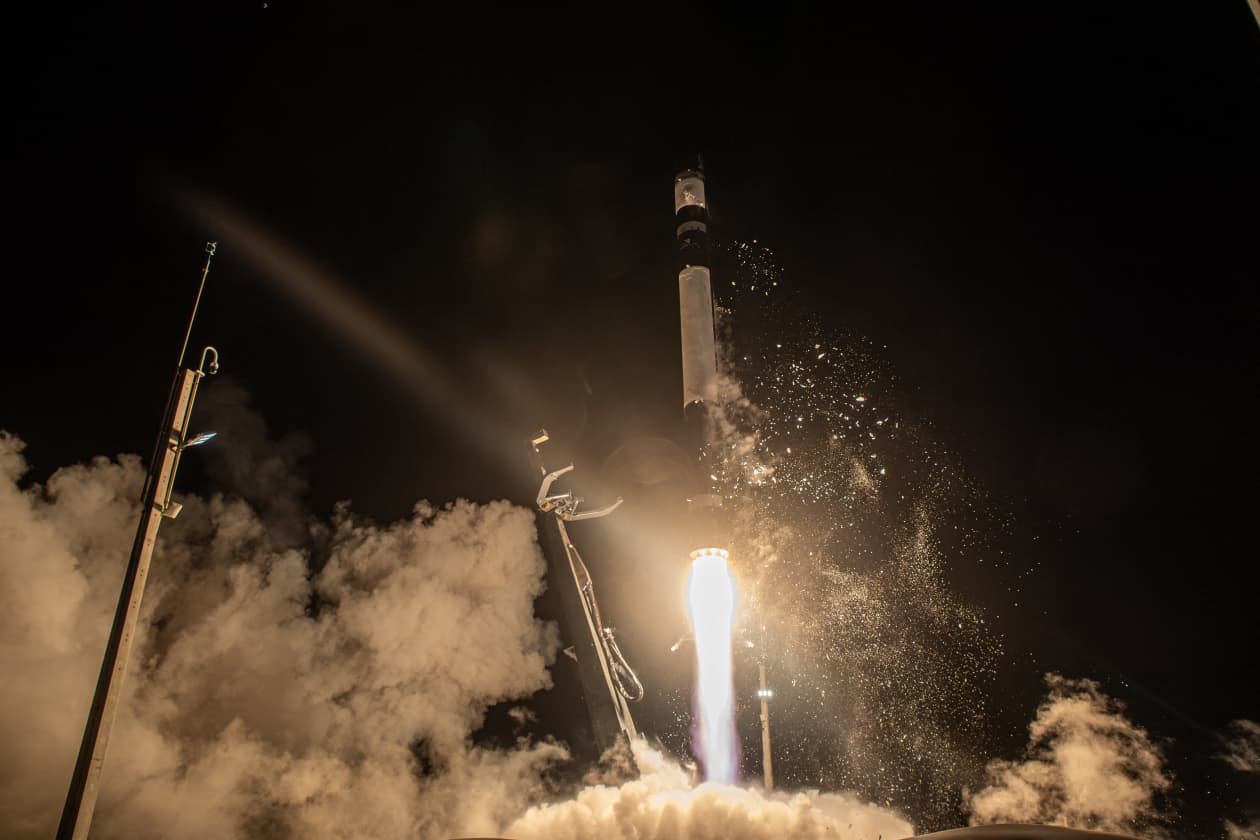

Space Technology's New Frontier: Rocket Lab's Strategic Ascent in Defense and Satellite Markets
- Emerging space infrastructure provider transforms government contract landscape with precision and scalability

Overview
The space technology ecosystem is experiencing a profound transformation, with Rocket Lab emerging as a critical strategic player in national defense and satellite infrastructure. At the core of this shift is a landmark $805 million contract from the U.S. Space Development Agency, which not only validates the company's technological capabilities but also positions it as a key national security asset.
Strategic Market Positioning reveals a nuanced evolution in space technology deployment. Rocket Lab's remarkable 177% annual stock growth and 20 successful launches in 2025 underscore a pivotal transition from a niche launch provider to a comprehensive space infrastructure solution. The company's ability to complete the STP-S30 mission five months ahead of schedule demonstrates exceptional operational efficiency that distinguishes it from competitors.
Technological Innovation as a Competitive Lever is exemplified by the upcoming Neutron reusable rocket, planned for its maiden flight in 2026. Analysts view this development as potentially disruptive, positioning Rocket Lab as a viable alternative to SpaceX's Falcon 9. This strategic move suggests the company is not merely competing but actively reshaping unit economics in the space launch market. With 78 total launches and a contracted backlog approaching $1.1 billion, Rocket Lab is transforming from a secondary player to a critical national space capabilities provider.
The broader implications extend beyond immediate financial performance. CEO Peter Beck's emphasis on strengthening national space capabilities signals a deeper strategic narrative: space technology is no longer just a commercial endeavor but a critical infrastructure domain with significant geopolitical and defense implications. Rocket Lab's trajectory represents a new model of public-private collaboration in advanced technological domains.
For investors and strategic observers, the key takeaway is clear: space infrastructure is transitioning from an experimental frontier to a structured, mission-critical ecosystem where precision, reliability, and strategic alignment determine market leadership.
Questions 3
How does Rocket Lab's recent contract impact its market position?
The $805 million U.S. Space Development Agency contract substantially expands Rocket Lab's contracted backlog to $1.1 billion, positioning the company as a critical national security space infrastructure provider. This contract validates their technological capabilities and signals a strategic shift from a niche launch provider to a comprehensive space solutions partner.
What makes the Neutron rocket a potential game-changer?
Analysts view the Neutron rocket as a potentially viable alternative to SpaceX's Falcon 9, with expectations of dramatically improving unit economics. Planned for its maiden flight in 2026, the Neutron represents Rocket Lab's technological innovation strategy, aiming to reshape cost structures and performance standards in the space launch market.