


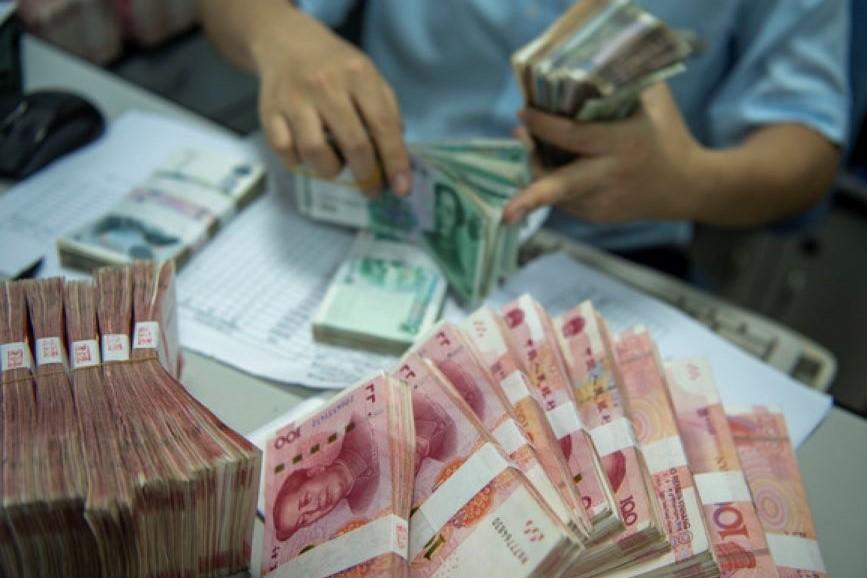


China's Monetary Crossroads: Navigating Economic Stability Through Strategic Rate Holding
- Delicate Policy Balancing Act Reveals Deeper Economic Challenges for Global Markets





















Overview
The People's Bank of China (PBOC) is executing a nuanced monetary strategy that speaks volumes about the complex economic landscape facing global markets. By maintaining benchmark lending rates at 3.0% and 3.5% for seven consecutive months, the central bank is signaling a sophisticated approach to economic management that goes far beyond simple interest rate manipulation.
The underlying economic context is deeply challenging. China's economic indicators reveal significant stress points: retail sales grew a meager 1.3% year-on-year, industrial production climbed just 4.8%, and the real estate sector continues to contract. These figures paint a picture of an economy at a critical inflection point, where traditional stimulus methods may no longer be sufficient.
Monetary policy experts like Eswar Prasad from Cornell University suggest that while rate stability provides short-term predictability, broader structural reforms are necessary. The Chinese government's response—planning ultra-long-term special government bonds and exploring an interim trade deal with Washington—indicates a multi-dimensional strategy to stimulate growth. The potential reduction of export tariffs could be a key lever in achieving the approximately 5% economic growth target for 2025.
For international traders and investors, this represents a critical window of opportunity. The consistent lending rates create a relatively stable financial environment, translating to more predictable operational costs for cross-border businesses. The Australian Dollar's response, holding gains against the US Dollar, further suggests market confidence in China's measured approach.
The PBOC's strategy reflects a delicate balancing act: maintaining economic stability while addressing deflationary pressures, supporting key economic sectors, and providing a reliable backdrop for business planning. This approach demonstrates strategic patience in managing complex economic pressures, signaling that incremental, thoughtful interventions may be more effective than dramatic policy shifts.
Questions 3
What are the potential risks if China cannot stimulate economic growth through these monetary strategies?
If current strategies prove insufficient, China risks prolonged economic stagnation, continued real estate sector challenges, and potential global economic ripple effects. The government may need to implement more aggressive structural reforms or alternative stimulus measures.
Why is the PBOC maintaining steady lending rates despite weak economic indicators?
The PBOC is using a strategic patience approach to provide economic stability. By holding rates constant, they aim to create a predictable environment for businesses, avoid shock interventions, and signal confidence while buying time for broader structural reforms.