





NFL Narratives of Resilience: Bengals' Dominant Performance Reveals Team Dynamics
- Exploring Leadership and Performance Strategies in Professional Sports Ecosystems


































Overview
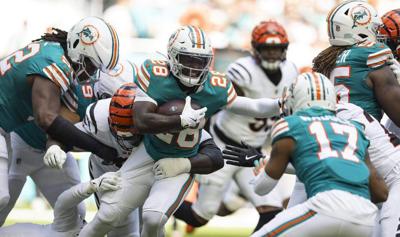
In the high-stakes world of professional football, the Cincinnati Bengals' recent 45-21 victory over the Miami Dolphins offers more than just a scoreline—it provides a compelling narrative of team leadership, performance psychology, and strategic resilience.
Coaching Leadership Dynamics emerge as a critical theme through Head Coach Zac Taylor's post-game ritual of distributing game balls. This practice transcends mere celebration, representing a sophisticated motivational strategy that publicly recognizes individual contributions while reinforcing collective achievement. By highlighting specific player performances—such as Joe Burrow's exceptional 4-touchdown, 309-yard game—Taylor creates a culture of accountability and recognition that extends beyond the field.
The emergence of rookie quarterback Quinn Ewers as the Dolphins' potential QB1 adds another layer of strategic complexity to the narrative. Despite the decisive loss, the team's commitment to developing young talent signals a forward-looking approach common in modern sports management. This reflects a broader trend of organizational investment in long-term potential over short-term performance metrics.
Performance Under Pressure becomes a central motif in these game reports. Joe Burrow's statement about "having fun playing football" reveals a psychological approach that transforms high-stakes competition into an enjoyable pursuit. This mindset is crucial in professional sports, where mental resilience often differentiates good players from exceptional ones.
The 45-21 victory is not just a game result but a complex ecosystem of leadership, individual performance, and team dynamics. It demonstrates how professional sports organizations create value through strategic recognition, talent development, and psychological management. The Bengals' approach shows that success is rarely about a single moment of brilliance, but about consistent, structured efforts that transform individual talents into collective achievements.
Questions 3
How does Zac Taylor's game ball distribution reflect modern leadership approaches?
Taylor's practice of distributing game balls is a strategic leadership technique that publicly recognizes individual contributions while reinforcing team cohesion. By highlighting specific player performances, he creates a culture of accountability and motivation that goes beyond traditional coaching methods.
What psychological factors contribute to high performance in professional sports?
Joe Burrow's perspective of 'having fun' demonstrates that psychological resilience and enjoyment are critical to peak performance. Professional athletes must transform high-pressure environments into opportunities for personal and collective growth, balancing competitive drive with mental well-being.