


India's Nuclear Revolution: Private Sector Unleashed in High-Stakes Energy Transformation
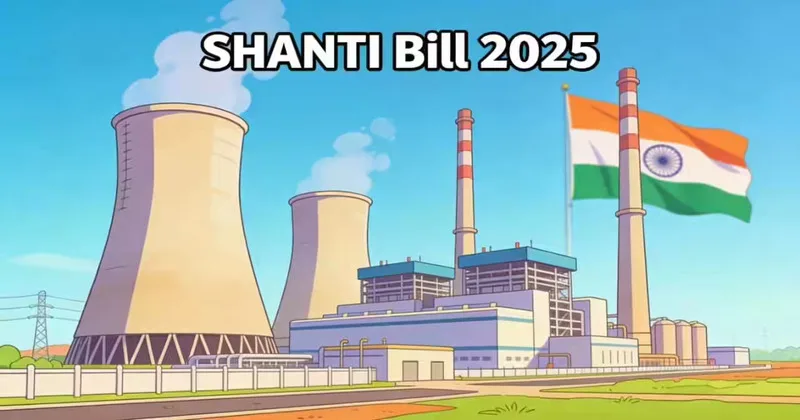
- Landmark SHANTI Bill Redefines Nuclear Sector Ownership and Global Energy Dynamics















)



Overview
The SHANTI Bill represents a tectonic shift in India's nuclear energy landscape, fundamentally restructuring a sector once exclusively controlled by government entities. By opening nuclear power plant development to private participation, India is executing a strategic pivot that simultaneously addresses multiple critical objectives: energy security, economic modernization, and international technological collaboration.
The legislation's most profound implication is the dramatic regulatory transformation that allows private companies to enter a domain previously locked behind strict governmental barriers. With an ambitious target of achieving 100 GW nuclear energy capacity by 2047, India is signaling a bold commitment to diversifying its energy portfolio while attracting significant domestic and international investment.
Critically, the bill maintains a nuanced approach to privatization. While private entities can now build, own, and operate nuclear power plants, the government retains exclusive control over sensitive activities like uranium mining, isotopic separation, and radioactive waste management. This balanced framework suggests a sophisticated strategy of introducing private sector efficiency without compromising national security imperatives.
The United States' enthusiastic welcome of the bill underscores its geopolitical significance. By explicitly stating readiness for joint innovation and research, the US is positioning itself as a strategic partner in India's nuclear transformation. This diplomatic endorsement transforms the SHANTI Bill from a domestic policy change into a potential blueprint for international nuclear sector modernization.
However, the legislation is not without controversy. Critics like Shashi Tharoor argue that the bill creates potential regulatory loopholes and shifts substantial financial risks onto taxpayers. The relatively low liability cap of 3,900 crores—minuscule compared to historical nuclear disaster costs like Fukushima—raises legitimate concerns about long-term safety and economic responsibility.
For global energy markets, this represents more than a national policy shift. It signals a potential model for integrating private capital into critical infrastructure while maintaining strategic government oversight. Investors, energy strategists, and policymakers worldwide will be watching closely to see how India navigates this complex transformation.
Questions 4
What are the key changes introduced by the SHANTI Bill?
The bill allows private companies to build, own, and operate nuclear power plants for the first time in India, while government retains control of sensitive nuclear activities like uranium mining and waste management. It repeals previous restrictive legislation and aims to attract private investment in the nuclear energy sector.
What is India's long-term nuclear energy goal?
India aims to achieve 100 GW of nuclear energy capacity by 2047. The SHANTI Bill is a critical component of this strategy, designed to accelerate nuclear energy development by introducing private sector efficiency and investment.