

College Football's Strategic Talent Migration: Klein's K-State Rebuild Through Texas A&M Connections
- Coaching network dynamics reshape collegiate football program development
Overview
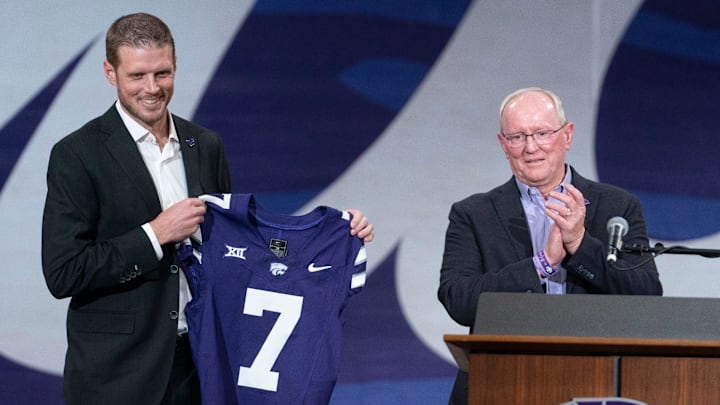
The Kansas State football program is undergoing a strategic transformation through targeted coaching staff recruitment, revealing the intricate talent networks that drive collegiate athletic program development. Collin Klein's hiring decisions represent more than routine personnel changes—they signal a sophisticated approach to building competitive athletic ecosystems by leveraging deep professional relationships.
Strategic Talent Acquisition Dynamics: Klein's initial staff appointments demonstrate a calculated approach to program reconstruction. By recruiting Jordan Peterson as defensive coordinator and Christian Ellsworth as quarterback coach, both from Texas A&M, Klein is essentially transplanting proven defensive and coaching expertise directly into Kansas State's program. Peterson's impressive track record—guiding Texas A&M to an 11-2 record and a College Football Playoff appearance in 2025—brings immediate credibility and strategic depth to K-State's defensive unit.
Coaching Network Interconnectivity: The hires reveal the profound interconnectedness of collegiate coaching circles. Ellsworth's history with Klein, having played quarterback under him at Northern Iowa and subsequently coaching together at multiple institutions, exemplifies how personal and professional relationships drive talent migration. This isn't just recruitment; it's a deliberate strategy of importing proven systems, methodologies, and cultural approaches that have demonstrated success elsewhere.
The broader implications extend beyond individual hires. Klein's anticipated expansion, potentially bringing more Texas A&M staff members to Manhattan, suggests a comprehensive program reimagining. By strategically assembling a coaching staff with shared experiences and proven collaborative dynamics, K-State is positioning itself to rapidly accelerate program development through trusted, pre-validated professional networks.
Ultimately, these moves represent more than staffing decisions—they are calculated investments in institutional knowledge transfer, highlighting how modern collegiate athletic programs compete not just through player recruitment, but through sophisticated coaching ecosystem engineering.
Questions 3
What competitive advantage does this staffing approach provide?
By recruiting coaches with shared professional experiences and proven success, Klein is essentially fast-tracking K-State's program development. This approach allows rapid knowledge transfer and implementation of tested strategies, potentially compressing the typical program improvement timeline.
Why are Klein's Texas A&M coaching hires strategically significant?
These hires represent more than personnel changes—they're about importing proven defensive strategies and coaching methodologies. Jordan Peterson's track record of leading Texas A&M's defense to top national rankings suggests K-State is acquiring a complete defensive system, not just individual coaches.