
Educational Toys Revolution Reshaping Global Learning Landscapes
- Emerging market signals transformative potential for STEM learning and child development ecosystem
Overview
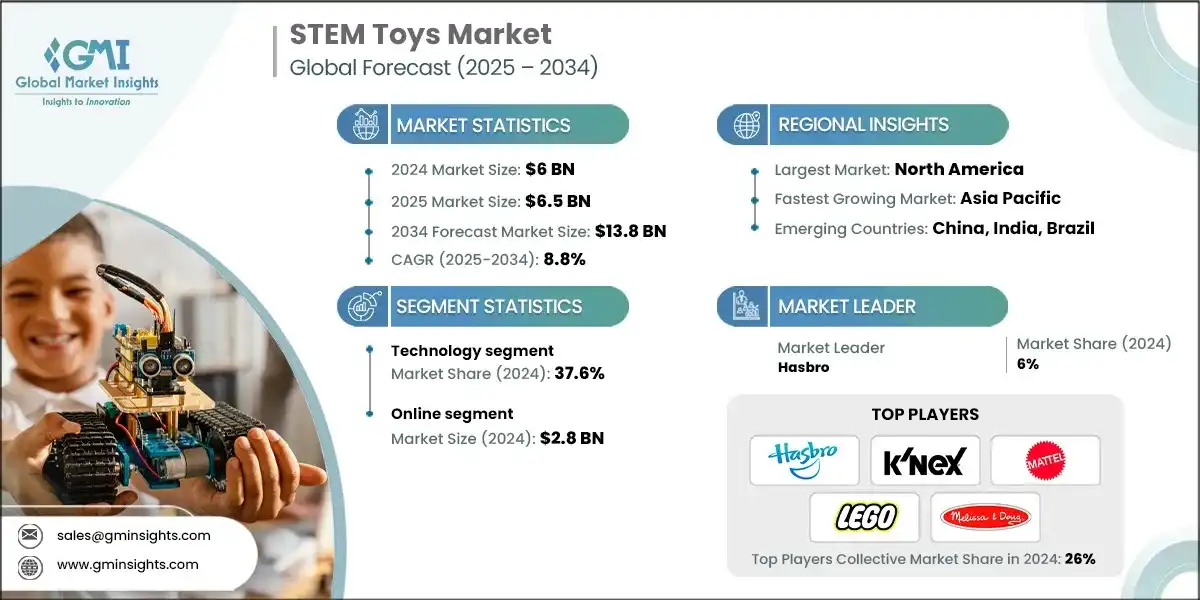
The global educational toy market is undergoing a profound transformation, driven by a convergence of technological innovation, parental aspirations, and strategic market dynamics. At the heart of this revolution lies a robust market expansion, with the STEM toys sector projected to grow from USD 6.5 billion in 2025 to USD 13.8 billion by 2034, representing a compelling 8.8% compound annual growth rate.
Technological Integration emerges as a critical driver of this market evolution. Manufacturers are not merely creating toys, but developing sophisticated learning ecosystems that integrate augmented reality (AR), virtual reality (VR), and artificial intelligence technologies. These advanced educational tools are designed to foster critical thinking, creativity, and problem-solving skills across diverse demographic segments. The integration of cutting-edge technologies signals a fundamental shift from traditional play models to immersive, interactive learning experiences.
Market Inclusivity represents another significant trend reshaping the educational toy landscape. Organizations are deliberately developing products that transcend traditional boundaries of gender, ethnicity, and socio-economic backgrounds. This strategic approach is supported by broader workforce trends, with the US Department of Commerce predicting a 10.5% growth in STEM occupations from 2020-2034. By creating more accessible and representative learning tools, manufacturers are not just selling toys, but actively participating in skill development and social mobility.
Geographically, the market dynamics reveal fascinating patterns. North America currently dominates with a 35% market share, while the Asia Pacific region emerges as the fastest-growing market. This growth is fueled by rising disposable incomes, government STEM initiatives, and an increasingly competitive educational ecosystem. Popular product categories like robotic kits, coding games, and construction sets are becoming sophisticated platforms for early technological literacy.
However, the market is not without challenges. Stringent safety regulations and high price points of technologically advanced STEM toys create significant barriers, particularly for small and medium enterprises and lower-income families. These constraints underscore the need for innovative pricing strategies and potential government or institutional support to democratize access to advanced educational tools.
Questions 3
How are manufacturers addressing market inclusivity in educational toys?
Manufacturers are creating toys that appeal across gender, ethnicity, and socio-economic backgrounds, developing more representative and accessible learning tools that democratize technological skill development.
What challenges exist in the STEM toys market?
Key challenges include stringent safety regulations that can impede market entry for small businesses, high price points of advanced technological toys, and potential accessibility barriers for lower-income families.