





Nigeria Political Stability Impacts African E-Commerce Market | Seller Risk Assessment
- 16 military officers indicted in October 2024 coup plot; political instability threatens logistics networks and payment processing in West Africa's largest e-commerce market






















Overview
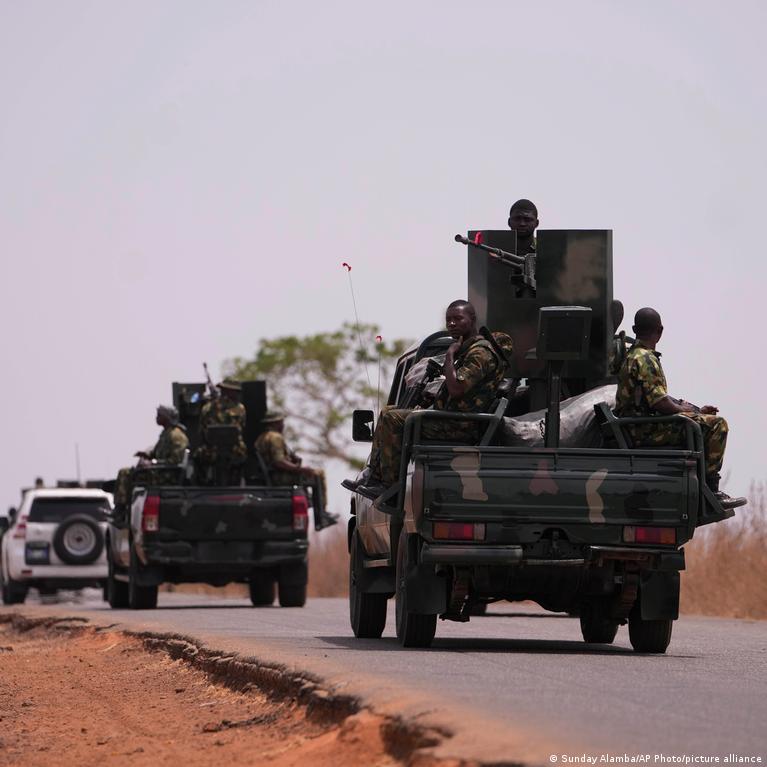
Political instability in Nigeria presents indirect but significant risks for cross-border e-commerce sellers operating in or expanding to West Africa's largest digital marketplace. The October 2024 arrest of 16 military officers on coup-plotting charges, now advancing to court-martial proceedings, signals underlying institutional stress within Nigeria's security apparatus. While Nigeria has maintained unbroken civilian rule since 1999—a stabilizing factor—the alleged coup plot reveals operational pressures from jihadist insurgencies in the northeast, criminal activity in northwestern states, and resource constraints affecting military discipline. These systemic pressures create downstream risks for e-commerce infrastructure.
For sellers, the immediate concern centers on logistics and payment system reliability. Nigeria represents Africa's largest e-commerce market with estimated 2024 GMV exceeding $15B, driven by platforms like Jumia, Konga, and emerging Amazon presence. Political instability historically correlates with disruptions to: (1) Last-mile delivery networks dependent on stable security environments; (2) Payment gateway operations requiring consistent regulatory oversight; (3) Customs clearance procedures vulnerable to institutional dysfunction; (4) Cross-border logistics corridors through ECOWAS region (Mali, Burkina Faso, Niger, Guinea all experienced recent coups). The military's acknowledged intelligence gaps and institutional reshuffling suggest temporary operational disruptions are possible.
Sellers should implement risk mitigation strategies focused on operational resilience. The trial proceedings will likely extend 6-12 months, during which military institutional focus remains divided. Sellers with significant Nigerian inventory exposure should: (1) Diversify fulfillment across multiple 3PL providers to reduce single-point-of-failure risk; (2) Maintain 30-45 day buffer inventory given potential 2-3 week logistics delays during institutional transitions; (3) Monitor payment processor stability through real-time transaction monitoring; (4) Consider temporary inventory reallocation to Ghana, Kenya, or South Africa as geographic hedges. Nigeria's commitment to civilian democratic governance and ECOWAS stabilizing role provide medium-term confidence, but near-term operational caution is warranted. The regional context—with Mali, Burkina Faso, Niger, and Guinea experiencing recent military takeovers—underscores that West African political risk remains elevated despite Nigeria's democratic track record.
Questions 8
How does Nigeria's military situation compare to other African e-commerce markets?
Nigeria's political stability significantly exceeds neighboring West African markets. Nigeria maintained unbroken civilian rule since 1999, while Mali, Burkina Faso, Niger, and Guinea experienced military coups 2020-2023. However, Nigeria's current military institutional stress (jihadist insurgencies, criminal activity, resource constraints) creates near-term operational risk comparable to post-coup stabilization periods in other markets. Kenya, South Africa, and Ghana offer lower political risk alternatives but smaller e-commerce markets ($8-12B GMV vs. Nigeria's $15B+). Sellers should view Nigeria as a higher-risk, higher-reward market requiring active risk management rather than a safe-haven market. The risk-reward calculus favors continued Nigeria operations with geographic hedging rather than complete market exit.
What immediate actions should sellers take regarding Nigeria operations?
Sellers should complete a risk audit within 30 days: (1) Map inventory concentration by location and 3PL provider; (2) Identify payment processor dependencies; (3) Review customs clearance timelines for recent shipments. Within 60 days: (1) Establish secondary fulfillment arrangements with alternative 3PL providers; (2) Increase safety stock for high-velocity SKUs by 20-30%; (3) Implement daily transaction monitoring for payment gateway anomalies. Within 90 days: (1) Evaluate temporary inventory reallocation to Ghana or Kenya; (2) Stress-test logistics timelines assuming 2-3 week delays; (3) Document contingency procedures for payment processing failures. These actions cost $2-5K per seller but prevent potential $50-200K inventory disruption losses.