




Geopolitical Pressure Cooker: How US Maritime Blockades Are Reshaping Global Oil Markets
- Strategic maritime interventions create ripple effects across international energy trade dynamics





















Overview
The global oil market is experiencing a critical inflection point driven by sophisticated geopolitical maneuvering, with the United States leveraging maritime blockades as a nuanced economic pressure mechanism. Geopolitical tensions are transforming from abstract diplomatic challenges into concrete market disruptions, particularly in the Caribbean and Black Sea regions.
The U.S. is strategically targeting Venezuela's oil trade through maritime interdiction, demonstrating a sophisticated approach to economic statecraft. By implementing a quarantine on Venezuelan oil tanker traffic, Washington is applying targeted pressure on Nicolás Maduro's regime without triggering a full-scale military confrontation. Market analysts like Dennis Kissler from BOK Financial highlight that while the global market disruption remains relatively small, the strategic implications are significant.
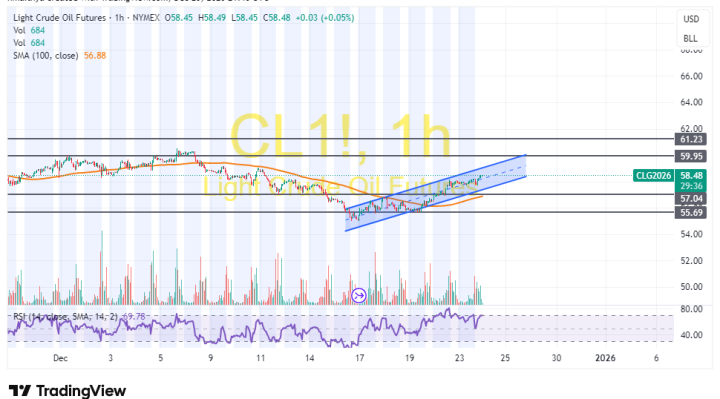
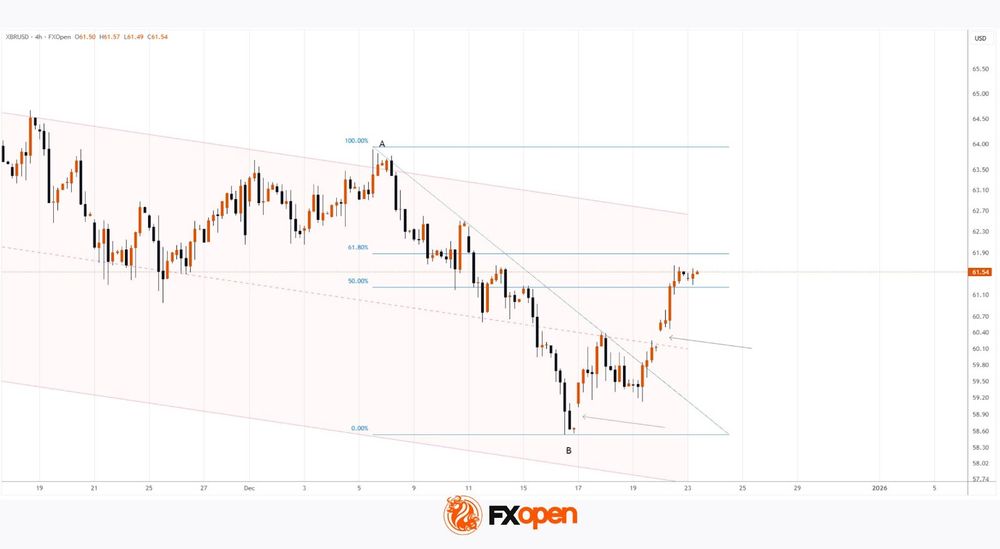
Oil futures have become a critical barometer of these geopolitical tensions, with West Texas Intermediate (WTI) and Brent crude experiencing subtle but meaningful fluctuations. The current price range—WTI at $58.38 and Brent at $62.38 per barrel—reflects a delicate balance between geopolitical risks and market fundamentals. Barclays' forecast of a well-supplied oil market by 2026, with the surplus expected to shrink to 700,000 barrels per day, underscores the complex dynamics at play.
The broader context reveals a sophisticated chess game of international trade. Russian-Ukrainian maritime operations in the Black Sea and potential U.S. sanctions create an environment of persistent uncertainty. For global trade and logistics sectors, these developments signal more than just price volatility—they represent fundamental shifts in energy procurement strategies and international economic relationships.
Critically, these interventions demonstrate how political decisions can rapidly reshape commodity markets. Energy-dependent businesses must now view geopolitical tensions not as distant diplomatic events, but as direct operational risks that can instantaneously impact transportation costs, shipping routes, and overall supply chain expenses.
Questions 3
How are oil futures responding to these geopolitical developments?
Oil futures are experiencing subtle volatility, with WTI and Brent crude prices reflecting a delicate balance between geopolitical risks and market fundamentals. Analysts note that while market disruption remains minimal, the strategic implications are significant and warrant close monitoring.
How are maritime blockades impacting Venezuela's oil trade?
The U.S. is implementing a strategic quarantine on Venezuelan oil tanker traffic, effectively limiting Venezuela's ability to export oil and applying economic pressure without direct military intervention. This blockade creates market uncertainty and disrupts Venezuela's international trade capabilities.