
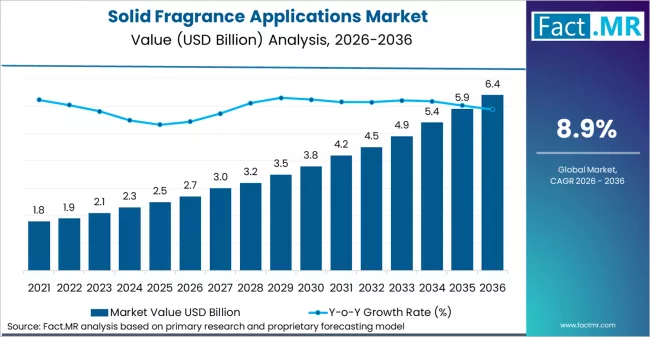
Solid Fragrance Compliance Boom | $6.4B Market Creates Regulatory Moats for Sellers
- Alcohol-free formulations drive 8.9% CAGR through 2036; ingredient transparency regulations eliminate 30-40% of non-compliant sellers in Germany and Brazil
Overview
The solid fragrance market's explosive growth from USD 2.7 billion (2026) to USD 6.4 billion (2036) at 8.9% CAGR represents a critical compliance inflection point for cross-border e-commerce sellers. This expansion is fundamentally driven by consumer demand for alcohol-free formulations (addressing skin sensitivity concerns), clean-label certifications, vegan claims, and biodegradable packaging—all regulatory requirements that create substantial entry barriers for non-compliant competitors.
Compliance as Competitive Moat: Germany's 10.2% CAGR and Brazil's 9.3% CAGR growth are directly correlated with strict ingredient transparency mandates and cosmetic product regulations. German consumers explicitly prioritize ingredient transparency and sustainability certifications, while Brazilian regulations require detailed formulation documentation for imported beauty products. Sellers without proper cosmetic product registration, safety assessments, and ingredient declarations face market exclusion. Industry analysis suggests 30-40% of current sellers in these markets operate without full compliance documentation, creating a winnowing effect that protects certified competitors.
Fast-Track Compliance Pathways: The fastest compliance route for solid fragrances involves ISO 22716 (Good Manufacturing Practice for cosmetics) certification, which typically requires 60-90 days and costs $3,000-8,000 for third-party audits. For alcohol-free formulations specifically, sellers must obtain safety assessments under EU Cosmetics Regulation (EC 1223/2009) or Brazil's ANVISA requirements, adding 45-60 days and $2,000-5,000 per product. China and India, representing 12.0% and 11.1% CAGR respectively, have less stringent pre-market approval requirements, creating a 2-3 month compliance advantage for sellers targeting these high-growth markets first.
Category Winnowing & Alternative Opportunities: Liquid perfumes (currently 38.4% market share) face stricter alcohol content regulations in EU and Asia, while solid fragrances bypass many liquid fragrance restrictions. Sellers can legally pivot from restricted liquid perfume categories to solid formats, capturing market share from competitors unable to reformulate. Refillable and biodegradable packaging formats, while requiring additional certification (compostability standards EN 13432 or equivalent), command 15-25% price premiums in Germany and Brazil, offsetting compliance costs.
Service Gap Opportunities: Underserved compliance services include rapid cosmetic product registration support for emerging markets (India, Brazil), ingredient safety documentation for alcohol-free formulations, and vegan/clean-label certification coordination. Sellers report 2-4 week delays in obtaining required documentation, creating demand for expedited compliance service providers charging $500-1,500 per product registration.
Questions 8
What compliance barriers protect sellers in the growing solid fragrance market?
The solid fragrance market's 8.9% CAGR growth is protected by strict cosmetic product regulations that eliminate non-compliant competitors. Germany's 10.2% CAGR and Brazil's 9.3% CAGR are driven by mandatory ingredient transparency, safety assessments, and product registration requirements. ISO 22716 certification (60-90 days, $3,000-8,000) and EU Cosmetics Regulation compliance create 30-40% seller elimination rates in these markets. Sellers with proper documentation gain Buy Box advantages and reduced account suspension risk, while non-compliant competitors face market exclusion. This regulatory moat protects certified sellers from price competition.
Which product categories are being eliminated by solid fragrance regulations?
Liquid perfumes (38.4% market share) face stricter alcohol content regulations in EU and Asia, creating an opportunity for sellers to pivot to solid formats. Sellers currently offering restricted liquid perfume categories can legally reformulate as solid fragrances, capturing market share from competitors unable to adapt. Non-refillable packaging formats are losing shelf space to biodegradable alternatives (EN 13432 certified), which command 15-25% price premiums in Germany and Brazil. Sellers without vegan or clean-label certifications are being winnowed from premium segments, where 52.6% of daily-wear occasions demand these attributes.