



Nvidia's $62 Billion Investment Blitz Reveals a Vertical Integration Strategy to Lock In AI Chip Dominance
- Nvidia is systematically acquiring stakes in complementary software and infrastructure companies to create an ecosystem moat that makes switching away from its chips economically unfeasible for AI developers and chip designers




































/Nvidia%20logo%20and%20sign%20on%20headquarters%20by%20Michael%20Vi%20via%20Shutterstock.jpg)







!role~Preview!mt~photo!fmt~JPEG%20Baseline)











































































































































































































































Overview
Nvidia has fundamentally shifted from being a pure hardware vendor to becoming a financial architect of the entire AI infrastructure ecosystem. The scale of this transformation is staggering: according to PitchBook data, Nvidia and its NVentures unit made 117 investments totaling $62.24 billion in 2024 and early 2025, compared to just 46 investments worth $6.09 billion in the previous two years. This tenfold acceleration signals a deliberate strategy to create what CEO Jensen Huang calls CUDA adoption expansion—but the mechanism is far more sophisticated than simply funding AI companies. Instead, Nvidia is systematically acquiring strategic stakes in the companies that make switching costs prohibitively expensive.
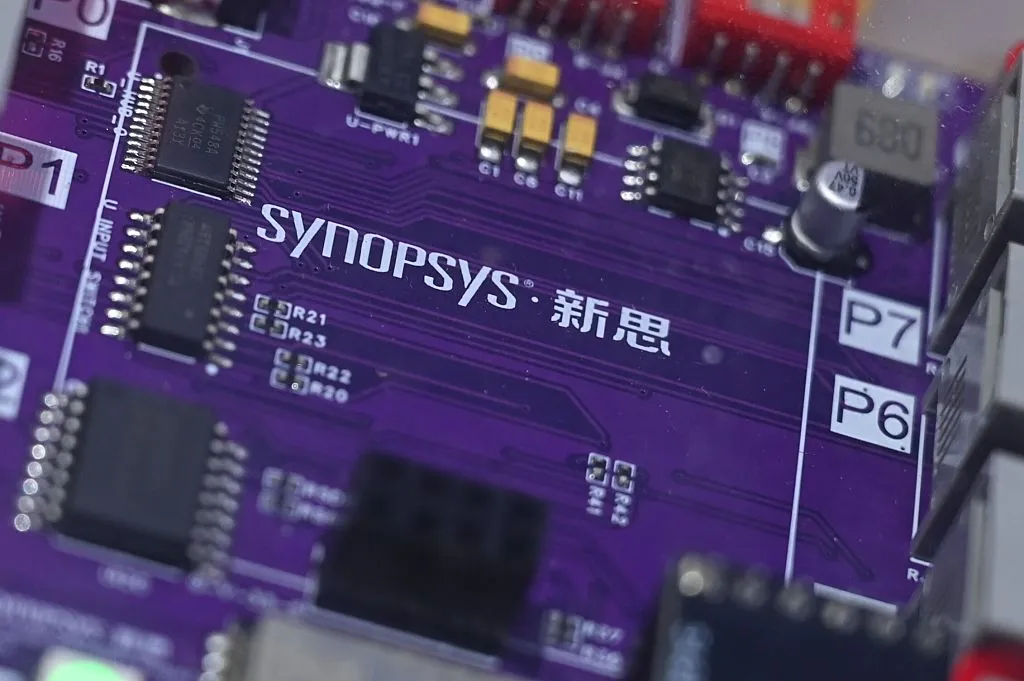
The Synopsys investment exemplifies this approach. By acquiring a 2.6% stake for $2 billion in the leading provider of electronic design automation (EDA) software, Nvidia is embedding itself into the chip-design workflow itself. This is not a passive financial bet; it's a structural lock-in. When semiconductor engineers use Synopsys tools to design chips, those tools are now being integrated with GPU-accelerated computing capabilities that make designing for Nvidia's architecture the path of least resistance. The partnership aims to accelerate chip-design workflows by transitioning from CPU-based to GPU-accelerated architectures—meaning future chip designs will be optimized for Nvidia hardware by default. Synopsys shares jumped 6.9% on the announcement, reflecting market recognition that this investment validates long-term growth tied directly to Nvidia's ecosystem dominance.
What distinguishes Nvidia's strategy from speculative dot-com era investments is its performance-based structure. The arrangement with OpenAI, for instance, is contingent on OpenAI operating at least 10 gigawatts of AI data centers using Nvidia systems, with the first gigawatt expected in the second half of next year. This transforms Nvidia's capital deployment from venture betting into demand creation with built-in accountability. Nvidia funds companies whose growth depends on AI infrastructure expansion, which in turn creates guaranteed demand for Nvidia chips. It's a virtuous cycle: invest in Synopsys to make chip design easier for Nvidia architectures; invest in AI developers to create demand for those chips; invest in data center operators to deploy them at scale. Each investment reinforces the others, creating a vertical integration that competitors cannot easily replicate.
However, this strategy faces a critical vulnerability: Google's emergence as a competitor with in-house AI chips. Industry observers are monitoring whether Nvidia will need to adjust its thesis if Google's custom silicon gains meaningful adoption. Additionally, major institutional investors including SoftBank and venture capitalist Peter Thiel have reduced their Nvidia positions, suggesting skepticism about whether this massive capital deployment can generate profitable returns. Analysts have begun scrutinizing similar circular deals within the AI industry, raising concerns about potential bubble dynamics where major AI companies invest in complementary service providers to artificially inflate valuations. The question is whether Nvidia's performance-based deals and ecosystem lock-in create genuine defensibility or merely delay the inevitable commoditization of AI infrastructure.
Questions 5
What is Nvidia's long-term competitive advantage from this ecosystem strategy?
By controlling key layers of the **AI infrastructure** stack—from chip design software (Synopsys) to AI developer funding (Anthropic) to data center deployment (OpenAI)—Nvidia creates a **vertical integration** moat. Each investment reinforces the others: better design tools optimize for Nvidia chips; funded AI companies need those chips; data centers deploy them. Competitors would need to replicate this entire ecosystem simultaneously, which is economically unfeasible. However, this advantage is vulnerable to **in-house chip development** by large cloud providers like Google.
How does Nvidia's $62.24 billion investment strategy differ from the dot-com bubble?
Nvidia's deals are **performance-based**, not speculative. The OpenAI arrangement, for example, is contingent on OpenAI operating at least 10 gigawatts of **AI data centers** using Nvidia systems. This creates accountability: Nvidia only wins if its portfolio companies actually deploy its chips at scale. Dot-com investors had no such guarantees. However, skeptics note that this structure still assumes Nvidia's continued dominance—a bet that could fail if competitors like Google's custom chips gain adoption.