






Avatar Fire and Ash Positions Theatrical Spectacle as Cinema's Last Defensive Moat Against Streaming Dominance
- James Cameron's third installment signals that premium visual experiences and franchise momentum remain the entertainment industry's strongest hedge against digital disruption














































/https://tf-cmsv2-smithsonianmag-media.s3.amazonaws.com/filer_public/30/e1/30e194df-61e2-477c-b724-cbe7bd7d9e2c/hamnet4.jpg)






















)
















































.jpg)















































)







































)




























































































-(1).jpg)





































/hospibuz/media/media_files/2025/11/25/image001-68-2025-11-25-14-35-48.jpg)





)


















Overview
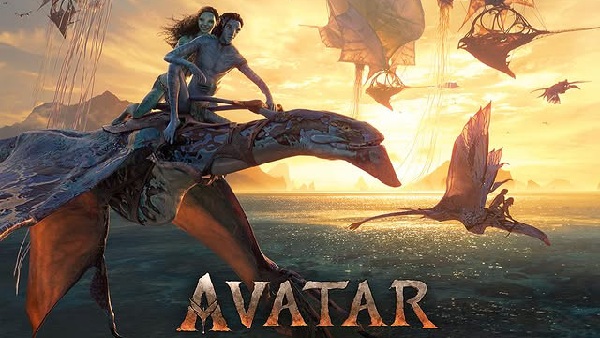
The December 2025 premiere and critical reception of Avatar: Fire and Ash reveals a fundamental strategic calculus reshaping the entertainment industry: theatrical spectacle has become the primary differentiator that justifies cinema's continued existence in an era of streaming saturation. With the film scheduled for December 19 theatrical release across premium formats including IMAX 3D, Dolby Cinema 3D, and 4DX, the industry is doubling down on what streaming cannot replicate—immersive, technically advanced visual experiences that demand large-screen presentation.
The critical consensus emerging from early reactions demonstrates this positioning with precision. Multiple film critics emphasized that Avatar: Fire and Ash "reminds audiences what movie theaters were built for," with praise centering not on narrative depth but on visual spectacle and technical boundaries. This framing is strategically significant: critics explicitly acknowledged the story "may lack depth" while simultaneously praising the film as a "cinematic spectacle" that "pushes technical boundaries in unprecedented ways." This disconnect between narrative substance and visual praise is not accidental—it reflects the industry's conscious pivot toward experiences that justify premium ticket prices and cannot be consumed on home screens.
Box office performance has become the franchise's existential metric. Director James Cameron explicitly stated that Fire and Ash's box office results will determine the franchise's future, a statement that carries weight given the franchise's historical performance: the original Avatar remains the highest-grossing film of all time at $2.9 billion worldwide, while The Way of Water earned $2.3 billion. This $600 million decline between installments signals potential audience fatigue or market saturation, yet the industry continues investing in increasingly expensive productions. Cameron's willingness to personally direct a fourth film—despite acknowledging the "physical challenges" of such an undertaking for another six to seven years—underscores how critical franchise continuity has become to studio economics. The Avatar franchise essentially functions as a theatrical anchor tenant, justifying investment in premium cinema infrastructure and driving attendance across the entire theatrical ecosystem.
The narrative shift toward moral complexity reflects audience sophistication but also production risk. Fire and Ash introduces the Ash People (Mangkwan clan) as a fire-based Navi tribe allied with human forces, deliberately blurring traditional good-versus-evil dynamics. This narrative choice—moving beyond the original film's clear moral binaries—suggests the franchise is attempting to deepen storytelling while maintaining visual spectacle. However, this complexity also introduces creative risk: audiences expecting straightforward heroic narratives may find the moral ambiguity alienating, particularly in a film where story is secondary to visual experience. The Sully family's grief over their son Neteyam's death adds emotional weight, but the question remains whether emotional resonance can sustain audience investment when narrative depth is explicitly not the film's primary value proposition.
Looking at the broader context, Avatar: Fire and Ash represents the entertainment industry's bet that theatrical exclusivity and technical innovation remain defensible against streaming competition. The film's release across multiple premium formats—each with distinct technical capabilities—creates a tiered pricing structure that captures different audience segments willing to pay for varying levels of immersion. This is a deliberate strategy to maximize per-ticket revenue in an environment where total theatrical attendance continues declining. The world premiere at the Dolby Theatre, attended by major cast members and industry figures, functions as both celebration and validation of this theatrical-first strategy. For the broader industry, Fire and Ash's box office performance will signal whether audiences still value theatrical experiences enough to justify the production costs and infrastructure investment required to compete with streaming's convenience and affordability.
Questions 5
Why is Avatar: Fire and Ash releasing across so many premium formats like IMAX 3D, Dolby Cinema, and 4DX?
The multi-format strategy maximizes per-ticket revenue by creating a tiered pricing structure that captures different audience segments willing to pay varying amounts for different levels of immersion. Since the film's primary value proposition is **visual spectacle** rather than narrative depth, premium formats justify higher ticket prices and differentiate theatrical experiences from streaming alternatives. This approach reflects the industry's recognition that theatrical survival depends on offering experiences that cannot be replicated on home screens.
What does James Cameron's emphasis on box office performance determining the franchise's future signal about the entertainment industry?
It reveals that **franchise economics** have become existential for major studios. With the original Avatar earning $2.9 billion and The Way of Water earning $2.3 billion—a $600 million decline—the industry is facing potential audience fatigue. Cameron's willingness to personally direct future films despite physical challenges underscores how critical theatrical anchor tenants have become to justifying cinema infrastructure investment. Box office performance now functions as the primary metric determining whether studios continue investing in expensive, technically advanced productions.