
Bangladesh E-Commerce Boom 2025-2029 | $7.41B Market Opens Regional Fulfillment Opportunities
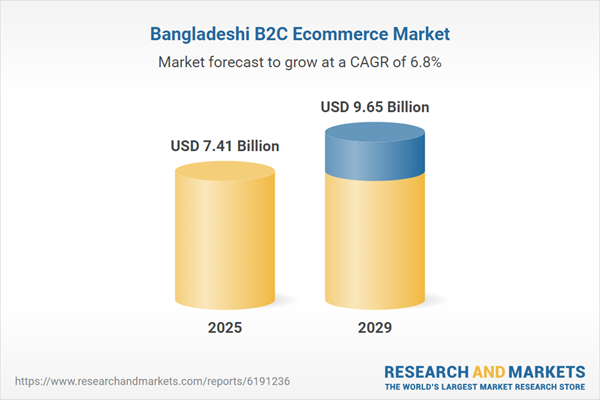
- Market growing 6.8% CAGR to $9.65B by 2029; 3-5% online penetration signals untapped demand for cross-border sellers entering South Asia logistics networks
Overview
Bangladesh's B2C e-commerce market represents a critical supply chain expansion opportunity for cross-border sellers, with the market valued at $7.41 billion in 2025 and projected to reach $9.65 billion by 2029 at a 6.8% CAGR. This follows exceptional growth during 2020-2024 with an 11.2% CAGR, yet online retail still accounts for only 3-5% of total retail, indicating massive untapped market potential. The consolidation of leading marketplaces—Daraz (Alibaba-owned), Chaldal (grocery), and Pickaboo (electronics)—investing heavily in logistics infrastructure and regional expansion beyond Dhaka creates immediate sourcing and fulfillment opportunities for sellers.
Critical logistics implications emerge from market dynamics: Mobile-first commerce dominance (smartphone penetration driving adoption) and digital payment acceleration (bKash, QR-based transactions replacing cash-on-delivery) fundamentally reshape fulfillment requirements. Sellers must optimize for low-bandwidth mobile experiences and integrate with local payment ecosystems rather than relying on traditional COD models. The shift from urban-centric to second-tier city and rural market penetration requires regional fulfillment networks rather than centralized Dhaka-based operations. This directly impacts warehouse positioning strategy—sellers entering Bangladesh now face a choice between partnering with established marketplace logistics (Daraz's network) or building independent 3PL relationships in secondary cities like Chittagong, Sylhet, and Khulna.
Competitive intensity is accelerating across product categories, with pricing, service speed, and payment convenience becoming battlegrounds. Sellers that build specialized logistics capabilities and vertical specialization (niche categories with integrated payment ecosystems) are positioned to capture market share before saturation. The emerging startup ecosystem targeting B2B2C models and niche categories signals fragmentation opportunities—sellers can compete on specialized logistics rather than price alone. Firms failing to invest in regional fulfillment networks and mobile-optimized operations will face constraints in market penetration beyond Dhaka's 20+ million urban consumers.
Immediate supply chain actions: Establish partnerships with Bangladesh-based 3PL providers or marketplace logistics networks (Daraz fulfillment preferred for market access); stock inventory in secondary city warehouses (Chittagong port offers cost advantages over Dhaka); optimize product listings for mobile-light versions with lower connectivity constraints; integrate bKash and local payment gateways into order processing. The total landed cost advantage for sellers sourcing from South Asia and fulfilling locally (vs. importing finished goods) creates 15-25% margin improvement opportunities through reduced shipping and tariff costs.
Questions 8
What product categories and vertical specialization offer competitive advantages in Bangladesh?
**Electronics (Pickaboo platform focus), grocery (Chaldal dominance), and niche categories through emerging B2B2C platforms** represent the primary opportunities. Sellers that define clear value propositions through **specialized logistics, vertical specialization, or integrated payment ecosystems** are positioned to gain market share as competitive intensity increases. Social commerce integration (influencer-led sales, live-streams, community features) is reshaping buyer behavior, creating opportunities for sellers in fashion, beauty, and lifestyle categories with strong influencer partnerships. Avoid competing on price alone—differentiation through logistics speed, payment convenience, and mobile-optimized experiences is essential as margins face pressure from rising competition.
How are digital payment changes affecting fulfillment and inventory strategies in Bangladesh?
Digital payment adoption is accelerating through **mobile wallets like bKash and QR-based transactions**, reducing reliance on cash-on-delivery methods that previously required complex logistics for payment collection. This shift enables sellers to implement **prepayment-based fulfillment models**, reducing inventory holding costs and improving cash flow. Sellers should integrate payment gateways directly into marketplace listings and optimize for mobile-light versions compatible with lower connectivity constraints. The transition from COD to digital payments also reduces last-mile delivery complexity, allowing sellers to partner with lighter-weight 3PL providers and reduce fulfillment costs by 10-15%.