





The Great Economic Divide: How K-Shaped Recovery Rewrites Market Strategies
- Uneven Growth Demands Hyper-Targeted Business Models for Survival









Overview
The emerging K-shaped economic recovery represents a profound structural transformation that demands unprecedented strategic agility from businesses. At its core, this economic phenomenon reveals a stark bifurcation where affluent consumers continue robust spending while lower-income groups face mounting financial constraints.
Consumer spending dynamics are experiencing a critical metamorphosis. The top 10% of households now drive nearly half of all consumer expenditures, creating a dramatically polarized market landscape. This isn't just an economic trend—it's a fundamental restructuring of purchasing power and market engagement. Businesses must now design radically differentiated strategies that can simultaneously serve high-end and budget-conscious consumer segments.
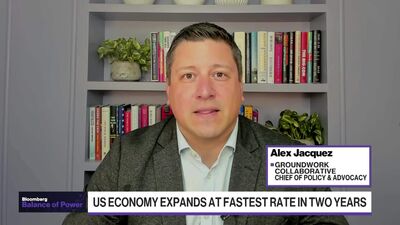
The jobless growth dimension adds another layer of complexity. Despite Q3's impressive 4.3% GDP growth and $166 billion in corporate profits, hiring remains stagnant with unemployment climbing to 4.6%. This decoupling of economic expansion from employment signals a deeper transformation in productivity models. Companies are extracting more value through existing resources, suggesting that traditional workforce expansion is no longer the primary growth lever.
For cross-border e-commerce sellers, this landscape demands hyper-adaptive business models. Successful strategies will require simultaneously developing:
- Premium product lines targeting affluent consumers
- Value-oriented offerings for price-sensitive markets
- Flexible financing options that bridge economic disparities
- Rapid pivoting capabilities across different consumer spending scenarios
The long-term implications are profound. Traditional market assumptions are being systematically dismantled, replaced by a more nuanced understanding of consumer segmentation. Businesses that can rapidly sense and respond to these micro-economic shifts will not just survive—they will define the next generation of market leadership.
Questions 3
What are the risks of prolonged K-shaped recovery?
Prolonged K-shaped recovery can lead to increased social inequality, reduced overall consumer spending, and potential market instability. It challenges traditional economic growth models and may require fundamental reimagining of business and economic strategies.
What defines a K-shaped economic recovery?
A K-shaped recovery occurs when different segments of the economy recover at dramatically different rates. In this scenario, affluent households continue spending and growing wealth, while lower-income groups experience financial stagnation or decline, creating a divergent economic trajectory resembling the two arms of the letter K.