
Retail Automation Revolution Transforms Checkout Experiences Worldwide
- Self-Checkout Technologies Redefine Retail Efficiency for Global Sellers and Consumers
Overview
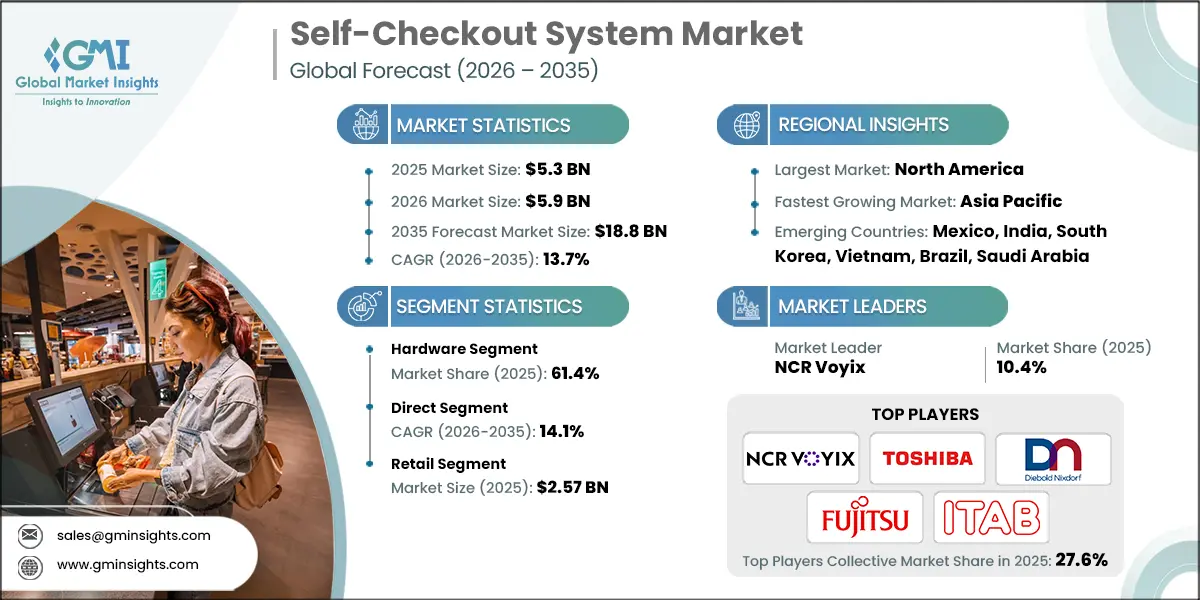
The global retail landscape is undergoing a profound transformation driven by self-checkout technologies, signaling a critical inflection point for e-commerce and traditional retail sellers. With the self-checkout market projected to expand from USD 5.3 billion in 2025 to USD 18.8 billion by 2035—representing a robust 13.7% CAGR—the implications for sellers are both urgent and transformative.
Technological Convergence and Market Dynamics are reshaping retail interactions. The surge in contactless checkout solutions reflects deeper market trends: consumers increasingly prioritize speed, convenience, and minimal human interaction. North America currently leads this technological wave, but emerging markets like Mexico, India, South Korea, and Brazil present significant growth opportunities. This isn't just a technological upgrade; it's a fundamental reimagining of retail engagement.
Strategic Implications for Sellers are multifaceted and complex. Tech-forward businesses can leverage AI-powered checkout solutions to dramatically improve customer experiences, while smaller retailers face potential challenges from high initial deployment costs. The market landscape is bifurcating: those who rapidly integrate hybrid checkout systems and mobile payment methods will gain competitive advantages, while hesitant players risk technological obsolescence.
The broader context extends beyond mere transactional efficiency. These developments signal a fundamental shift in retail technology, emphasizing automation, personalization, and seamless consumer experiences. Future developments are expected to focus on AI-driven personalization and potentially cashier-less shopping environments, fundamentally restructuring how retail interactions are conceived and executed.
Questions 3
How significant is the growth potential for self-checkout technologies?
The market is projected to grow from USD 5.3 billion in 2025 to USD 18.8 billion by 2035, representing a substantial 13.7% CAGR. This indicates massive technological and market transformation in retail checkout experiences.
Which regions are leading in self-checkout technology adoption?
North America currently leads the market, with Asia Pacific emerging as the fastest-growing region. Emerging markets like Mexico, India, South Korea, and Brazil present significant growth opportunities for technology integration.