
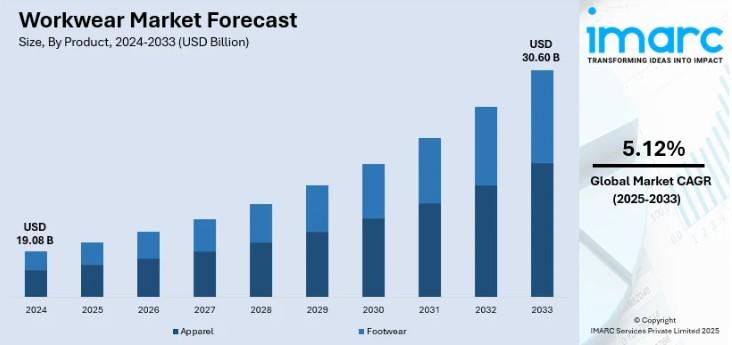
Workwear Market Expansion | USD 11.52B Growth Opportunity for Cross-Border Sellers
- Global workwear market projected to grow from USD 19.08B (2025) to USD 30.60B (2034) at 5.12% CAGR; Asia Pacific dominates with 42.6% market share; hybrid work, sustainability, and smart textiles drive seller opportunities
Overview
The global workwear market is experiencing transformative growth that directly impacts cross-border e-commerce sellers. IMARC Group's comprehensive market analysis reveals the workwear sector valued at USD 19.08 billion in 2025 will expand to USD 30.60 billion by 2034, representing a compound annual growth rate of 5.12% and creating USD 11.52 billion in new market opportunity. Asia Pacific currently dominates with 42.6% market share, positioning sellers in this region for accelerated growth during the forecast period.
Three primary growth drivers are reshaping workwear e-commerce dynamics and creating immediate seller opportunities. First, the rise of remote and hybrid work models has fundamentally altered professional clothing demand—employees now seek versatile pieces balancing professionalism with comfort, enabling sellers to expand beyond traditional formal workwear into casual-professional hybrid categories. This shift allows sellers to capture market share from legacy corporate suppliers by offering comfort-focused designs that appeal to distributed workforces. Second, sustainability and ethical sourcing have become critical purchasing factors, with consumers increasingly prioritizing eco-friendly products and brands implementing recycled materials and ethical production practices. Sellers who source sustainable workwear from certified manufacturers can command 15-25% price premiums while differentiating from competitors. Third, technological innovations in fabric development—including moisture-wicking, stain resistance, stretchability, and smart textiles with wearable technology—are transforming product expectations and creating differentiation opportunities for sellers who can access advanced fabric suppliers.
Market segmentation reveals distinct seller opportunities across healthcare, construction, and corporate environments. The report identifies apparel and footwear products across chemical, power, food and beverage, and biological sectors, each with specialized requirements. Healthcare workwear demands antimicrobial and fluid-resistant properties; construction requires durability and safety features; corporate segments prioritize comfort and style. Employers increasingly recognize employee well-being and comfort as productivity drivers, directly influencing corporate purchasing decisions—this signals B2B2C opportunities where sellers can target corporate bulk buyers through Amazon Business, Alibaba, and specialized B2B platforms. For cross-border sellers, Asia Pacific represents the highest-growth region, where emerging economies are industrializing rapidly and establishing new workplace standards. Sellers positioned in Southeast Asia, India, and China can leverage manufacturing proximity to capture regional demand while exporting to developed markets where workwear consumption is stabilizing at higher price points.
Questions 8
How can sellers capitalize on the sustainability trend in workwear?
Sustainability has become a critical purchasing factor, with consumers and corporate buyers increasingly prioritizing eco-friendly products and brands implementing recycled materials and ethical production practices. Sellers who source workwear from certified sustainable manufacturers can command 15-25% price premiums while differentiating from competitors. Certifications like Fair Trade, GOTS (Global Organic Textile Standard), and B Corp status enhance credibility on Amazon, Shopify, and B2B platforms. Sellers should highlight recycled content, ethical labor practices, and environmental impact in product listings to capture the growing segment of conscious corporate buyers and individual consumers willing to pay premium prices for sustainable workwear.
What product categories within workwear offer the most seller opportunities?
The market segments across healthcare, construction, and corporate environments, each with distinct requirements. Healthcare workwear demands antimicrobial and fluid-resistant properties; construction requires durability and safety features; corporate segments prioritize comfort and style. Additionally, specialized sectors including chemical, power, food and beverage, and biological industries have unique workwear specifications. Sellers can target niche segments with specialized products rather than competing in broad categories. For example, healthcare workwear sellers can focus on antimicrobial fabrics, while construction sellers emphasize durability and safety certifications, allowing for higher margins and reduced competition compared to generic workwear.