


AMD AI Chip Guidance Miss Signals Supply Chain Volatility for Tech Sellers | Q1 2026 Outlook
- AMD Q1 2026 guidance of $9.8B disappoints despite Q4 beat; stock drops 5-9% amid AI market expectations gap; impacts electronics sellers' sourcing and pricing strategies























/Advanced%20Micro%20Devices%20Inc_%20office%20sign-by%20Poetra_RH%20via%20Shutterstock.jpg)






Overview
AMD's paradoxical earnings report on February 3, 2026 reveals critical supply chain implications for cross-border electronics sellers. The chipmaker reported strong Q4 2025 results—$10.27 billion revenue (34% YoY growth), $1.53 adjusted EPS beating $1.32 estimates—yet guided Q1 2026 at $9.8 billion (±$300M), disappointing Wall Street's $9.42 billion expectation and triggering a 5-9% stock decline. This disconnect between historical performance and forward guidance exposes a fundamental market reality: AI-driven semiconductor demand is materializing slower than investors anticipated, with competitive pressures from NVIDIA limiting AMD's market share gains in high-growth segments.
For electronics sellers and technology retailers, this volatility directly impacts three operational areas. First, product availability and sourcing: AMD's guidance miss signals potential inventory normalization in Q1 2026, meaning sellers specializing in AI-enabled devices, data center equipment, and computing hardware may face tighter supply or delayed product launches. The $360 million inventory release of MI308 chips in Q4 (including $390 million sold to China) suggests AMD managed excess inventory through one-time sales, indicating future quarters may see constrained supply. Second, pricing strategy: AMD's inability to capture expected AI market share could pressure margins on competing products. Sellers relying on AMD processors for gaming laptops, workstations, and server equipment should anticipate potential price competition as AMD adjusts positioning. Third, customer concentration risk: AMD's major partnerships—OpenAI's 6-gigawatt Instinct GPU deployment (1GW in H2 2026) and Oracle's 50,000 AI chip order—concentrate demand among enterprise buyers, leaving less allocation for consumer and mid-market channels that cross-border sellers typically serve.
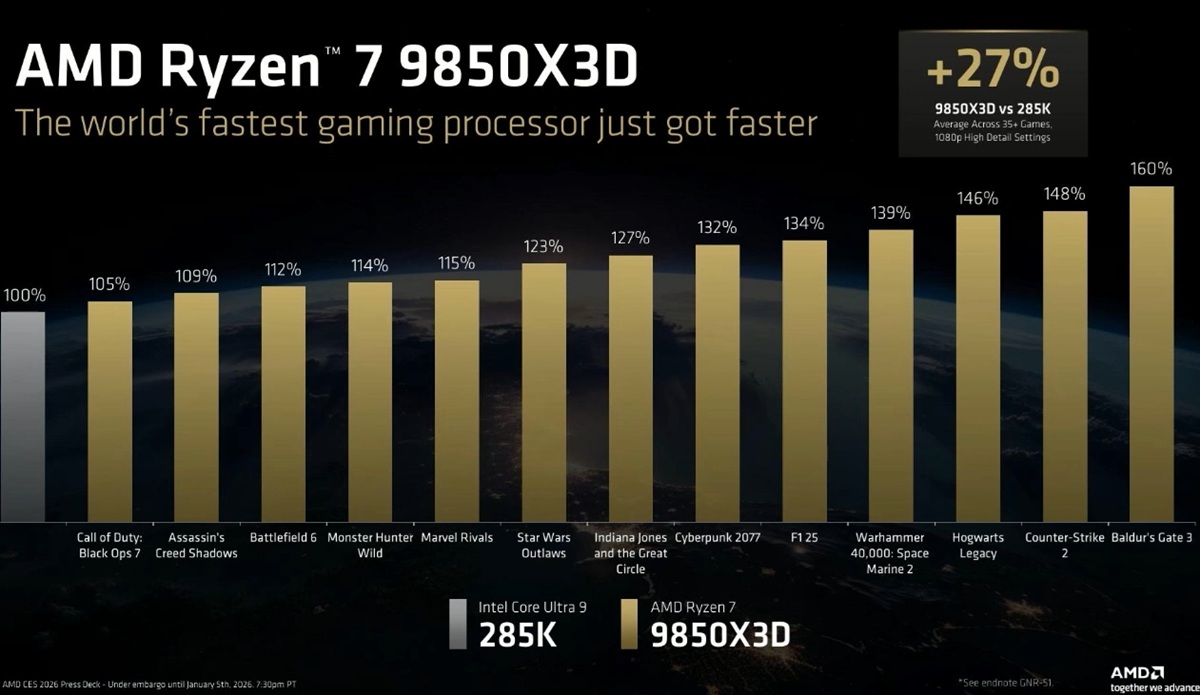
The broader context reveals semiconductor market volatility driven by expectations management rather than fundamental weakness. Data center sales surged 39% YoY to $5.4 billion, PC/gaming chips rose 37% to $3.9 billion, and embedded chips grew 3% to $950 million—demonstrating broad-based demand. However, analyst Chris Rolland (Susquehanna) noted that Chinese revenue shipments ($390M in MI308 sales) weren't included in street estimates, meaning the actual beat was substantially less impressive. This suggests geopolitical factors and China export restrictions are creating supply chain unpredictability. For sellers, this indicates potential disruptions in sourcing from China-dependent supply chains and possible tariff impacts on AI-accelerated products. The stock market's focus on forward guidance over historical performance underscores investor skepticism about margin sustainability—a signal that semiconductor pricing power may weaken in 2026, directly affecting retail margins on high-margin electronics categories.
Questions 8
What are the key risks for sellers relying on AMD supply in 2026?
Three critical risks emerge from AMD's earnings volatility: (1) **Supply concentration**: Enterprise partnerships (OpenAI, Oracle) may reduce consumer channel allocation, creating inventory shortages for sellers in Q1-Q2 2026; (2) **Geopolitical exposure**: China sales restrictions could disrupt supply chains and increase tariffs on AI-accelerated products by 10-25%; (3) **Competitive pressure**: NVIDIA's market dominance may force AMD to cut prices, compressing retail margins by 3-8% on gaming and workstation products. Sellers should diversify suppliers, maintain 60-90 day safety stock buffers, and monitor AMD's quarterly guidance for allocation signals. Consider shifting 20-30% of inventory to NVIDIA alternatives or Intel products to reduce concentration risk.
How should sellers adjust pricing strategies given AMD's margin sustainability concerns?
Market skepticism about AMD's margin sustainability (reflected in the stock decline despite beat-and-raise results) suggests semiconductor pricing power may weaken in 2026. Sellers should: (1) avoid aggressive price increases on AMD-based products, as competitive pressure from NVIDIA may limit pricing flexibility, (2) monitor AMD's quarterly gross margins for signals of pricing pressure, and (3) consider bundling AMD products with higher-margin accessories or services. The guidance miss indicates investors expect AMD to compete harder on price to gain market share, which could compress retail margins by 2-5% on gaming laptops and workstations. Sellers should build margin buffers and diversify into higher-margin product categories to offset potential compression.