
Google's $180B AI Capex Surge Reshapes E-Commerce Advertising & Cloud Services for Sellers
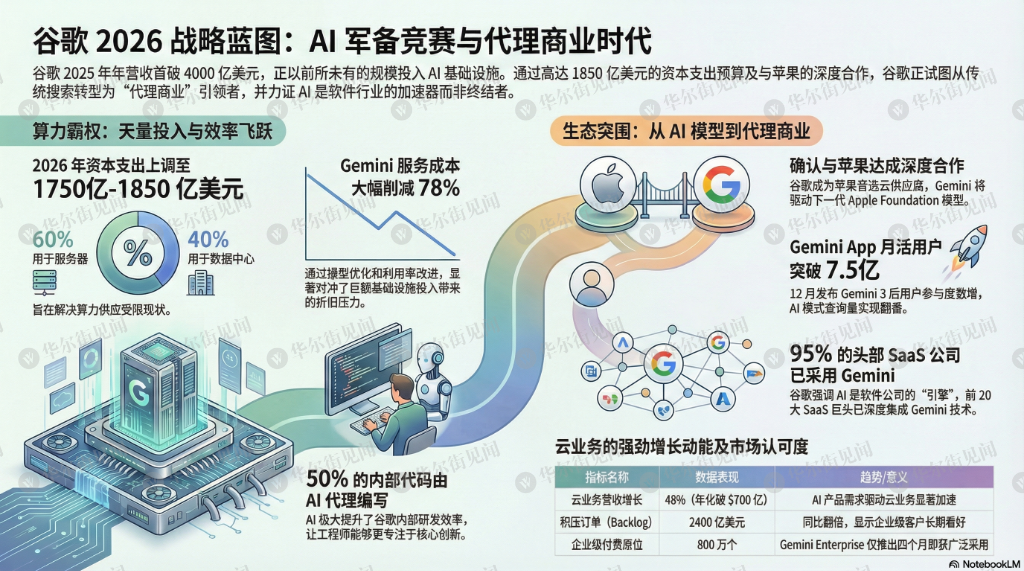
- Alphabet doubles 2026 spending to $175-185B for AI infrastructure; Google Cloud revenue hits $17.66B; sellers face potential pricing changes and enhanced platform capabilities by Q2 2026














Overview
Alphabet's massive $175-185 billion capital expenditure commitment for 2026—more than double its 2025 spending—signals a fundamental shift in how AI infrastructure will power e-commerce platforms that sellers depend on daily. Reported on February 5, 2026, this investment targets Google DeepMind's AI compute capacity and data-center expansion, with the company achieving $113.83 billion in Q4 revenue (beating $111.43B estimates) and Google Cloud generating $17.66 billion versus forecasted $16.18 billion. For cross-border e-commerce sellers, this capex surge creates both immediate opportunities and strategic risks across three critical operational areas.
First, Google Shopping and Search Algorithm Improvements Will Accelerate: Barclays analysts highlighted that Cloud's exceptional growth metrics—revenue, backlog, API tokens, and enterprise Gemini adoption—justify the capex increase through DeepMind's model progress and accelerating Search performance. This translates directly to sellers: enhanced AI-powered product recommendations, improved search relevance, and more sophisticated ad targeting will become available throughout 2026. Sellers using Google Shopping and Google Ads can expect better product visibility and conversion optimization, but only if they adapt their product feeds and bidding strategies to leverage these new AI capabilities. The competitive advantage window for early adopters is 3-6 months before the features become standard.
Second, Google Cloud Pricing and Service Structure Changes Are Likely: The massive capex commitment signals potential future changes to Google's service offerings, pricing structures, and competitive positioning in cloud services. Sellers currently using Google Cloud for inventory management, analytics, and business operations should monitor pricing announcements closely. Historical precedent suggests that after major infrastructure investments, cloud providers typically introduce tiered pricing models or premium AI-powered features (predictive analytics, automated inventory optimization) that could increase monthly costs by 15-25% for power users. The Deutsche Bank assessment that the capex plan carries "uncertainty about its long-term value given the current state of technological flux" suggests Google may experiment with pricing models throughout 2026.
Third, Competitive Dynamics Will Intensify: Google's financial advantage over competitors like OpenAI (which must raise external funding) positions Google to dominate Western AI markets. This means Amazon and Microsoft will likely accelerate their own AI infrastructure investments, creating a competitive arms race that benefits sellers through improved platform features but also increases pressure on margins. Sellers should expect Amazon to enhance its AI-powered advertising tools and Shopify to integrate more sophisticated AI features—all driven by this broader infrastructure competition. The time-to-market advantage for sellers who adopt these new AI tools first could represent 20-30% higher conversion rates before competitors catch up.
Questions 7
How does Google's AI infrastructure advantage compare to Amazon and Microsoft for e-commerce sellers?
Google's $175-185B capex commitment provides a significant competitive advantage over OpenAI and other AI startups, but Amazon and Microsoft are likely to accelerate their own infrastructure investments in response. This competitive arms race benefits sellers through improved platform features across all major marketplaces. Google's advantage lies in its existing advertising ecosystem (Google Ads, Google Shopping) and search dominance, while Amazon excels in marketplace-specific AI (Buy Box algorithms, recommendation engines). Sellers should diversify their presence across multiple platforms and adopt AI tools from each ecosystem—Google Ads for search traffic, Amazon Advertising for marketplace visibility, and Shopify AI for independent store optimization.
What immediate actions should sellers take to capitalize on Google's enhanced AI capabilities in 2026?
Sellers should take three immediate actions: (1) Audit and optimize your Google Merchant Center product feeds by adding detailed attributes, high-quality images, and accurate pricing—this is critical for AI-powered ranking algorithms; (2) Implement Google's AI-powered bidding strategies (Target CPA, Target ROAS) in Google Ads campaigns to leverage improved conversion prediction models; (3) Monitor Google Cloud announcements for new AI features and evaluate whether premium services (predictive analytics, automated inventory optimization) provide ROI for your business. Set a deadline of March 31, 2026 to complete feed optimization and bidding strategy updates, as new AI features will likely roll out in Q2 2026.