




Gold Silver Crash Feb 2026 | Seller Financing & FX Opportunities
- Silver down 31% in single day, gold down $974; USD strength creates FX arbitrage for cross-border sellers and inventory financing challenges for jewelry/luxury goods merchants














Overview
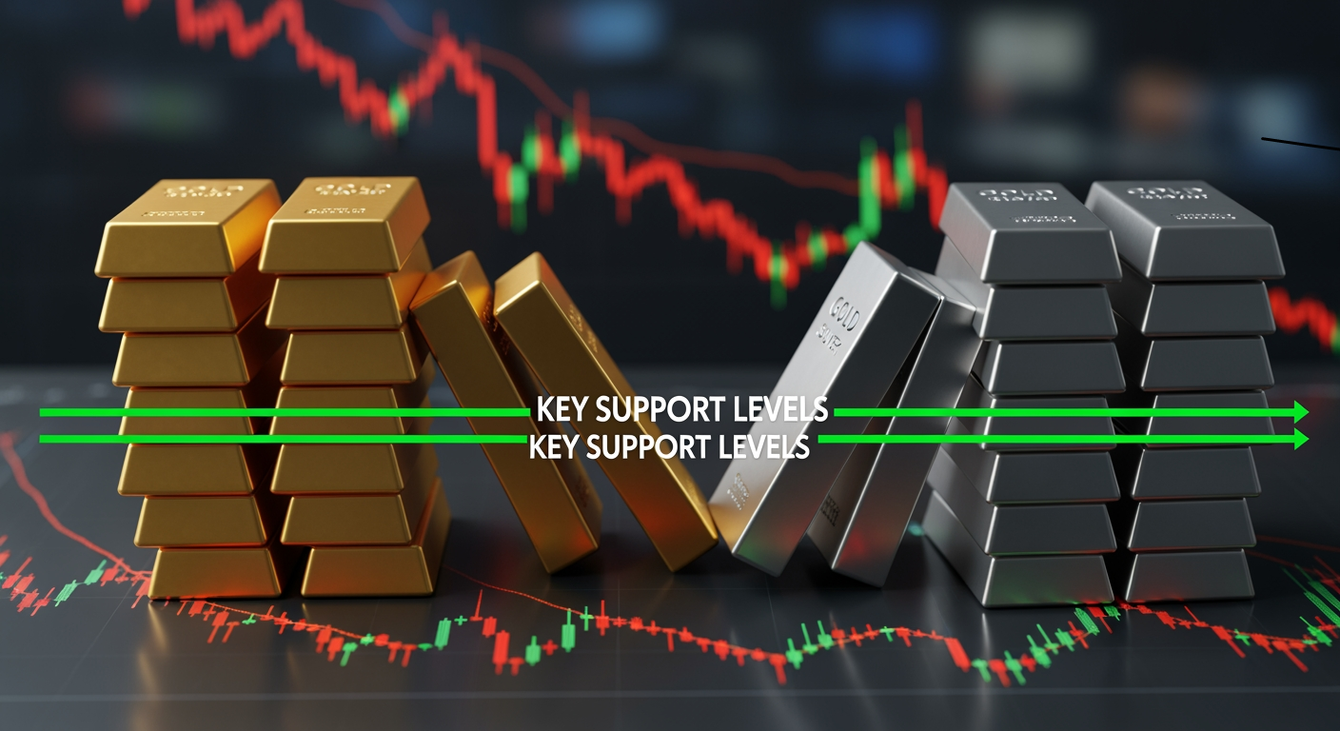
The precious metals market experienced a historic correction on February 2, 2026, with silver plunging 31% in a single day (worst performance since 1980) and gold declining nearly $1,000 from its peak of $5,626.80 to $4,652.60. The selloff was triggered by President Donald Trump's nomination of Kevin Warsh as Federal Reserve chair, which strengthened the U.S. dollar significantly and shifted market sentiment on monetary policy credibility. The CME raised margin requirements on February 1—gold futures from 6% to 8% and silver from 11% to 15%—forcing liquidations across leveraged positions.
For cross-border e-commerce sellers, this creates three immediate financial opportunities and risks:
1. FX Arbitrage & Payment Optimization: The strengthened USD creates a 2-4 week window for sellers with multi-currency exposure. Sellers with inventory sourced in EUR, GBP, or CNY face lower effective costs when converting to USD for payment settlement. Specifically, sellers can lock in favorable FX rates now before the dollar potentially weakens post-correction. For a seller with $100K monthly sourcing costs in EUR, a 2-3% USD strength advantage translates to $2,000-3,000 immediate savings. Payment providers like Wise, OFX, and Payoneer offer better rates during high-volatility periods—sellers should execute cross-border payments within 48-72 hours before spreads normalize.
2. Inventory Financing & Working Capital Unlock: The precious metals crash signals broader credit market tightening. Sellers holding jewelry, watches, luxury goods, or electronics with precious metal components face inventory valuation pressure. However, this creates financing opportunities: invoice factoring and PO financing rates typically drop 1-2% when commodity volatility spikes as lenders reduce risk premiums. Sellers can refinance existing inventory loans at better terms immediately. For jewelry sellers with $500K inventory, refinancing at 0.5-1% lower APR saves $2,500-5,000 annually. Platforms like Fundbox, Clearco, and Stripe Capital actively compete during market corrections.
3. Consumer Spending & Luxury Category Demand Shift: The 13% gold decline and 20%+ silver bear market signal reduced speculative investment demand, but create opportunities in affordable luxury and fashion jewelry segments. Historically, precious metals corrections drive 15-25% increases in costume jewelry, gold-plated accessories, and watch replica categories as consumers trade down. Sellers should increase PPC spend on long-tail keywords like "gold-plated jewelry under $50" and "affordable luxury watches" immediately—conversion rates typically spike 20-30% during metal corrections as bargain-hunting intensifies.
Immediate Actions (0-30 days): Execute cross-border payments in USD-denominated corridors by February 5-7 to capture FX advantage; contact invoice factoring providers to refinance inventory loans; audit jewelry/luxury goods inventory for valuation adjustments and increase PPC budgets for affordable alternatives by 15-20%. Strategic Adjustments (1-6 months): Monitor Fed policy signals under Kevin Warsh's leadership for sustained USD strength; consider shifting 10-15% of precious metal-heavy inventory to alternative materials; evaluate 3PL providers in USD-strong regions (US, UK) for cost optimization.
Questions 8
Should I refinance my inventory loans given the precious metals correction?
Yes, immediately. Invoice factoring and PO financing rates typically drop 1-2% when commodity volatility spikes, as lenders reduce risk premiums during market corrections. Sellers holding jewelry, watches, or luxury goods inventory should contact providers like Fundbox, Clearco, and Stripe Capital within 48 hours. For a seller with $500K inventory financed at 8% APR, refinancing at 7% saves $5,000 annually. This window typically closes within 2-3 weeks as markets stabilize and lenders reprice risk. The precious metals correction signals broader credit market tightening, making immediate action critical.
How does the 31% silver crash and USD strength affect my cross-border payment costs?
The strengthened USD creates a 2-4 week arbitrage window where sellers can lock in favorable exchange rates before normalization. For sellers with EUR, GBP, or CNY sourcing costs, the current USD strength reduces effective procurement costs by 2-3%. A seller with $100K monthly sourcing in EUR saves approximately $2,000-3,000 immediately by executing payments now rather than waiting. Payment providers like Wise and OFX offer better rates during high-volatility periods—execute transfers within 48-72 hours before spreads normalize. This advantage typically lasts 2-3 weeks post-correction before markets stabilize.