





Bitcoin Volatility & Crypto Payment Risk | Cross-Border Seller Treasury Strategy
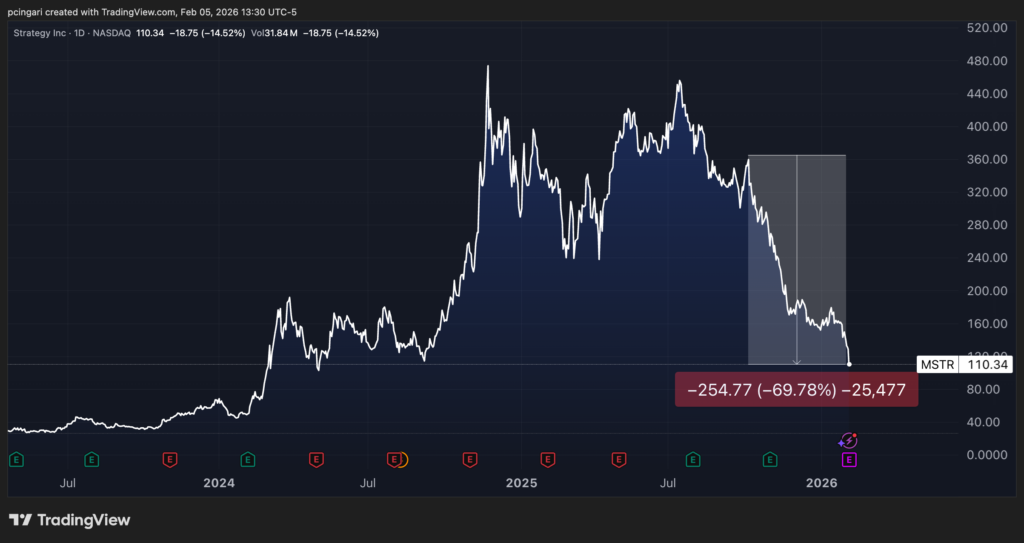
- Strategy's $12.6B loss signals 72% market correction; sellers holding crypto reserves face 15-25% valuation pressure




























Overview
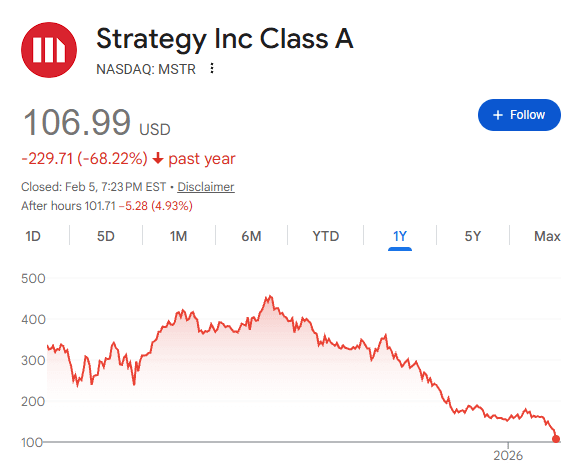
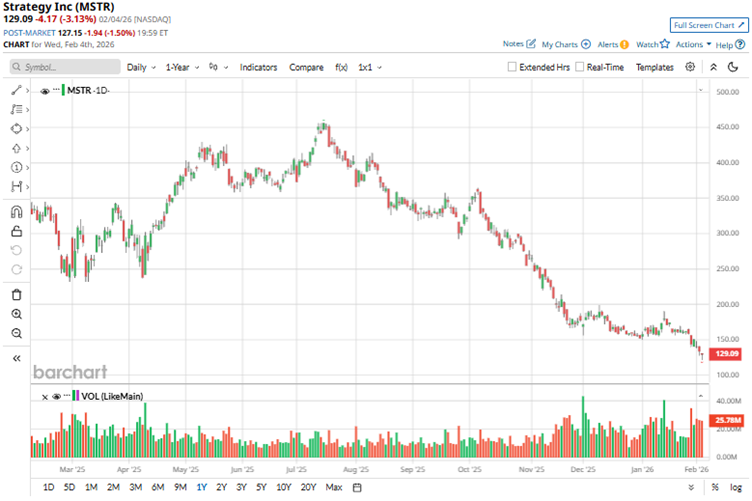
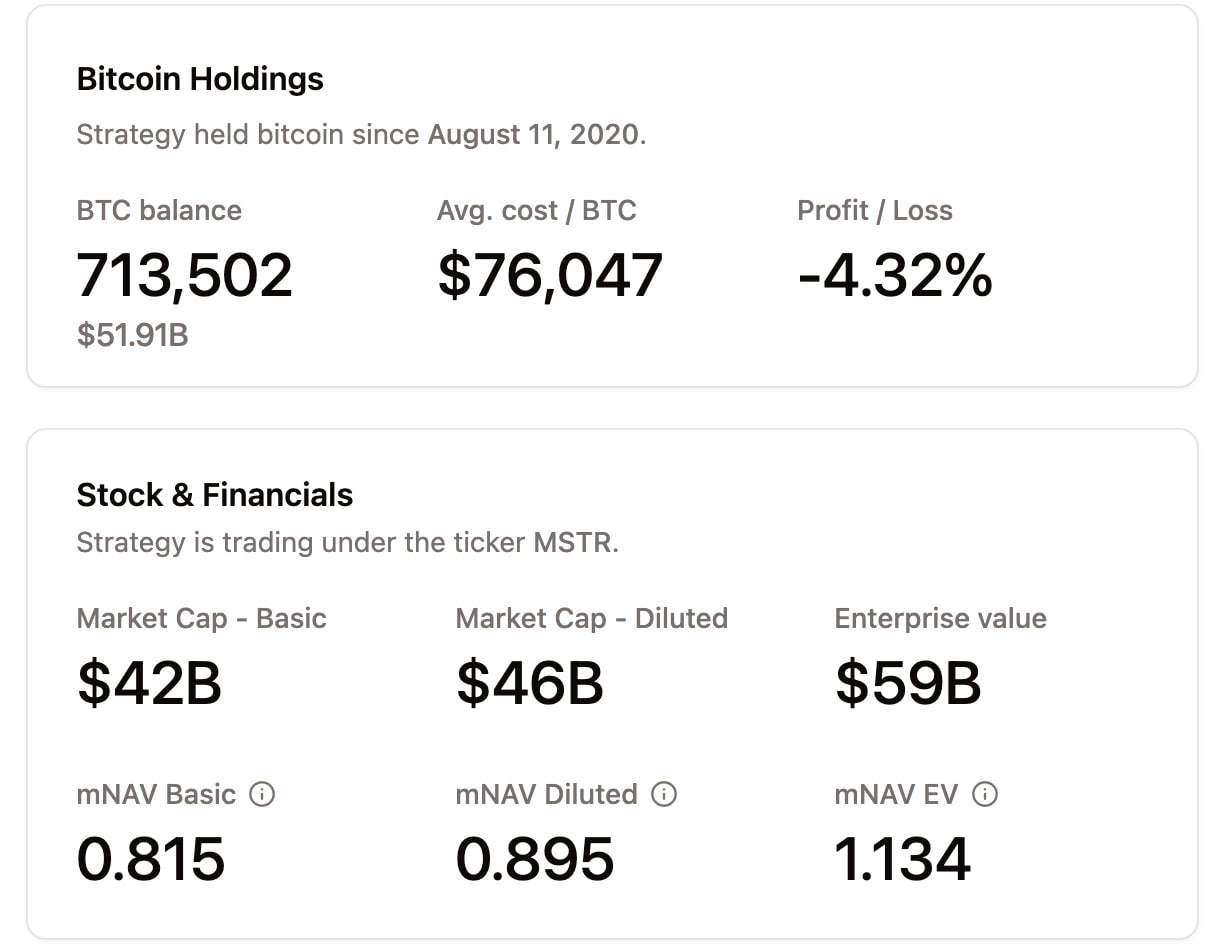
Cryptocurrency market instability is creating immediate financial risks for cross-border e-commerce sellers considering or currently using crypto payment solutions. Strategy (formerly MicroStrategy), which holds the world's largest corporate Bitcoin reserve, reported a $12.6 billion quarterly loss in Q4 2025 as Bitcoin plunged from $64,833 (down 9% in 24 hours) to below $65,000, marking the first time since 2023 that the company's holdings fell below cumulative cost basis. CEO Phong Le stated the company's balance sheet remains secure only if Bitcoin stays above $8,000 for 5-6 years—a 90% decline threshold. This $12.6B loss demonstrates the extreme valuation pressure concentrated cryptocurrency exposure creates during market corrections.
For cross-border sellers, this event signals three critical financial risks: First, payment processing volatility: Sellers accepting Bitcoin or stablecoins through payment gateways (Coinbase Commerce, BitPay, Stripe Crypto) face similar mark-to-market losses if they hold reserves rather than immediately converting to fiat. A seller holding $50,000 in Bitcoin reserves experienced a $4,500 loss in the 24-hour window reported. Second, financing access constraints: The broader tech sector decline (Nasdaq -1.94%, S&P 500 -1.72%) and Strategy's 72% stock decline over six months signals reduced venture capital availability for fintech platforms offering crypto payment solutions, potentially limiting new financing products for sellers. Third, treasury management complexity: Sellers with international operations holding crypto for cross-border payments face balance sheet volatility similar to Strategy's situation—a $100,000 crypto reserve could swing $15,000-25,000 in value during market corrections.
Strategic implications for seller payment optimization: The news reveals that concentrated cryptocurrency holdings create unhedged FX risk worse than traditional currency exposure. A seller holding 10 BTC ($640,000 at $64,000) faces potential $576,000 loss if Bitcoin reaches $8,000—equivalent to 90% margin compression. This contrasts sharply with traditional cross-border payment methods: wire transfers (2-3% fees, stable), ACH (0.5-1% fees, stable), and multi-currency accounts (1-2% FX spreads, predictable). Strategy's situation demonstrates why diversified payment strategies outperform concentrated crypto exposure. Sellers should immediately audit cryptocurrency holdings and consider converting to stablecoin-backed payment solutions (USDC, USDT) which maintain 1:1 fiat parity, eliminating the valuation pressure Strategy experienced. The company's announcement of a Bitcoin Security program addressing quantum-resistant protocols (10+ years away) suggests long-term crypto infrastructure investment, but near-term volatility remains extreme.
Questions 7
Should cross-border sellers accept Bitcoin payments given current market volatility?
No—not without immediate conversion to fiat or stablecoins. Strategy's $12.6B loss demonstrates that holding Bitcoin reserves creates unhedged 90% downside risk. Sellers accepting Bitcoin should use payment processors (Coinbase Commerce, BitPay) that convert to USD/EUR within 24 hours, eliminating valuation pressure. The cost: 1-2% processing fees vs. 15-25% potential loss from holding crypto reserves. For sellers with $100K+ monthly cross-border volume, immediate conversion saves $1,500-2,500 monthly vs. concentrated holdings.
When should sellers convert crypto holdings to stablecoins or fiat?
Immediately, if holding more than 30 days of operating expenses. Strategy's situation shows that even 5-6 year time horizons don't eliminate 90% downside risk. Sellers should maintain 30-60 days operating cash in fiat (USD, EUR, GBP) in multi-currency accounts, use stablecoins (USDC) for 60-90 day buffers, and avoid Bitcoin/Ethereum for treasury. Conversion costs: 1-2% via Coinbase/Kraken, 0.5-1% via Wise for fiat. A $50K conversion costs $250-500 but eliminates $5,000-15,000 potential loss. Deadline: Convert by end of Q1 2026 before further volatility.