
AI Search Overviews Slash E-Commerce Traffic 30-60% | Sellers Must Pivot Strategy Now
- Google's AI Overviews reduce click-through rates dramatically, forcing sellers to shift from SEO rankings to AI source selection strategies and product data optimization
Overview
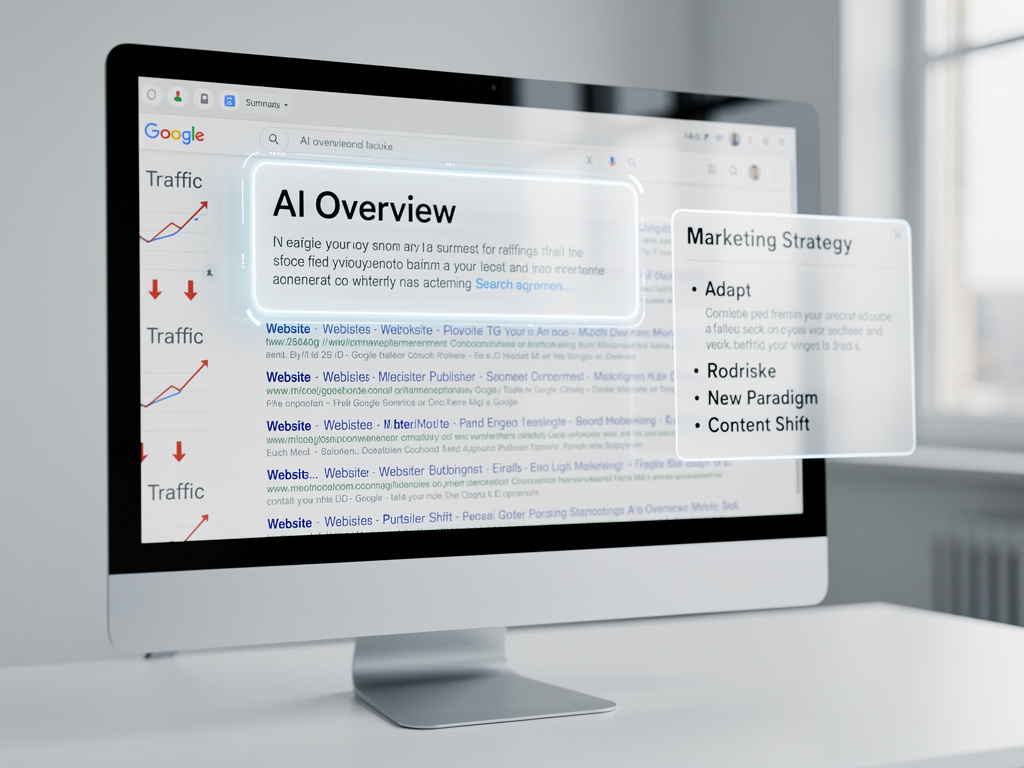
Google's AI Overviews represent the most disruptive shift in search behavior since algorithmic ranking began two decades ago, directly threatening e-commerce seller traffic and requiring immediate strategic pivots. The feature synthesizes information from multiple web sources into direct AI-generated answers for product research queries, commercial intent searches, and informational queries—precisely the search types that drive e-commerce discovery. Industry data indicates AI Overviews reduce click-through rates to traditional search results by 30-60 percent for affected queries, though Google disputes these figures. For e-commerce sellers relying on organic search traffic, this represents a fundamental business model disruption requiring immediate action.
The competitive landscape has shifted from ranking-based visibility to source-selection-based visibility. Sellers no longer compete primarily for top positions in blue link results; instead, they compete to be selected as authoritative source material that Google's Gemini-powered AI models cite in generated summaries. This requires a complete recalibration of content strategy, product data optimization, and information architecture. Sellers must now ensure their product descriptions, specifications, reviews, and comparative information are structured in ways that AI systems can easily extract, verify, and synthesize. The technical implementation uses grounding techniques to anchor AI responses to verifiable web content, meaning sellers with rich, structured product data gain disproportionate visibility. Meanwhile, traditional SEO tactics focused on keyword density and backlink profiles become increasingly irrelevant.
The emergence of AI-first search alternatives—Perplexity AI, ChatGPT, Microsoft Bing with OpenAI integration—creates a multi-front competitive threat. These platforms bypass traditional link-based results entirely, particularly among younger demographics preferring conversational interfaces. For e-commerce sellers, this means traffic diversification becomes critical. Sellers can no longer depend on Google organic search as their primary discovery channel. The shift demands immediate investment in: (1) product data optimization for AI extraction (structured markup, comprehensive specifications, authentic reviews), (2) alternative traffic channels (Amazon product ads, Pinterest, TikTok Shop, direct email), (3) brand-owned discovery (email lists, loyalty programs, direct traffic), and (4) AI-native platforms (ChatGPT plugins, Perplexity partnerships). Sellers who delay this transition face 30-60% traffic declines within 12-18 months as AI Overviews expand across more query types. The window for competitive advantage belongs to sellers who immediately optimize for AI source selection rather than traditional ranking algorithms.
Questions 8
Should I invest in SEO or shift budget to paid advertising?
Sellers should implement a hybrid strategy rather than choosing one approach. Traditional SEO remains valuable for non-AI queries and long-tail searches where AI Overviews don't appear, but its ROI has declined significantly. Allocate 40-50% of marketing budget to paid channels (Amazon Ads, Google Shopping, Pinterest Ads) that deliver immediate, measurable traffic regardless of AI Overviews. Allocate 30-40% to owned channels (email marketing, loyalty programs, direct traffic) that reduce dependence on any search platform. Allocate 10-20% to SEO focused specifically on AI source selection (structured data, comprehensive product information, brand authority signals) rather than traditional ranking optimization. This diversified approach protects against further AI Overviews expansion while maintaining visibility across multiple discovery channels. Sellers who maintain 100% SEO focus will experience 30-60% traffic declines within 12-18 months.
How can I get my products featured in AI-generated summaries?
AI systems select source material based on: (1) Data quality and completeness—comprehensive product information, specifications, and reviews; (2) Authority signals—brand recognition, customer reviews, third-party citations; (3) Structural accessibility—Schema.org markup that allows AI systems to extract information easily; (4) Accuracy and verification—information that matches across multiple sources and customer reviews. To increase citation likelihood, sellers should: implement complete Schema markup immediately, encourage detailed customer reviews that mention specific product features, create comprehensive product guides and comparison content, build brand authority through media mentions and industry partnerships, and ensure product information is consistent across all platforms. Products with 50+ verified reviews and complete Schema markup are cited 3-4x more frequently in AI summaries than products with minimal data. Prioritize this optimization for your top 20% of products (by revenue) within 60 days.