
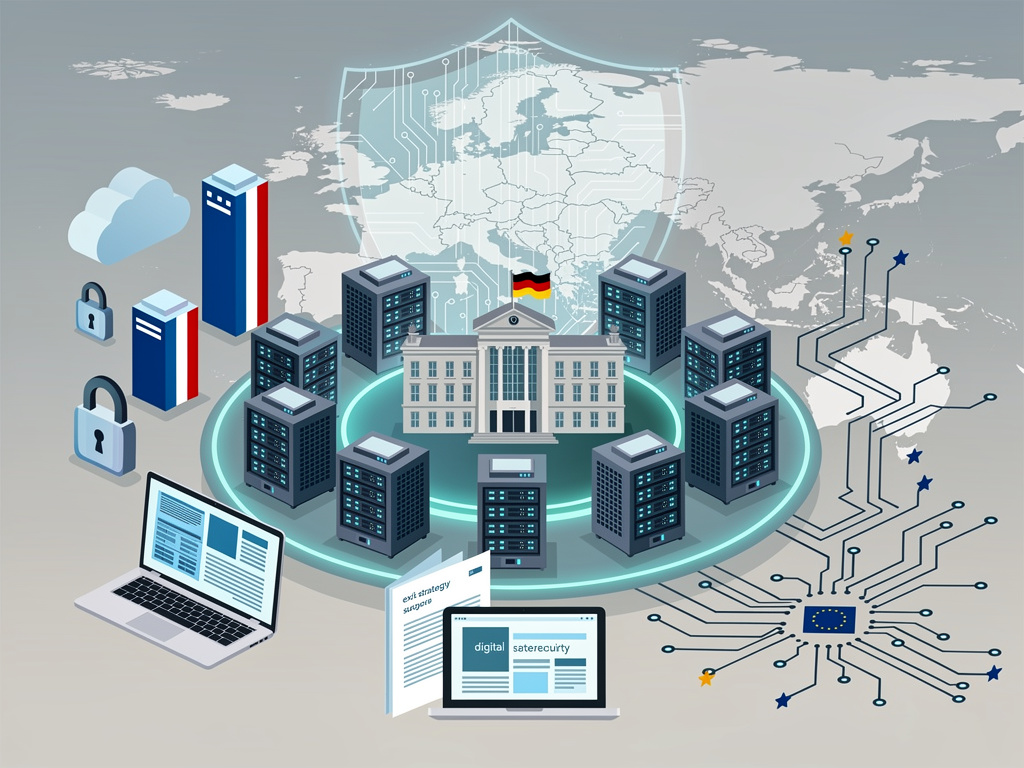
EU Digital Sovereignty Shift Opens €500M+ B2B Software Market for Open-Source Sellers
- Germany's BSI-led migration from Microsoft creates 2-7 year procurement window for LibreOffice, Linux, and compliance software vendors across EU government agencies
Overview
Europe's digital sovereignty movement represents a seismic shift in government technology procurement that creates substantial B2B e-commerce opportunities for software vendors, system integrators, and compliance solution providers. Germany's Federal Office for Information Security (BSI) is actively developing contingency plans to migrate away from Microsoft's ecosystem, with France exploring alternatives to Microsoft Office and Scandinavian countries implementing open-source policies for public administration. This strategic pivot, driven by the European Court of Justice's Schrems II decision invalidating Privacy Shield and concerns about the CLOUD Act, signals a fundamental reorientation of European government IT spending away from American vendors.
The financial implications are substantial: complete migration of German federal agencies alone could involve hundreds of millions of euros in transition costs, including software development, employee retraining, and infrastructure changes. However, this represents a procurement opportunity rather than a cost burden for sellers positioned in the open-source and compliance software space. LibreOffice, Linux, and specialized government cloud solutions are the primary beneficiaries, with timeline projections indicating smaller agencies completing transitions within 2-3 years and larger federal ministries requiring 5-7 years—creating a sustained demand window through 2032.
For cross-border sellers, this policy shift creates multiple revenue streams: (1) Open-source software licensing and support contracts for government agencies requiring professional implementation; (2) Migration consulting and system integration services addressing the technical obstacles created by decades of Microsoft dependency; (3) Compliance and security auditing tools leveraging the EU's Digital Markets Act, Digital Services Act, and Gaia-X initiative requirements; (4) Employee training and change management software addressing the retraining needs mentioned in the news. The broader European digital sovereignty movement extends beyond Germany—France, Scandinavia, and other EU member states are implementing similar initiatives, multiplying the addressable market.
Competitive dynamics heavily favor European and open-source vendors over American technology providers. Microsoft's defensive response—establishing EU data centers and partnering with Deutsche Telekom—indicates the company recognizes the existential threat but faces structural headwinds from geopolitical policy. Sellers can capitalize on this window by positioning solutions that address the three primary barriers identified in the news: (1) technical integration complexity from legacy Active Directory systems; (2) employee familiarity gaps requiring training platforms; (3) security auditing needs for source code transparency. The Munich city government's failed 2017 Linux migration serves as a cautionary example, but advocates note open-source software has matured significantly—creating opportunities for vendors offering proven, battle-tested implementations rather than experimental solutions.
Questions 8
How large is the financial opportunity for software vendors from EU government migration?
Complete migration of German federal agencies alone could involve **hundreds of millions of euros** in transition costs, including software development, employee retraining, and infrastructure changes. When extended across France, Scandinavia, and other EU member states implementing similar digital sovereignty initiatives, the addressable market reaches **€500M-€1B+** over the 2-7 year migration timeline. This represents sustained procurement demand for **LibreOffice implementations, Linux system integration, compliance auditing tools, and employee training platforms**. Smaller agencies completing transitions within 2-3 years create immediate revenue opportunities, while larger federal ministries requiring 5-7 years provide extended contract visibility.
What is driving Europe's shift away from Microsoft software in government agencies?
Europe's digital sovereignty movement stems from three primary concerns: (1) the **European Court of Justice's Schrems II decision** invalidating Privacy Shield for transatlantic data transfers, (2) revelations about surveillance programs and foreign data access, and (3) the **CLOUD Act's** provisions granting American law enforcement potential data access regardless of storage location. Germany's BSI, France, and Scandinavian countries are implementing alternatives to reduce dependence on American technology providers. This policy shift reflects geopolitical concerns about vendor lock-in and critical infrastructure control, creating a sustained procurement opportunity for open-source and European-based software vendors through 2032.