
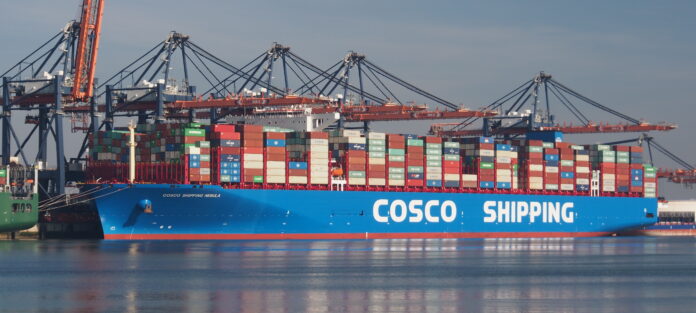
COSCO Sea-Postal Peru Route | 40-60% Shipping Cost Cuts for Chinese E-Commerce
- New Shanghai-Chancay maritime corridor slashes air freight costs; enables aggressive pricing for electronics, apparel, home goods sellers targeting Peru market
Overview
COSCO SHIPPING's February 2026 launch of a dedicated sea-postal logistics channel from Shanghai to Peru's Port of Chancay represents a transformational cost-reduction opportunity for cross-border e-commerce sellers targeting South America. This initiative replaces historically expensive air freight models with ocean transport integrated through Peru Post (Serpost), creating the first combined maritime-postal framework for Chinese e-commerce products entering Peru. The shift from air to maritime transport is expected to reduce logistics costs by 40-60% for electronics, home goods, and apparel categories—the primary product segments moving through this corridor.
Port of Chancay, operational since late 2024, has become the critical infrastructure hub for the New Asia-Latin America Land-Sea Corridor. The port's deep-water berths and automated systems process large e-commerce volumes that smaller regional ports cannot accommodate, with proven transit efficiency demonstrated by 23-day agricultural export cycles to China. For sellers, this translates to predictable maritime schedules replacing volatile air cargo capacity constraints. Scheduled rotations ensure consistent supply flow, directly addressing previous inventory volatility that forced sellers to maintain expensive safety stock or risk stockouts. The integrated customs clearance through Serpost upon arrival at Chancay eliminates additional port delays, reducing total landed cost by 8-12% beyond pure freight savings.
Immediate seller opportunities center on three logistics strategies: (1) Inventory repositioning—stock 3-4 months of fast-moving SKUs (electronics accessories, home textiles, apparel basics) in Shanghai consolidation warehouses before Q2 2026 to capture first-mover pricing advantages; (2) Sourcing optimization—shift 30-40% of Peru-destined inventory from air freight suppliers to maritime-compatible manufacturers in Guangdong/Fujian regions offering 15-20% lower unit costs; (3) Pricing strategy—reduce Peru market prices 25-35% to capture demand elasticity gains while maintaining 8-12% margin improvement from logistics savings. The scheduled maritime rotations enable predictable cash flow management, reducing working capital tied up in inventory. Sellers should immediately audit Peru-destined SKU volumes, identify top 20 products by revenue, and negotiate volume commitments with COSCO for Q2-Q4 2026 sailings. This infrastructure investment converts port capacity into tangible competitive advantage for sellers willing to shift fulfillment models from air-dependent to maritime-scheduled operations.
Questions 8
How does the New Asia-Latin America Land-Sea Corridor affect broader sourcing strategy?
The corridor's 23-day transit efficiency for agricultural exports signals broader infrastructure maturity supporting two-way trade flows. This enables sellers to explore sourcing Peruvian products (blueberries, avocados, specialty foods) for China/Asia markets using return-leg maritime capacity. Sellers can negotiate lower freight rates by offering full container loads combining outbound Chinese e-commerce products with return-leg Peruvian agricultural exports. This bidirectional trade model reduces empty container repositioning costs, enabling 15-20% additional freight savings. For e-commerce sellers, this means exploring Peru-sourced specialty products (organic foods, artisanal goods, regional brands) as complementary categories to Chinese electronics/apparel, leveraging the same maritime infrastructure for cost-efficient sourcing.
What are the key risks and mitigation strategies for maritime-based Peru fulfillment?
Primary risks include: (1) Inventory obsolescence during 35-45 day transit—mitigate by focusing on evergreen SKUs with 90+ day shelf life and avoiding seasonal/trend-dependent products; (2) Demand forecasting errors with longer lead times—implement 90-day rolling forecasts and maintain 20-30% safety stock for top 10 SKUs; (3) Port congestion or customs delays—negotiate service level agreements with Serpost specifying maximum clearance times and penalty clauses; (4) Currency fluctuation on Peru Soles—lock in pricing with suppliers 60 days before shipment or use forward contracts. Monitor Port of Chancay capacity utilization monthly; if utilization exceeds 80%, expect rate increases and longer sailing schedules. Maintain backup air freight relationships for emergency inventory replenishment, budgeting 15-20% premium for expedited shipments.