


The Great AI Reckoning: When Technological Promise Meets Economic Reality
- Navigating the Emerging AI Market Correction for E-Commerce Innovators





Overview
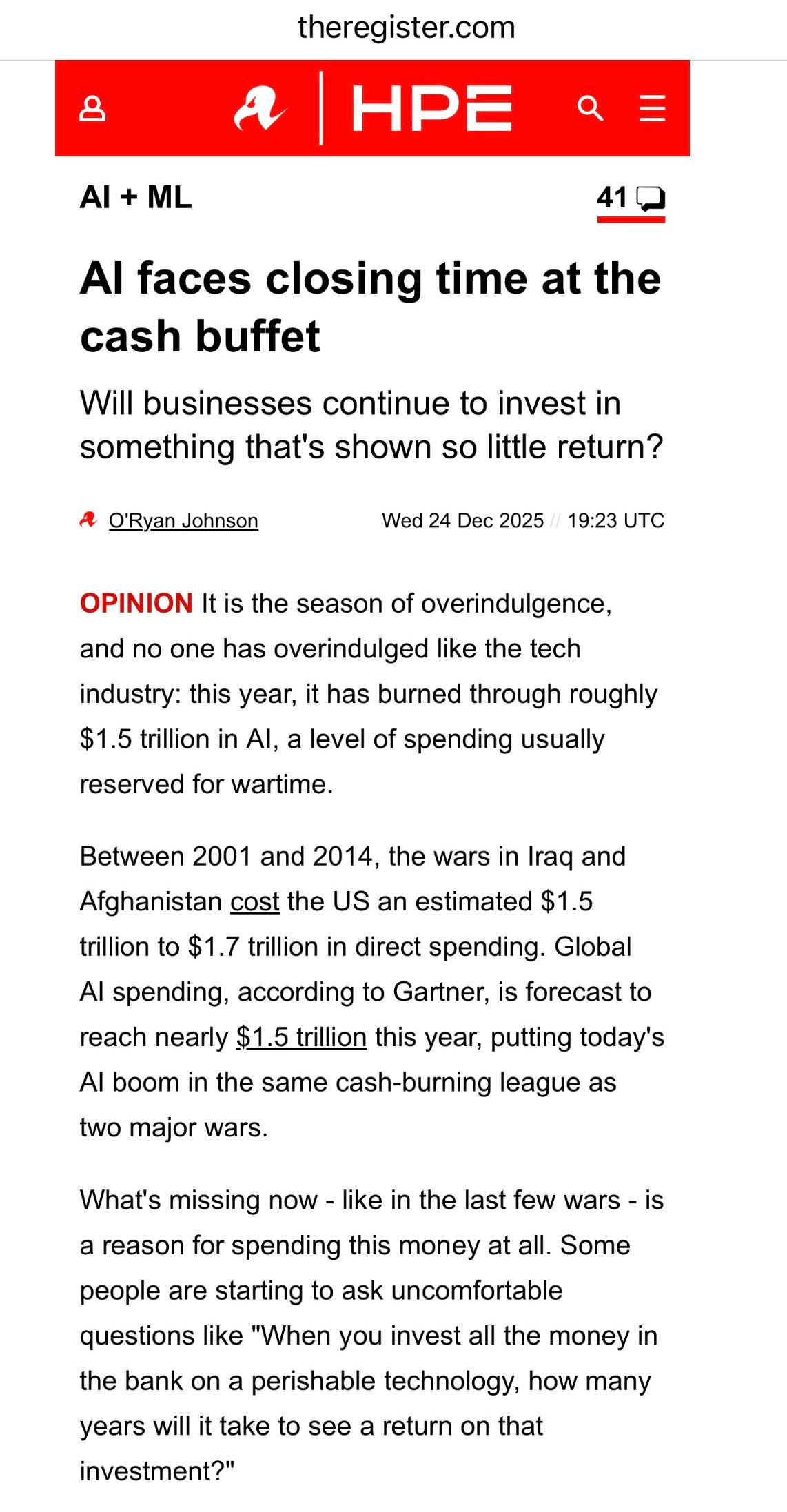
The artificial intelligence landscape is experiencing a profound moment of critical reassessment, where technological capabilities are colliding head-on with economic sustainability. As of 2025, the AI ecosystem finds itself at a critical inflection point, characterized by a growing disconnect between remarkable technological potential and fundamental profitability challenges.
Massive investments totaling approximately $1 trillion have fueled an AI bubble that is now showing significant structural vulnerabilities. Prominent researchers like Gary Marcus are highlighting inherent design problems in Large Language Models (LLMs) that extend beyond temporary technical glitches. These are not mere implementation challenges, but fundamental architectural constraints that restrict genuine world modeling and economic scalability.
For cross-border e-commerce sellers, this signals a critical transition. The AI integration strategy must pivot from broad, undefined technological adoption to laser-focused, measurable use cases. The era of speculative AI investment is giving way to a more pragmatic approach that demands concrete business outcomes. Sellers must now carefully evaluate AI investments through a lens of immediate operational efficiency and demonstrable return on investment.
The market implications are profound. We're witnessing a potential market recalibration that will likely include:
- Reduced speculative investments in generative AI applications
- Increased scrutiny of AI project feasibility
- A shift towards more robust, reliable AI models with genuine understanding
- Strategic scaling back of undefined AI-driven product development
The core challenge is not AI's technological potential, but its economic viability. E-commerce platforms and sellers must now navigate a landscape where innovation must be tightly coupled with practical implementation. The AI bubble is not bursting, but transforming—demanding a more mature, results-oriented approach to technological integration.
Questions 3
What should e-commerce sellers do in light of the AI market reassessment?
Sellers should shift from broad AI adoption to strategic, measurable use cases. Focus on specific AI applications that demonstrate immediate operational efficiency, carefully evaluate investment potential, and prioritize concrete business outcomes over speculative technology integration.
Why are experts suggesting the AI market might be facing a correction?
Experts like Gary Marcus point to fundamental limitations in current AI architectures, including $1 trillion in investments without corresponding economic returns. Large Language Models lack reliable world models, creating structural constraints that limit genuine commercial applications and profitability.