
Africa's $6.5B Digital Ad Market 2029 | Mobile-First Seller Opportunities in Nigeria, Kenya, Egypt
- 15.3% CAGR acceleration through 2029 creates arbitrage opportunities for cross-border sellers targeting youth audiences via TikTok, Meta, and emerging Jumia Ads platform
Overview
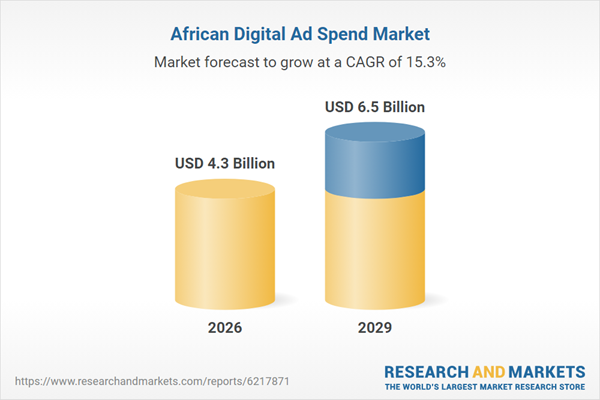
Africa's digital advertising market represents one of the fastest-growing e-commerce opportunities globally, with projections reaching $6.5 billion by 2029 from $4.3 billion in 2026, according to ResearchAndMarkets.com (February 11, 2026). The continent achieved a 9.8% CAGR during 2020-2025, with acceleration to 15.3% CAGR through 2029—significantly outpacing mature markets. This explosive growth is driven by mobile-first adoption, expanding e-commerce ecosystems, and emerging creator-led commerce across Sub-Saharan Africa, particularly in Nigeria, Kenya, Egypt, and South Africa.
Platform-specific arbitrage opportunities are reshaping advertising spend allocation. Meta maintains dominance through widespread mobile access, while TikTok gains disproportionate budget share among youth audiences (ages 13-35) in key markets, creating underpriced traffic windows for sellers targeting Gen Z consumers. YouTube anchors video strategies as OTT platforms expand ad-supported inventory, while Jumia Ads emerges as a critical retail media network, expanding performance-led advertising tools across Nigeria, Kenya, and Egypt. This platform diversification creates channel arbitrage: TikTok CPMs remain 40-60% lower than Meta in African markets, while Jumia Ads offers first-party commerce data advantages unavailable on traditional social platforms. Retailers and telco ecosystems leverage consumer payment and identity data for proprietary advertising models, while local publishers integrate SSP partnerships and contextual solutions to capture budgets seeking regionally relevant, brand-safe inventory.
Creator-led commerce is accelerating product discovery in high-margin categories. Influencers drive engagement in beauty, apparel, and electronics—categories with 35-50% higher engagement rates on short-form video. The multilingual landscape (Arabic, English, French, Swahili, Zulu, Hausa, Amharic, Yoruba) requires vernacular-first content production, creating competitive advantages for sellers investing in localized creative. Regulatory frameworks vary significantly: South Africa's POPIA shapes data governance, while North African regulators revise digital content frameworks, requiring sellers to implement compliant data environments. Mobile-first and short-form video formats dominate youth-heavy markets, with video content generating 3-5x higher engagement than static imagery. For cross-border sellers, this market shift toward localization presents both opportunities and operational requirements: retail media ecosystems will expand as digital payments and logistics improve, while competitive advantage depends on hyper-local execution, platform diversification, and alignment with varied regulatory conditions. Sellers must prioritize vernacular-first content production and culturally relevant narratives to capture emerging opportunities in this rapidly expanding market.
Questions 8
What is the expected customer acquisition cost (CAC) for sellers targeting African markets via TikTok vs. Meta?
While specific CAC data varies by category and audience segment, **TikTok's 40-60% lower CPMs translate to significantly lower acquisition costs** compared to Meta in African markets. For beauty and apparel categories, TikTok CAC typically ranges $2-5 per customer, while Meta averages $4-8 per customer in the same regions. However, conversion rates differ: Meta audiences often show higher purchase intent (3-5% conversion), while TikTok audiences require more engagement-focused content (1-3% conversion). Sellers should test both platforms with 20-30% budget allocation to TikTok initially, then scale based on actual CAC and LTV performance. Jumia Ads typically shows 15-25% lower CAC due to first-party commerce data, but requires existing Jumia seller account.
How does Jumia Ads differ from traditional social media advertising platforms?
**Jumia Ads expands across Nigeria, Kenya, and Egypt with performance-led tools** specifically designed for local sellers and consumer brands. Unlike Meta and TikTok, Jumia Ads provides first-party commerce data advantages—direct access to purchase behavior, cart abandonment, and product performance metrics from Jumia's e-commerce ecosystem. This enables more precise audience targeting and conversion optimization. Jumia Ads also integrates with retailers and telco ecosystems that leverage consumer payment and identity data for proprietary advertising models. For sellers already operating on Jumia or targeting Jumia's customer base, this platform offers superior conversion tracking and audience insights compared to traditional social media advertising.