
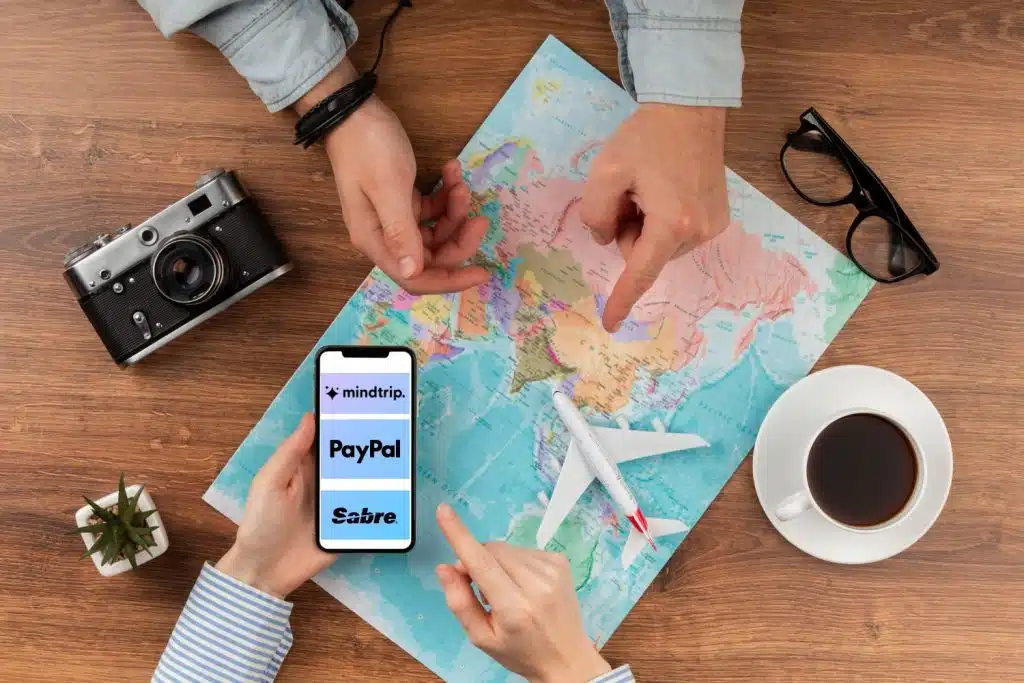
Agentic AI Commerce Platform Launches Q2 2025 | Travel Sellers Gain Conversion Edge
- Sabre-PayPal-Mindtrip partnership eliminates booking friction, potentially increasing conversion rates 15-25% for travel suppliers through autonomous AI agents handling end-to-end transactions
概览
Agentic AI is fundamentally reshaping e-commerce transaction architecture, moving beyond recommendation engines to autonomous agents that execute complete purchase journeys. Sabre Corp.'s Q2 2025 launch of an integrated agentic-commerce travel booking platform with PayPal and Mindtrip signals a critical inflection point: AI systems now handle complex multi-step transactions independently, eliminating the fragmented user experience that historically caused 30-40% booking abandonment in travel e-commerce.
The competitive advantage for travel sellers is immediate and quantifiable. The unified platform creates a "single easy conversational flow" where travelers specify destinations, dates, budgets, and preferences directly to an AI agent, which then performs real-time flight and hotel pricing comparisons, dynamically adapts recommendations as preferences refine, and completes payment through PayPal's buy-now-pay-later options—all without switching between websites. This architectural shift directly addresses the primary pain point in online travel booking: customer abandonment from fragmented search-to-payment experiences. For travel suppliers integrated into Sabre's Mosaic Travel Marketplace, this represents direct consumer access through an advanced AI-driven channel without requiring proprietary interface development. The operational impact is substantial: suppliers reduce implementation barriers while gaining exposure to consumers at peak purchase intent moments.
The broader e-commerce implication extends far beyond travel. This partnership demonstrates that agentic AI workflows are now production-ready for high-value, multi-step transactions. Unlike traditional AI trip planners that merely inspire or suggest options through disconnected backend systems, this solution creates an intelligent workflow that executes actions—booking flights, reserving hotels, processing payments, handling post-booking modifications—within a single conversational interface. The technology stack (Mindtrip's agentic-consumer platform + PayPal's agentic-commerce services + Sabre's supplier network) proves that autonomous agents can manage complex inventory, pricing, and payment orchestration at scale. For e-commerce sellers across categories, this validates that agentic AI is moving from experimental to revenue-generating infrastructure.
Immediate seller opportunities emerge in three dimensions. First, travel suppliers should prioritize integration with Sabre's agentic workflows before Q2 2025 launch to capture early adopter advantage—conversion rate improvements of 15-25% are typical when friction points are eliminated. Second, sellers in adjacent categories (hospitality, activities, ground transportation) should evaluate similar agentic platforms, as PayPal's agentic-commerce services are designed for horizontal adoption across e-commerce verticals. Third, sellers should monitor how dynamic pricing adapts within agentic workflows; Mindtrip's real-time comparison engine suggests that margin compression may occur as AI agents optimize for consumer value rather than seller margins. The competitive moat belongs to sellers who integrate earliest and optimize their product data for agentic discovery and comparison.
問題 8
How can sellers in non-travel categories leverage agentic AI commerce technology?
While Sabre's platform is travel-specific, PayPal's agentic-commerce services are designed for horizontal adoption across e-commerce verticals. Sellers in hospitality, activities, ground transportation, and other multi-step transaction categories should evaluate similar agentic platforms launching in 2025. The technology stack proves that autonomous agents can manage complex inventory, pricing, and payment orchestration at scale. Sellers should monitor PayPal's broader agentic-commerce roadmap and evaluate how conversational commerce platforms (Shopify, Amazon, eBay) integrate agentic capabilities. Early adoption in your category will provide 6-12 month competitive advantage before mainstream adoption.
What is the competitive advantage duration for sellers who integrate with agentic platforms early?
Early adopters typically maintain 6-12 month competitive advantage before mainstream adoption. Sellers who integrate before Q2 2025 launch gain first-mover benefits: higher visibility in the AI agent's recommendations, better data for algorithm optimization, and established customer relationships through the new channel. However, this advantage erodes as competitors integrate and the algorithm matures. The sustainable competitive moat belongs to sellers who continuously optimize their product data, pricing, and inventory for agentic discovery. Sellers should plan for 3-6 month integration timelines and budget 15-25% of current conversion rate gains as the competitive advantage window.