
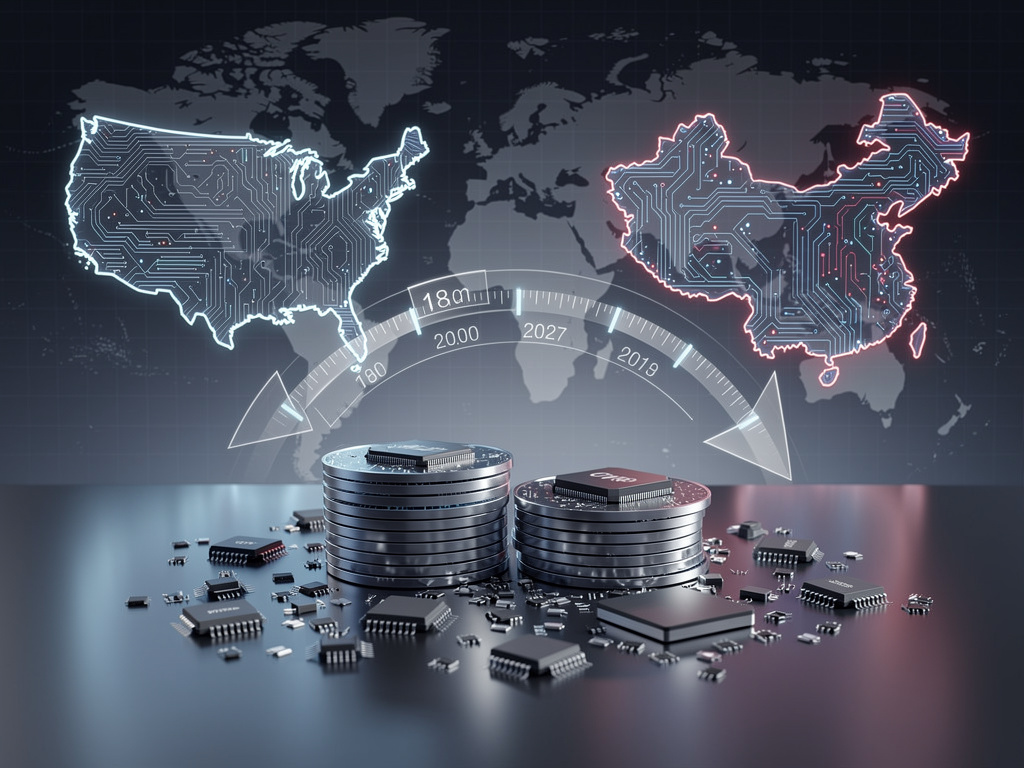
US Navigates Strategic Tech Decoupling with Calculated Semiconductor Policy Maneuver
- Gradual transformation strategy reveals nuanced approach to US-China technological competition
概览
The United States is executing a sophisticated policy recalibration in semiconductor trade relations, demonstrating a strategic approach to technological geopolitical tensions. By delaying tariffs on Chinese-made semiconductor chips until June 2027 and initially setting rates at zero, the U.S. Trade Representative has unveiled a nuanced decoupling strategy that balances economic disruption mitigation with long-term technological sovereignty objectives.
This policy move represents more than a simple tariff postponement; it's a calculated technological chess play. The zero-rate period provides tech companies, particularly Apple and other major manufacturers, an 18-month window to restructure global supply chains without immediate financial penalties. The underlying logic is profound: rather than implementing abrupt, potentially destabilizing trade barriers, the U.S. is creating a controlled environment for strategic realignment.
The broader geopolitical context reveals an ongoing technological decoupling between the U.S. and China. Mechanisms like the CHIPS Act demonstrate a systematic approach to encouraging domestic semiconductor production while providing breathing room for multinational corporations to adapt. This approach acknowledges the complex interdependencies in global technology manufacturing, recognizing that complete independence is challenging but gradual transformation is achievable.
For cross-border e-commerce sellers and technology companies, this policy signals a critical strategic inflection point. The extended timeline allows businesses to explore alternative manufacturing locations, develop more resilient sourcing strategies, and incrementally reduce dependence on Chinese production networks. It represents a policy-driven opportunity for companies to proactively redesign their global manufacturing footprints with minimal immediate economic disruption.
Ultimately, this semiconductor tariff delay is a masterclass in strategic policy implementation – using time, economic incentives, and measured pressure to reshape global technological ecosystems without causing immediate market shock.
問題 3
How will this policy impact technology manufacturers?
Manufacturers will have extended time to explore alternative production locations, redesign supply chains, and reduce dependence on Chinese manufacturing networks with minimal immediate economic consequences.
Why did the US delay semiconductor tariffs until 2027?
The delay allows tech companies an 18-month window to diversify supply chains without immediate financial penalties, demonstrating a strategic approach to technological decoupling that minimizes economic disruption while maintaining pressure on China's technological expansion.