
Urban Living Drives Global Kitchen Fixture Market Transformation
- Urbanization and Smart Home Trends Reshape Residential Design Opportunities for Sellers
概览
The global household kitchen sink market reveals a profound narrative of urban transformation and technological adaptation, with market dynamics signaling critical opportunities for e-commerce sellers and manufacturers. Urbanization stands as the primary catalyst, with global urban populations projected to reach 68% by 2050, driving fundamental shifts in residential design and consumer preferences.
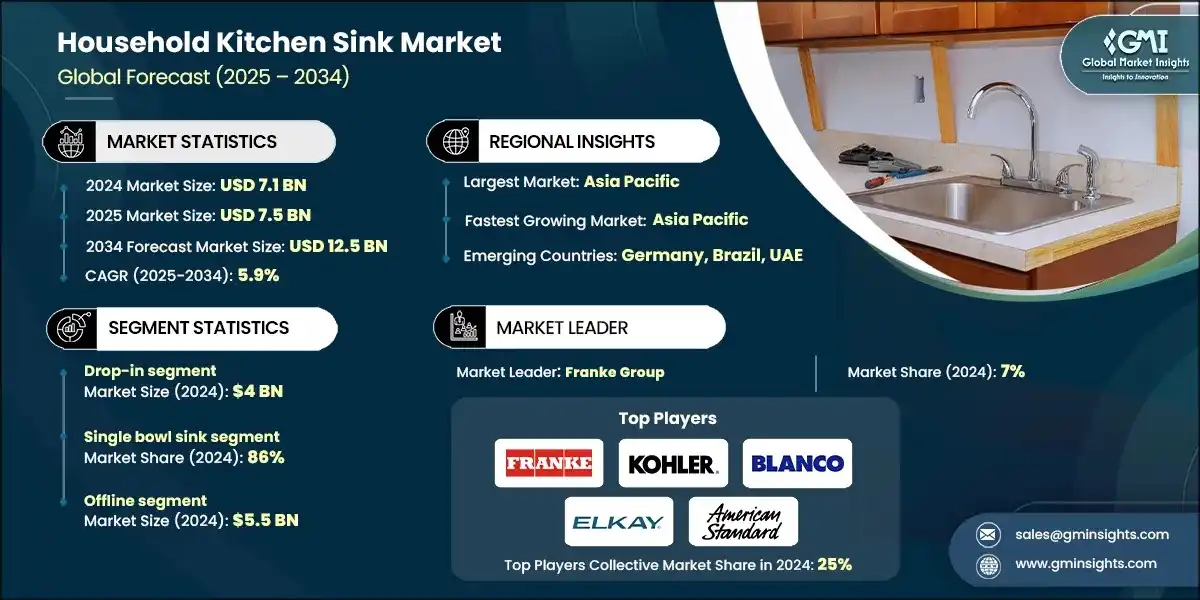
Market expansion is not just a numerical trend but a strategic landscape reshaping how we conceptualize living spaces. The kitchen sink market is projected to grow from USD 7.1 billion in 2024 to USD 12.5 billion by 2034, representing a robust 5.9% CAGR. This growth is particularly pronounced in the Asia-Pacific region, where rapid urbanization, rising disposable incomes, and increased residential construction create a perfect ecosystem for innovative home solutions.
The most compelling insight emerges from the intersection of technological innovation and spatial efficiency. Urban dwellers are increasingly demanding smart, sustainable kitchen solutions that maximize limited living spaces. Touchless faucets, water conservation features, and modular design are no longer luxury additions but essential considerations. E-commerce sellers who can develop compact, stylish, and functionally intelligent kitchen fixtures will capture significant market share.
Strategic positioning requires understanding that this market transformation extends beyond product design. It represents a holistic reimagining of domestic infrastructure, where every square inch matters and technology serves practical urban living needs. Manufacturers who partner with builders, emphasize affordability, and integrate cutting-edge features will secure long-term competitive advantages in this rapidly evolving landscape.
問題 3
How significant is the kitchen sink market's growth potential?
The market is projected to grow from USD 7.1 billion in 2024 to USD 12.5 billion by 2034, representing a substantial 5.9% CAGR. This indicates robust opportunities for sellers focusing on innovative, space-efficient kitchen solutions.
Which regions offer the most promising market opportunities?
The Asia-Pacific region leads market growth, driven by rapid urbanization, rising disposable incomes, and increased residential construction in countries like China and India. Sellers should prioritize developing products tailored to urban living spaces in these markets.