
Educational Games Market Explodes to $133B by 2035 | Seller Opportunity Guide
- 22.6% CAGR growth creates $115.7B new market opportunity; 410K+ institutions + 640M students drive demand for digital learning products, VR games, and gamified content platforms
概览
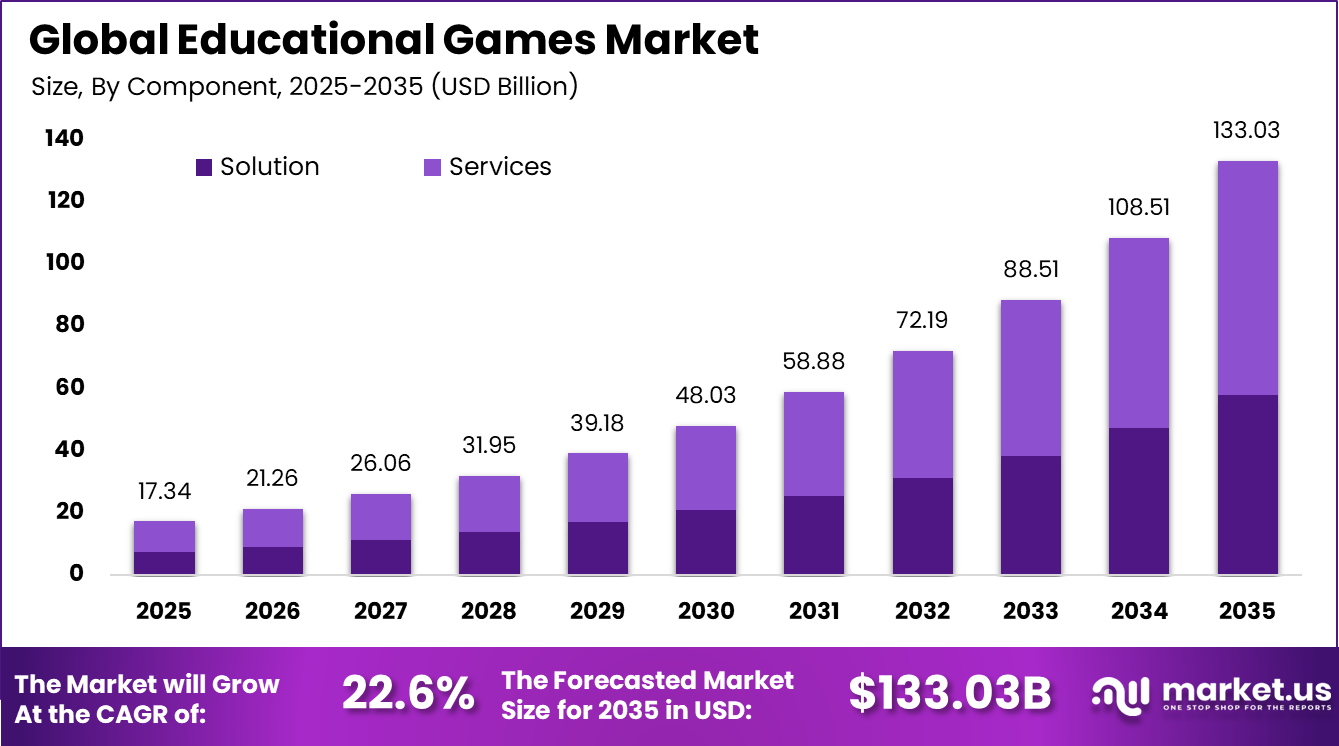
The global educational games market represents a transformative opportunity for cross-border e-commerce sellers, with projections showing explosive growth from USD 17.34 billion in 2025 to USD 133.03 billion by 2035—a 22.6% compound annual growth rate that dwarfs most traditional e-commerce categories. North America dominates with 43.5% market share (USD 7.54 billion), while the U.S. alone captures USD 6.76 billion with 20.52% CAGR, signaling concentrated demand in the world's largest digital marketplace ecosystem.
Institutional adoption is the primary demand driver, with over 410,000 educational institutions worldwide integrating games into teaching frameworks and 38% of schools adopting gamified solutions in formal curriculum delivery. This represents a structural shift in how education is delivered—not a temporary trend. More than 640 million students globally use educational games weekly, creating a massive installed base that sellers can target through complementary products, accessories, and content. Teachers report 88% higher student engagement with digital games and 93% of class time spent on active learning, validating the educational value proposition that drives institutional purchasing decisions.
Market segmentation reveals critical seller opportunities: Solutions-based platforms dominate at 68.9% of market value, indicating preference for comprehensive ecosystems combining content, analytics, and engagement tools—not standalone games. Cloud-based deployment captures 61.2% market share, reflecting institutional demand for scalable, remotely accessible systems that sellers can monetize through SaaS models or white-label partnerships. Online platforms account for 53.1%, highlighting browser-based access demand. Location-based games represent 29.4% with 51.9% growth rate, showing strong future demand for immersive VR/AR learning experiences. Critical thinking and problem-solving applications lead at 41.8%, demonstrating institutional focus on higher-order cognitive skills that command premium pricing.
Recent product momentum validates market timing: Duolingo's December 2025 expansion (flashcard exercises + 100,000 DuoRadio episodes), Lumos Labs' AI-driven personalization (September 2025), and Google's Skills Boost Arcade launch demonstrate major tech platforms investing heavily in educational gaming infrastructure. Mobile-based games account for 54% of usage, supported by high smartphone penetration—creating cross-selling opportunities for mobile accessories, learning tablets, and educational hardware bundles. By 2025, 40% of tools integrate AI-driven personalization, while VR learning games expand at 51.9% CAGR, indicating strong future demand for immersive experiences that require specialized hardware and content.
Immediate seller actions: (1) Audit current product catalog for educational game compatibility—bundles combining games with tablets, headsets, or learning accessories capture premium margins; (2) Identify 3-5 high-growth subcategories (VR learning, AI-personalized platforms, critical thinking apps) and source complementary products; (3) Target institutional buyers through B2B channels (school procurement platforms, EdTech marketplaces) where 410K+ institutions actively purchase; (4) Develop content partnerships with game publishers to create exclusive bundles on Amazon, Shopify, or specialized EdTech platforms. Strategic sellers can capture 2-5% of the $115.7B new market opportunity created between 2025-2035 through focused category expansion and institutional channel development.
問題 8
What market segments offer the highest seller opportunity?
Solutions-based platforms dominate at 68.9% of market value, indicating preference for comprehensive ecosystems combining content, analytics, and engagement tools rather than standalone games. Cloud-based deployment captures 61.2% market share, reflecting institutional demand for scalable, remotely accessible systems. Virtual reality learning games expand at 51.9% CAGR, indicating strong future demand for immersive experiences. Critical thinking and problem-solving applications lead at 41.8%, demonstrating institutional focus on higher-order cognitive skills that command premium pricing. Sellers should prioritize VR/AR hardware bundles and comprehensive platform partnerships over single-game products.
Which product categories should sellers focus on for educational games?
Mobile-based educational games account for 54% of total usage, supported by high smartphone penetration, making mobile learning accessories and tablet bundles high-priority categories. By 2025, over 40% of game-based learning tools integrate AI-driven personalization, creating demand for devices supporting advanced processing. Location-based games represent 29.4% of market with 51.9% growth rate, indicating strong future demand for VR/AR hardware. Sellers should develop bundles combining educational games with tablets (iPad, Android), VR headsets, learning accessories, and complementary educational hardware to capture premium margins in the 22.6% CAGR growth window.