


AI Automation Threatens Enterprise Consulting Revenue | IBM's 26% Stock Decline Signals Margin Compression for Legacy Tech Services
- IBM shares fall 13.2% in single day (Feb 23, 2026) as Claude Code automates COBOL modernization, compressing consulting timelines from years to quarters and eliminating demand for "armies of consultants"





































/tpg/sources/c6306648-4910-47c2-a6af-5d64575d02aa.jpeg)



概览
The Core Disruption: AI Commoditizes High-Margin Consulting Services
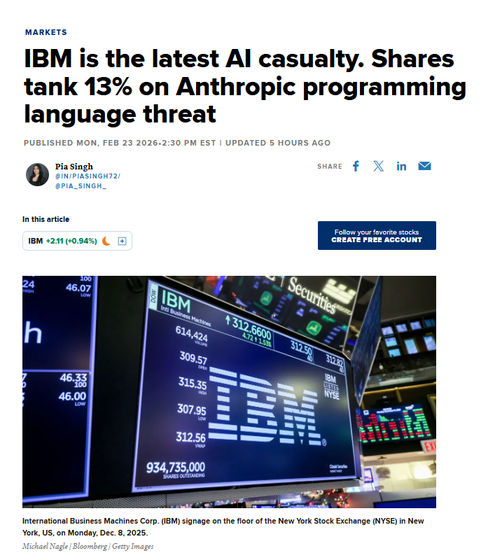
On February 23, 2026, IBM's stock experienced its worst single-day performance since March 2020 (down 13.2%), with the month-to-date decline reaching 26.8%—positioning it for the worst month since December 1992. The catalyst: Anthropic's announcement of Claude Code capabilities that automate COBOL modernization, a process historically requiring months or years of specialized consulting teams and generating substantial revenue for IBM's infrastructure and consulting divisions.
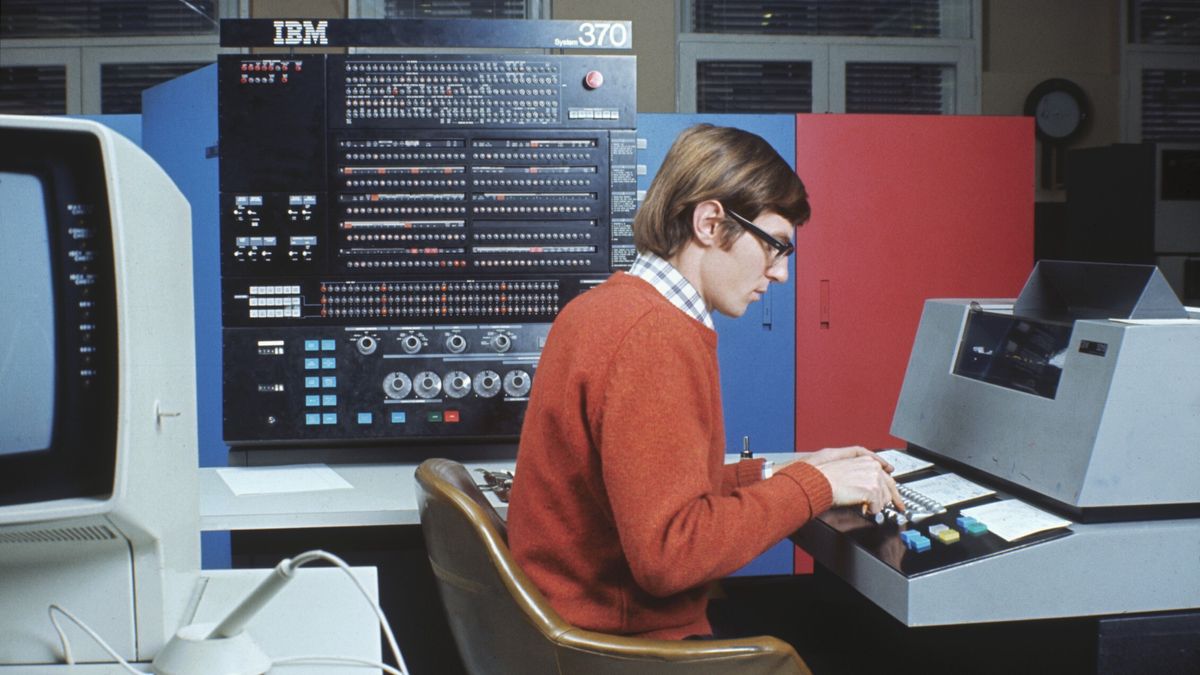
This event represents a critical inflection point for e-commerce sellers relying on enterprise software infrastructure. COBOL powers 95% of U.S. ATM transactions and critical systems in banking, travel, insurance, and government sectors—the exact verticals where many enterprise sellers source products, manage payment processing, and coordinate logistics. IBM's Z mainframe business achieved 48% year-over-year growth in Q4 2025 (its highest revenue in 20 years) and the company had accumulated $12.5 billion in cumulative generative-AI business by year-end 2025. However, Claude Code can map dependencies across thousands of code lines, identify risks, and compress modernization timelines from years to quarters, directly eliminating the consulting-dependent business model that generated IBM's premium margins.
The Broader Market Signal: SaaS and Payment Infrastructure Vulnerability
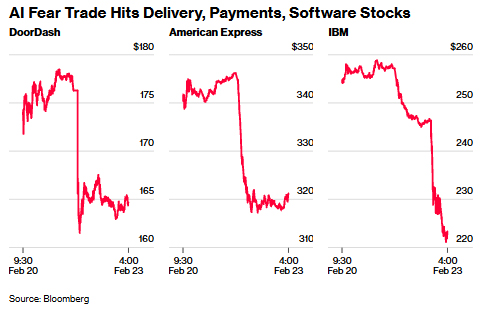
The February 22-23 "AI scare trade" triggered by Citrini Research's bearish report extended beyond IBM to payment processing companies, software-as-a-service (SaaS) providers, and delivery platforms—the exact infrastructure layer that cross-border e-commerce sellers depend on for inventory management, payment processing, and logistics optimization. Economist Nassim Taleb warned of potential software company bankruptcies, and institutional investors immediately reassessed positions in companies perceived as vulnerable to AI-driven disruption. This signals that AI commoditization is eroding pricing power and consulting margins across the entire enterprise software stack.
For e-commerce sellers, this creates two immediate risks: (1) SaaS provider financial instability affecting service reliability and pricing for critical tools like inventory management, payment gateways, and 3PL logistics platforms, and (2) accelerated automation of backend systems that previously required expensive consulting services, potentially reducing costs for competitors who adopt AI-powered modernization. IBM's competing Watsonx AI platform (which can refactor COBOL into Java and assist with code comprehension) demonstrates that even legacy tech giants are racing to commoditize their own consulting revenue streams.
Automation Opportunities for Sellers: Immediate AI Wins
The market's sharp reaction reveals that AI automation is now accessible to broader customer bases, not just enterprise consulting firms. Sellers managing complex backend systems can immediately leverage Claude Code or similar AI tools to: (1) automate legacy system modernization (reducing consulting costs by 60-80%), (2) accelerate payment processing system upgrades (compressing timelines from 12-18 months to 3-6 months), and (3) optimize inventory management system migrations (eliminating manual code analysis that previously required 500+ consulting hours). The time savings are substantial: Claude Code can surface risks that would take human teams months to identify, enabling teams to modernize systems in quarters instead of years.
Strategic Implications: Competitive Advantage Through AI Adoption
Sellers who adopt AI-powered automation for backend system modernization gain a 6-12 month competitive advantage over those relying on traditional consulting services. This advantage compounds as modernized systems enable faster payment processing, more reliable inventory tracking, and improved logistics coordination—all critical for cross-border operations. Conversely, sellers dependent on SaaS providers experiencing financial stress (due to the AI scare trade) face potential service disruptions or pricing increases as these companies struggle to maintain margins in an AI-commoditized landscape.
The market's 26.8% decline in IBM's stock over February reflects investor concerns that AI automation fundamentally reshapes the economics of legacy system modernization, a cornerstone of enterprise consulting. For e-commerce sellers, this is both an opportunity (adopt AI automation to reduce costs) and a risk (monitor SaaS provider stability as they face margin compression).
問題 8
How does IBM's Watsonx AI platform compete with Anthropic Claude Code for COBOL modernization?
IBM's Watsonx platform can refactor COBOL to Java and assist with code comprehension, but market reaction suggests investor skepticism about IBM's ability to maintain pricing power as AI automation becomes accessible to broader customer bases. Watsonx is enterprise-focused with premium pricing, while Claude Code (via Anthropic) is more accessible to mid-market infrastructure providers. For sellers, this competition is positive: it drives innovation in modernization tools and reduces costs across the industry. IBM's response indicates it recognizes the threat and will invest in competing AI capabilities, but the stock market's sharp decline suggests investors believe IBM's consulting-dependent business model is fundamentally challenged. Sellers should expect both IBM and Anthropic to offer modernization services to infrastructure providers, driving faster adoption and cost reduction across the industry.
How does Claude Code's COBOL automation affect e-commerce sellers relying on legacy payment systems?
Claude Code can compress COBOL modernization timelines from years to quarters by automating dependency mapping and risk identification that previously required months of human analysis. For e-commerce sellers, this means payment processing systems can be modernized faster and at lower cost (60-80% reduction in consulting expenses). However, it also signals that SaaS providers and payment processors face margin compression, potentially affecting their investment capacity and service development. Sellers should monitor their payment gateway providers' financial stability and consider accelerating system modernization projects to capture cost savings before consulting rates adjust downward.