



AI Infrastructure Investment Bubble Deflates with Strategic Precision
- Market Correction Signals Maturity in Tech Sector's Most Hyped Segment











/2d%20illustration%20of%20Cloud%20computing%20by%20Blackboard%20via%20Shutterstock.jpg)
概览
The artificial intelligence infrastructure investment landscape is experiencing a nuanced market correction that signals both maturity and investor sophistication. What initially appears as a selloff reveals a strategic recalibration of expectations around AI technology investments.
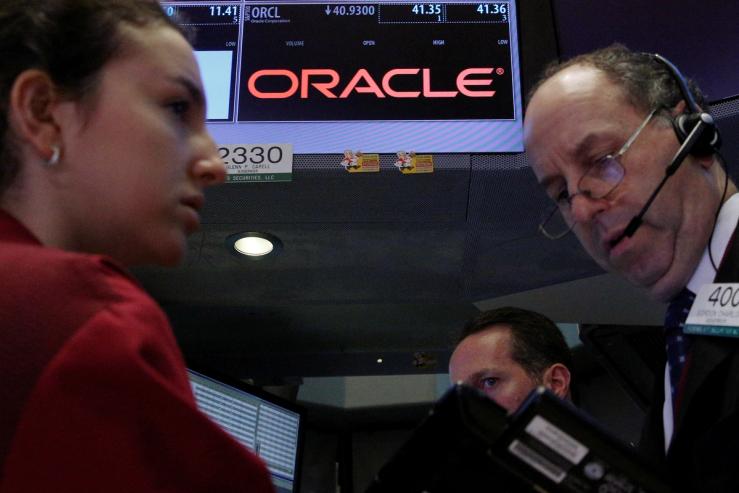
Oracle's dramatic financial repositioning epitomizes this trend, with the company facing an unprecedented debt-to-equity ratio of 500—significantly higher than cloud computing peers. This signals a critical inflection point where investors are demanding more than just computational promises. The market is no longer accepting blind faith in AI expansion, instead scrutinizing the financial sustainability of massive infrastructure spending.
The current market dynamics demonstrate a sophisticated rotation rather than a complete collapse. While AI-related stocks experience volatility, the S&P 500 remains relatively stable, down just 0.16% and still up 16% for the year. This suggests investors are not abandoning AI but becoming more discerning. The Financial Times aptly characterized this as a bubble ending with a "slow hiss, not a loud pop"—a controlled, strategic recalibration.
Key indicators reveal the depth of this transformation. Broadcom's CEO anticipates AI chip sales will double this quarter to $8.2 billion, but with lower gross margins. CoreWeave reports substantial debt ($3.7 billion current, $10.3 billion non-current) against projected $5 billion annual revenue. These numbers underscore a critical market shift: computational capacity must now demonstrate clear, measurable economic value.
Investors are pivoting from indiscriminate tech enthusiasm to a more nuanced approach. The equal-weight S&P 500, which provides a balanced market representation, is up 10.2% year-to-date—highlighting a move toward more balanced, risk-aware investment strategies. More economically cyclical sectors like materials, financials, and industrials are outperforming traditional tech sectors.
The emerging narrative is clear: AI infrastructure must now prove its worth beyond potential, with investors demanding tangible returns and sustainable financial models. This market correction represents not a defeat, but a maturation of the AI investment ecosystem.
問題 3
Is this the end of AI infrastructure investments?
No, this is a market maturation, not a collapse. Investors are becoming more selective, demanding clear economic value and sustainable financial models from AI infrastructure companies. The market is rotating toward more discerning, value-driven investments.
What are the key financial risks in AI infrastructure investments?
Primary risks include unsustainable debt levels, low gross margins, and inability to generate returns proportional to massive infrastructure spending. Companies like Oracle and CoreWeave demonstrate the dangers of over-leveraging without clear monetization strategies.