




Terror Travel Patterns Expose Global Security Surveillance Challenges
- Transnational Investigation Reveals Complex Counterterrorism Intelligence Gaps








概览
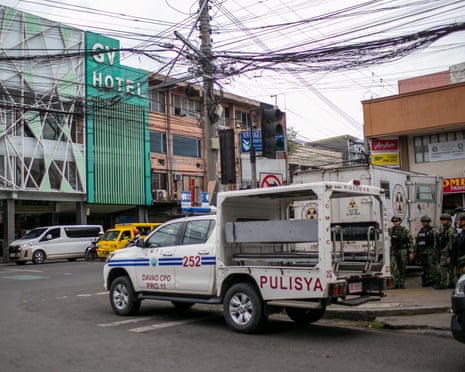
The case of Sajid and Naveed Akram's Philippines visit illuminates the intricate challenges of modern counterterrorism intelligence tracking. Their four-week stay in Davao City, marked by minimal movement and near-total isolation, represents a critical microcosm of contemporary terrorist mobility strategies that exploit international travel complexity.
Surveillance Opacity Emerges as Key Vulnerability: The Akrams' travel demonstrates how potential terror suspects can navigate international borders with remarkable discretion. Spending most of their time in a single hotel room, they minimized interaction and detection risks. The Philippine authorities' dismissal of terrorist training allegations, despite the discovery of an IS flag in their vehicle, underscores the profound difficulties in establishing definitive threat assessments.
Geopolitical Intelligence Coordination Becomes Paramount: With only approximately 50 IS-linked militants reported across Mindanao provinces, the investigation highlights the nuanced landscape of contemporary terrorist networks. The ongoing coordination between Australian and Philippine authorities reveals the critical importance of transnational intelligence sharing. The case exposes significant investigative challenges: limited concrete evidence, minimal observable activities, and the complex task of determining travel motivations.
The broader implications are stark. Naveed Akram's prior investigations by Australia's spy agency and the 59 offenses he faces—including 15 murder counts—suggest ideological radicalization pathways that transcend traditional geographic boundaries. This incident signals a critical need for enhanced cross-border intelligence mechanisms that can track high-risk individuals through their subtle, strategically minimalist travel patterns.
Ultimately, the Akrams' Philippines visit represents more than an isolated incident—it is a window into the evolving landscape of global security challenges, where traditional surveillance models are increasingly inadequate against sophisticated, low-visibility threat actors.
問題 3
What made the Akrams' travel pattern suspicious?
Their extremely limited movement, spending almost the entire four-week visit in a single hotel room, minimal interactions with hotel staff, and the discovery of an IS flag in their vehicle raised significant investigative concerns about potential terrorist connections.
What are the key intelligence coordination challenges in this case?
The investigation requires complex cross-border collaboration between Australian and Philippine authorities, dealing with limited concrete evidence, tracking ideological radicalization pathways, and establishing definitive threat assessments with minimal observable data.