

Tesla's AI Chip Revolution | E-Commerce Tech Transformation 2024
- AI Infrastructure Breakthrough Signals $20B Investment in Computational Power










概览
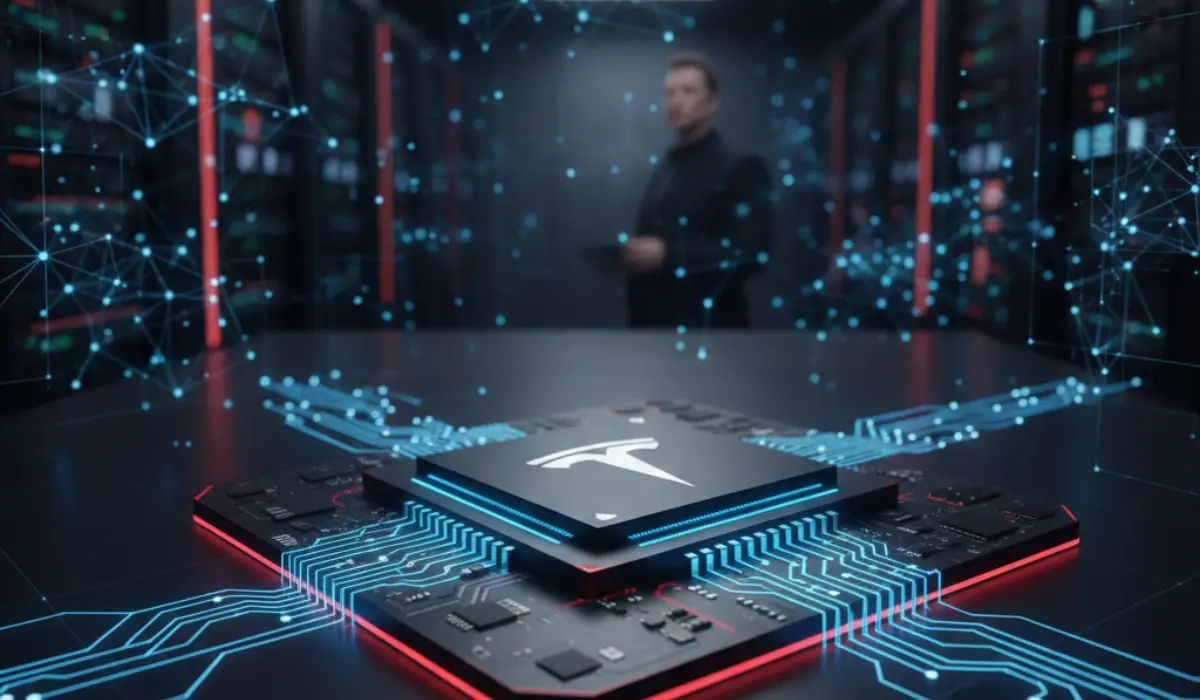
Tesla's aggressive AI chip development represents a critical technological inflection point with profound implications for e-commerce and digital infrastructure. The company's strategic pivot, centered on AI5, AI6, and future chip cycles, demonstrates an unprecedented commitment to computational innovation that will reshape technological capabilities across multiple industries.
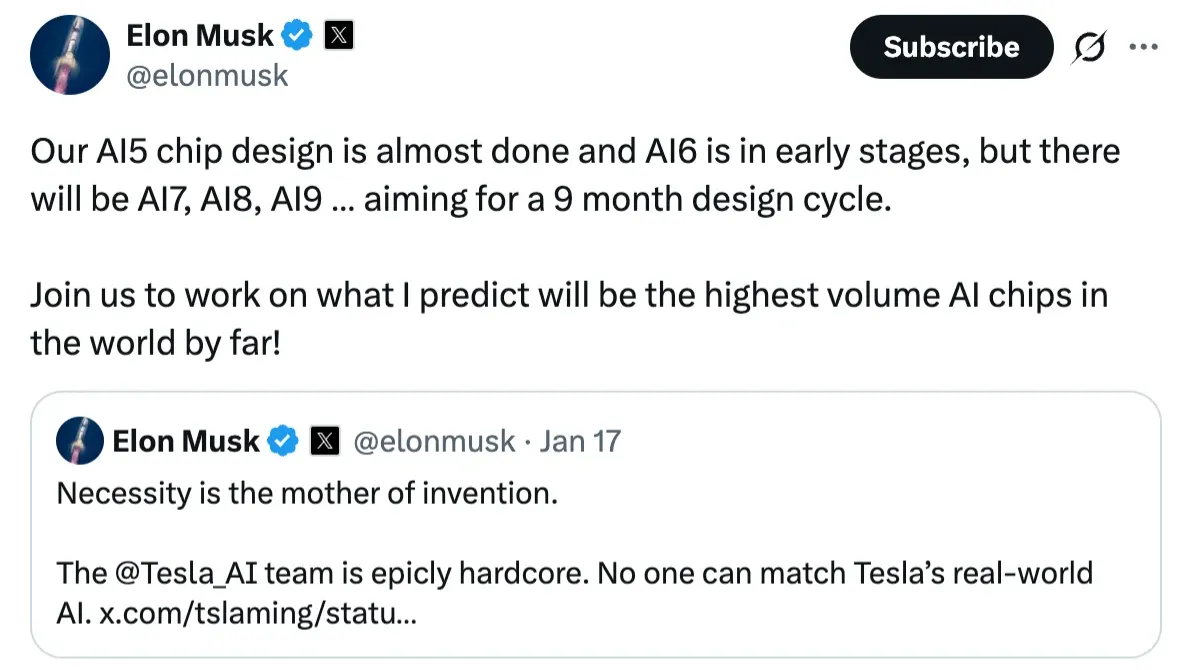
Key technological developments reveal a multi-dimensional AI strategy targeting autonomous driving, robotics, and advanced computational processing. Musk's roadmap includes developing AI4-AI9 chips in rapid nine-month cycles, with specific performance targets: AI4 for self-driving safety, AI5 for vehicle and robotics performance, and future chips supporting space-based computational needs. The $16 billion Samsung manufacturing agreement and $20 billion xAI funding round underscore the massive financial commitment behind this technological transformation.
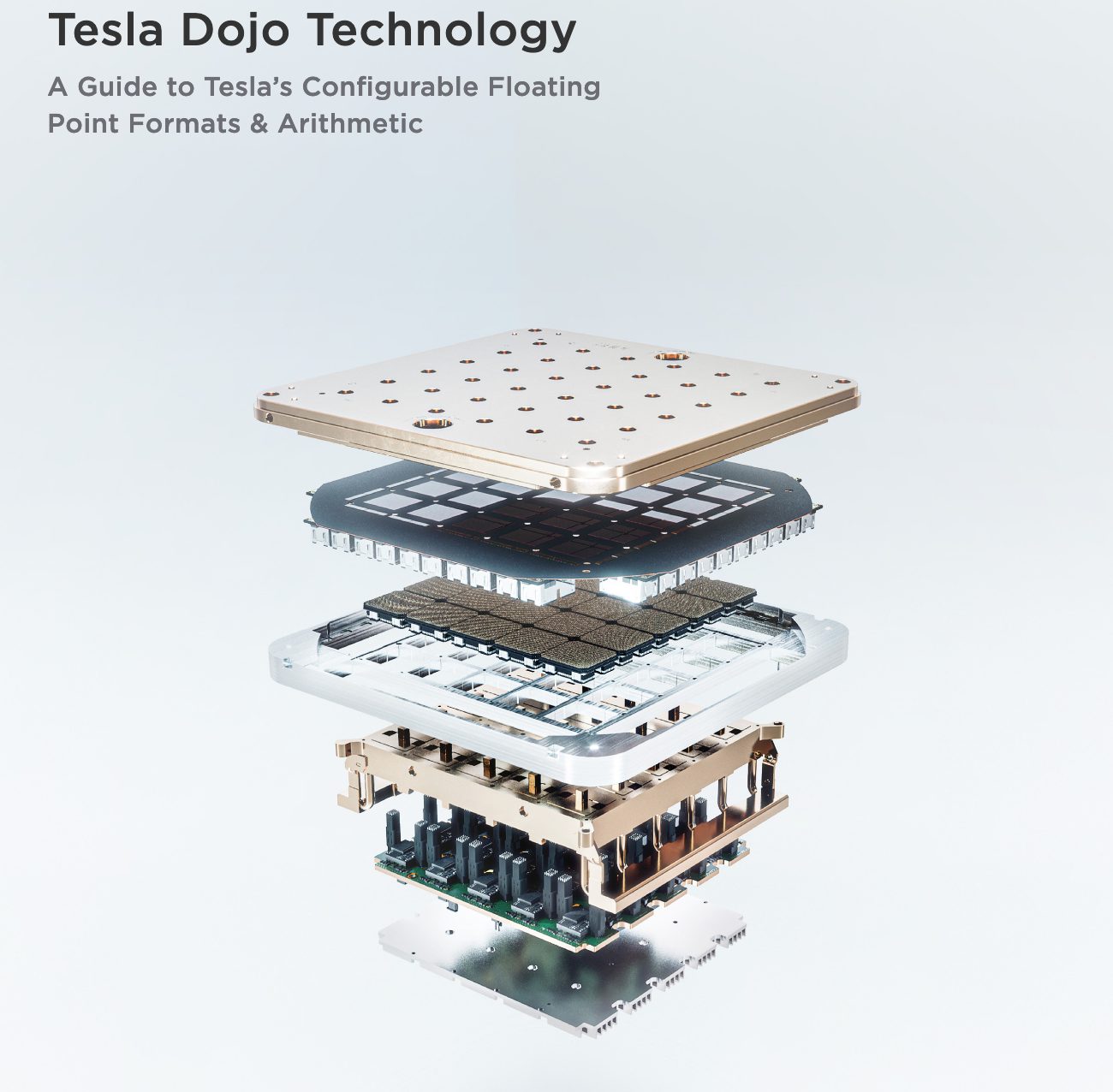
For e-commerce and technology ecosystems, these developments signal potentially revolutionary computational infrastructure capabilities. The Dojo supercomputer and space-based computing concept represent more than automotive technology—they're a blueprint for next-generation data processing. Sellers and technology platforms should anticipate dramatic shifts in AI-powered analytics, machine learning capabilities, and computational efficiency. The ability to process vast datasets with unprecedented speed could democratize advanced AI tools, enabling smaller sellers to leverage enterprise-grade computational intelligence.
Strategic implications extend beyond raw computing power. Tesla's approach suggests a future where AI infrastructure becomes a critical competitive differentiator, potentially creating new marketplaces for computational resources, advanced analytics, and machine learning services. E-commerce platforms, logistics providers, and technology sellers must closely monitor these developments to remain technologically competitive.
問題 5
What makes Tesla's AI chip strategy unique?
Tesla's approach differs by developing chips in rapid nine-month cycles with specific performance targets, integrating automotive, robotics, and potentially space-based computing needs. The company is not just creating chips but developing a comprehensive AI computational ecosystem.
How will Tesla's AI chip developments impact e-commerce technology?
Tesla's AI chip innovations could democratize advanced computational capabilities, enabling smaller e-commerce sellers to access enterprise-grade machine learning and data processing tools. The Dojo supercomputer and AI chip roadmap suggest future platforms might offer more sophisticated analytics, personalization, and predictive technologies.