



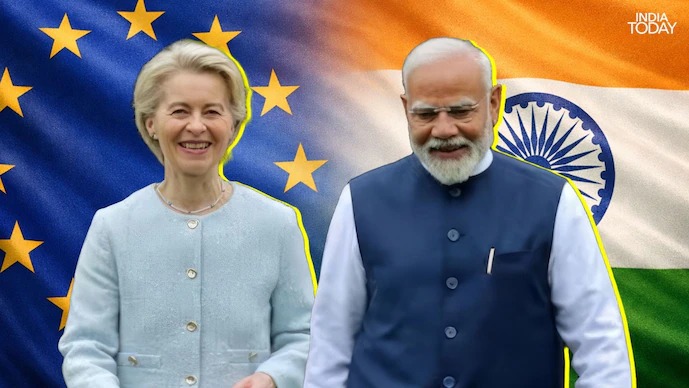
EU-India FTA 2026 | Tariff Cuts 100% to 10% Open $136.5B Market
- Automotive duties collapse from 110% to 10%; Indian textiles/handicrafts gain EU access; 2-billion-person trade zone creates supply chain arbitrage opportunities for cross-border sellers through 2026-2027
)


)




)






























概览
The EU-India Free Trade Agreement (FTA), finalized January 27, 2026, represents the most significant tariff restructuring between these economic blocs in two decades, directly reshaping cross-border e-commerce supply chains and market access strategies. The landmark deal eliminates tariffs on 2 billion consumers across 27 EU member states and India, affecting approximately one-third of global trade. Most critically for sellers: automotive tariffs collapse from 110% to 10% under a 250,000-unit annual quota (6x larger than UK agreement), while Indian labor-intensive exports—textiles, leather, handicrafts, gems, jewelry, and marine products—gain preferential EU market access with tariff reductions or eliminations. The agreement covers chemicals, machinery, electrical equipment, aircraft, and spacecraft through phased reductions, creating immediate arbitrage opportunities.
For European sellers, the tariff reduction on Indian automotive components and consumer goods dramatically improves margin structures. A €500 automotive part facing 110% Indian import duty (€550 total cost) drops to 10% duty (€50 total cost), representing 91% cost reduction—translating to €500 margin improvement per unit. Machinery and electrical equipment sellers gain similar advantages entering India's 1.4-billion-person market, previously protected by high tariff walls. European sellers can now price competitively against Chinese imports flooding Indian e-commerce platforms, particularly on Amazon.in, Flipkart, and emerging Indian marketplaces.
For Indian sellers, the agreement creates a critical hedge against Trump's 50% tariff threats on Indian goods. Indian textile and handicraft exporters gain preferential access to 27 EU member states, offsetting US market compression. A typical Indian textile exporter facing 50% US tariffs can redirect inventory to EU markets with reduced duties, maintaining volume and margins. Handicraft sellers (HS codes 9406-9406.90) and gems/jewelry exporters (HS codes 7102-7118) see immediate demand acceleration as EU tariffs drop to zero or near-zero rates. Implementation occurs throughout 2026-2027, with formal signing expected mid-2025 after European Parliament approval.
Critical timing window: Sellers have 6-12 months to restructure supply chains before implementation. Early movers establishing EU-India logistics corridors and inventory positioning will capture first-mover advantages. The agreement explicitly safeguards sensitive sectors (dairy, cereals, poultry), limiting competition in those categories. Sellers must monitor the 5-6 month legal vetting period and adjust pricing models, sourcing strategies, and inventory allocation by Q4 2026 when tariff reductions take effect.
問題 8
Which Indian product categories gain the most from EU market access under this FTA?
Indian textiles (HS 6204-6209), leather goods (HS 4202-4205), handicrafts (HS 9406-9406.90), gems and jewelry (HS 7102-7118), and marine products receive preferential tariff reductions or eliminations in EU markets. These labor-intensive categories represent India's competitive advantage and directly offset Trump's 50% tariff threats on Indian goods. Indian textile exporters can redirect inventory from US markets (facing 50% tariffs) to EU markets with reduced duties, maintaining volume. Handicraft and jewelry sellers see immediate demand acceleration as EU tariffs drop to zero. Implementation timelines suggest operational changes throughout 2026-2027.
How much will automotive tariffs drop for European sellers entering India under the FTA?
Automotive tariffs will collapse from 110% to 10% under a 250,000-unit annual quota, representing a 91% duty reduction. For a €500 automotive component, this eliminates €500 in import costs, dramatically improving margins. The quota is 6x larger than the UK agreement (37,000 units), enabling significant volume scaling. European automotive parts sellers (HS codes 8704-8708) can now compete directly with Chinese suppliers on Amazon.in and Flipkart. Implementation occurs throughout 2026-2027, with formal signing expected mid-2025.