
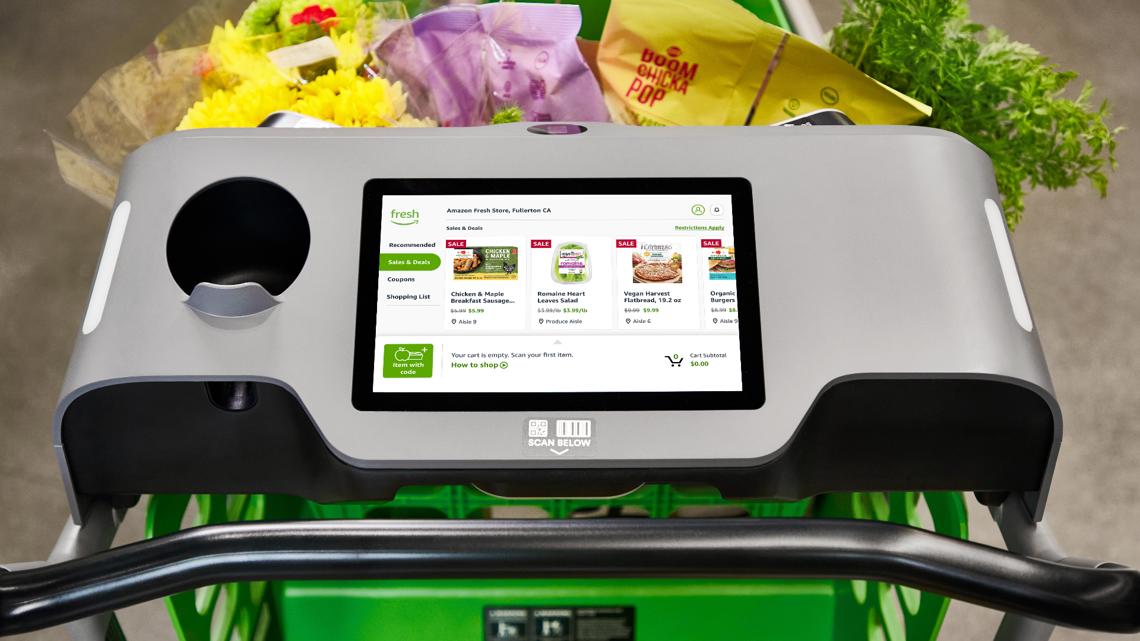
Amazon Fresh Closures Signal Retail Consolidation | O2O Opportunity for Sellers
- 22 California store closures reshape grocery retail landscape; 100+ Whole Foods expansion creates new distribution channels for cross-border sellers
概览
Amazon's strategic pivot from proprietary Amazon Fresh/Go formats to Whole Foods integration represents a fundamental shift in how e-commerce giants approach physical retail, with direct implications for cross-border sellers seeking offline distribution channels. On January 27, 2026, Amazon announced the closure of all 22 Amazon Fresh and Amazon Go locations across California (spanning Los Angeles, Orange County, and San Francisco Bay Area), signaling that these store formats failed to meet profitability requirements for nationwide expansion. Simultaneously, Amazon committed to opening 100+ new Whole Foods Market stores over the coming years, consolidating its physical grocery presence under an established brand rather than proprietary formats.
This consolidation strategy reveals critical O2O opportunities for sellers: Rather than competing in Amazon's failed standalone retail model, sellers should now focus on Whole Foods as a distribution partner. Whole Foods' 500+ existing locations across North America provide immediate offline touchpoints for grocery, specialty food, health/wellness, and household products. The shift indicates Amazon is redirecting resources from retail real estate toward delivery infrastructure and marketplace integration—meaning sellers should prioritize e-commerce packaging, subscription models, and logistics partnerships over traditional in-store merchandising. California's retail landscape now has 22 available premium retail spaces (formerly Amazon Fresh/Go locations in high-traffic areas like Cerritos, Upland, and major metros) that represent pop-up and showroom opportunities for competing brands and cross-border sellers testing offline presence.
For sellers, the strategic implications are threefold: First, Whole Foods partnership opportunities are expanding as Amazon consolidates distribution—sellers of organic, specialty, and premium products should explore Whole Foods vendor programs, which typically require 3-6 month lead times and 25-40% wholesale margins. Second, the closure of Amazon's proprietary stores eliminates a potential distribution channel but validates the broader trend that successful O2O strategies require established retail brands with customer loyalty (Whole Foods has 10M+ Prime members with store loyalty). Third, the 22 vacated California locations represent potential pop-up and temporary retail opportunities for brands testing offline presence before committing to permanent leases—typical pop-up ROI in these high-traffic areas ranges from 15-25% conversion lift when linked to online channels.
Key operational insight: Amazon's statement about "developing new mass physical store concepts" suggests future experiential retail formats focused on customer experience rather than transaction efficiency. This signals sellers should prepare for retail partnerships emphasizing brand storytelling, product sampling, and omnichannel integration rather than checkout speed optimization.
問題 8
What are the typical costs and timelines for setting up pop-up retail in California's high-traffic areas?
Pop-up retail in California's premium locations (Los Angeles, San Francisco, Orange County) typically costs $8,000-15,000 monthly for 3,000-5,000 sq ft spaces, with 3-6 month minimum leases. Setup costs (fixtures, signage, staffing) range from $15,000-30,000 depending on experience level. Industry benchmarks show pop-up stores achieve 40-60% brand awareness lift and 15-25% online conversion lift when properly integrated with digital marketing. Sellers should budget $40,000-60,000 total for a 3-month test (rent + setup + staffing + marketing), expecting 2-3x ROI if the pop-up drives 20%+ of online sales during the test period. Timing is critical: 6-8 week lead time required for lease negotiation and buildout.
How should sellers position products for Whole Foods' experiential retail strategy?
Whole Foods increasingly emphasizes in-store experiences, sampling, and brand storytelling—aligning with Amazon's stated goal of developing retail concepts focused on customer experience. Sellers should prepare product sampling programs, staff training materials, and in-store demonstrations that highlight sustainability, sourcing, or health benefits. Whole Foods typically allocates 15-25% of shelf space to experiential elements (sampling stations, QR codes linking to online content, interactive displays). Sellers should develop omnichannel content (Instagram-worthy packaging, behind-the-scenes sourcing stories, online exclusive bundles) that drives foot traffic to physical locations and converts to online sales. This approach increases customer LTV by 30-50% compared to traditional retail-only strategies.