




Dollar Weakness & FX Volatility | Cross-Border Seller Pricing & Hedging Strategy 2026
- 8% USD depreciation + 14% EUR decline creates urgent need for dynamic pricing, FX hedging, and supply chain rebalancing for 50K+ cross-border sellers






















概览
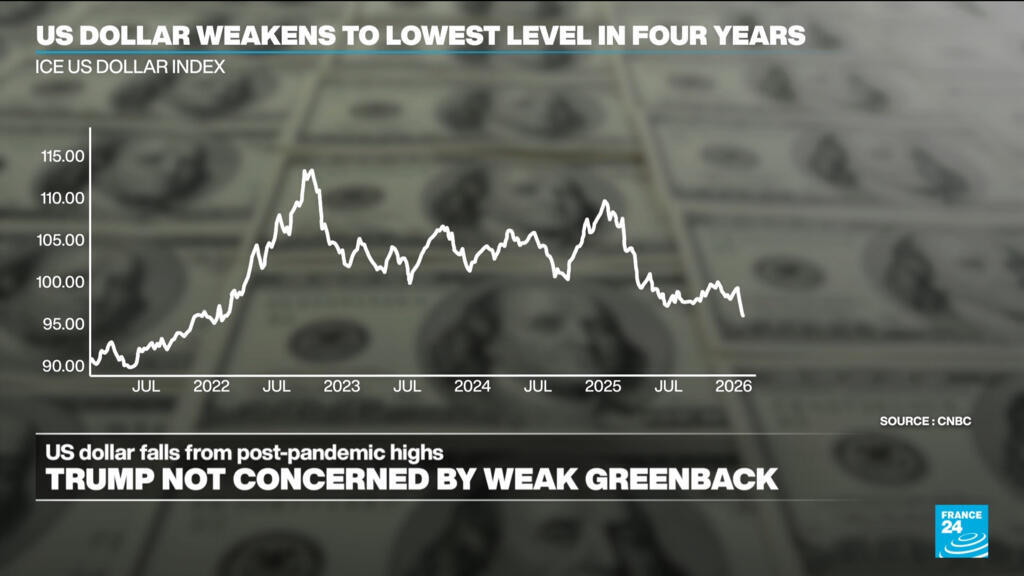
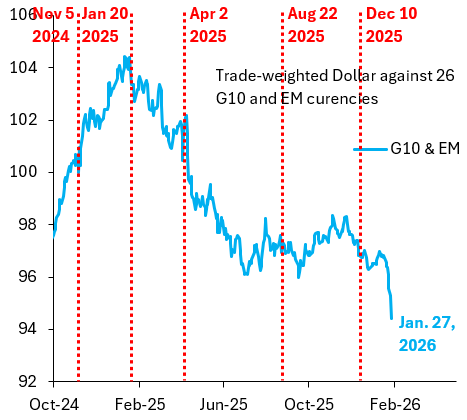
The January 2026 currency crisis presents a critical inflection point for cross-border e-commerce sellers. The Wall Street Journal's January 28, 2026 editorial warns of a weakening U.S. dollar amid President Trump's endorsement of currency depreciation—a policy stance contradicting mainstream economic analysis. The WSJ Dollar Index has fallen 8% over the past year against a basket of major currencies, with the dollar-euro exchange rate declining 14%, while gold prices surged above $5,300/oz, signaling broader currency instability concerns. This volatility directly impacts the operational and financial strategies of cross-border sellers managing multi-currency transactions.
For sellers importing goods, the cost structure has fundamentally shifted. A weaker dollar increases procurement costs for inventory sourced from Asia, Europe, and other non-USD regions. Sellers importing from China face higher effective costs when converting USD to CNY, while those sourcing from EU suppliers experience compounded pressure from the 14% euro strength. The 14% EUR appreciation is particularly acute for sellers trading with European marketplaces (Amazon.eu, eBay.eu, local platforms), as their revenue in euros now converts to fewer dollars. Simultaneously, sellers exporting U.S.-manufactured goods or dropshipping from domestic suppliers gain competitive pricing advantages in international markets—but only if they can lock in favorable exchange rates before further depreciation.
The operational challenge extends beyond procurement to pricing agility and cash flow management. Sustained FX volatility forces sellers to continuously adjust product pricing across marketplaces to maintain margin targets, creating administrative burden and potential Buy Box competitiveness issues on Amazon. Currency conversion fees (typically 2-3% on payment processors like Stripe, PayPal, or Amazon Pay) compound margin compression. Sellers relying on traditional bank transfers for international payments face additional delays and unfavorable rates. The broader foreign-exchange instability increases hedging costs, making forward contracts and currency options more expensive—a critical concern for sellers with 30-90 day payment cycles and inventory lead times. Working capital cycles extend as sellers must hold larger cash reserves to absorb FX losses or maintain inventory buffers against price volatility.
Strategic financial optimization is now essential. Sellers should immediately evaluate alternative payment corridors: Wise (formerly TransferWise) and OFX offer 1-2% fees vs. 2-3% for traditional processors, providing $500-2,000 monthly savings for sellers with $50K+ monthly cross-border transactions. Invoice financing and supply chain finance products (Trusli, Fintech Acquisition Corp, traditional factors) now offer competitive rates as lenders price in currency risk premiums. Sellers with significant EUR or GBP exposure should consider forward contracts through HSBC, Barclays, or fintech providers to lock in rates for 30-180 day periods, protecting margin on known future costs. For Amazon FBA sellers, the 8% dollar weakness may trigger inventory rebalancing: shifting stock from U.S. fulfillment centers to EU warehouses (where local currency revenue is stronger) can improve cash conversion cycles by 15-20 days while reducing FX exposure.
問題 8
How does the 8% dollar depreciation affect my import costs as an Amazon seller?
The 8% WSJ Dollar Index decline directly increases procurement costs for sellers importing inventory. If you source $100K monthly from China, the effective cost rises approximately $8,000 due to unfavorable USD/CNY conversion rates. The impact compounds for sellers with 60-90 day payment terms, as they lock in costs at weaker rates. Immediate action: obtain forward contracts from HSBC or Wise to lock in current rates for 30-180 day periods, protecting against further depreciation. This typically costs 0.5-1.5% but saves 2-4% on unhedged exposure.
How should I adjust pricing on Amazon.eu and eBay.eu due to the 14% euro strength?
The 14% EUR appreciation means your euro revenue converts to 14% fewer dollars, compressing margins significantly. A €100 sale that previously converted to $110 now yields $94, reducing profit by $16 per transaction. Dynamic pricing is essential: use Amazon's automated repricing tools or third-party solutions (Repriceit, SellerApp) to adjust prices based on real-time FX rates. Maintain a 3-5% price buffer above cost to absorb FX volatility. For eBay, manually review pricing weekly and adjust EUR listings upward by 5-8% to maintain dollar-equivalent margins.