


Deutsche Bank Q4 2025 Record Profits vs Money Laundering Probe | Payment Processing Risk for EU Sellers
- Record €1.3B quarterly profit offset by January 2026 regulatory raids; stricter AML compliance threatens 15-30 day merchant account delays for cross-border sellers using Deutsche Bank payment corridors





























概览
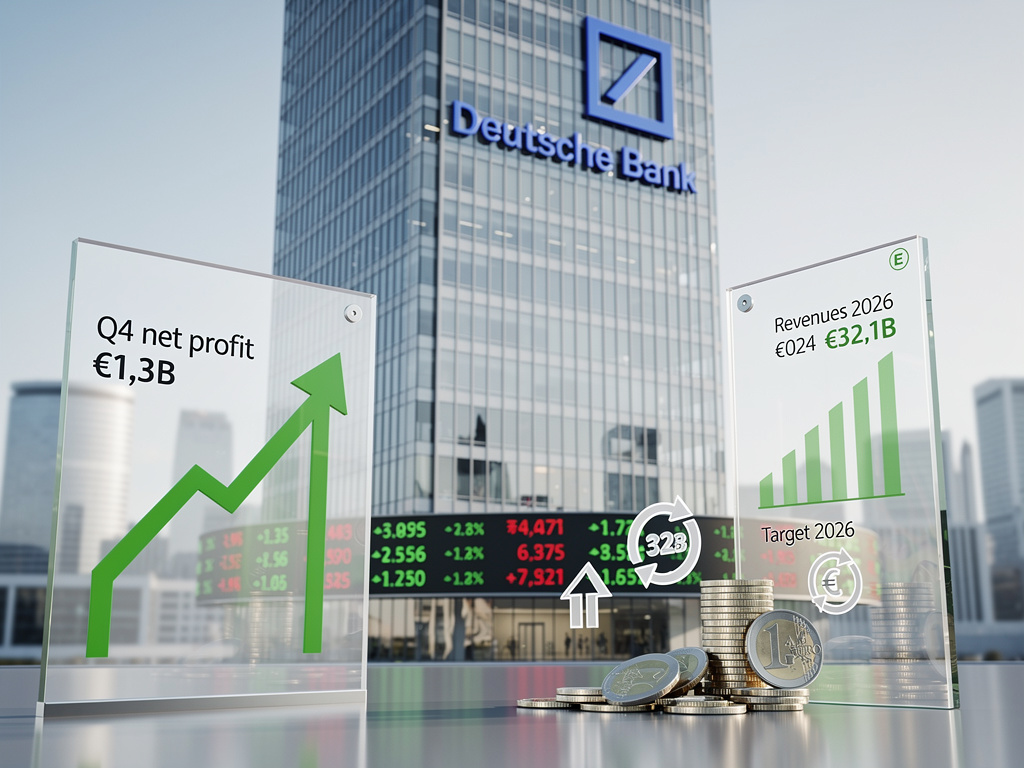
Deutsche Bank's paradoxical position in early 2026 creates immediate financial optimization opportunities and operational risks for cross-border e-commerce sellers. The bank reported record fourth-quarter 2025 net profit of €1.3 billion ($1.56 billion), beating analyst forecasts of €1.12 billion, with group revenues of €7.73 billion and a solid CET1 capital ratio of 14.2%. However, this financial strength is directly undermined by a January 28, 2026 money laundering investigation launched by Frankfurt state prosecutors and the Federal Criminal Police Office (BKA), involving approximately 30 investigators searching Deutsche Bank's Frankfurt headquarters and Berlin offices. The investigation targets transactions from 2013-2018, focusing on business relationships with foreign companies suspected of money laundering, with alleged connections to sanctioned Russian billionaire Roman Abramovich.
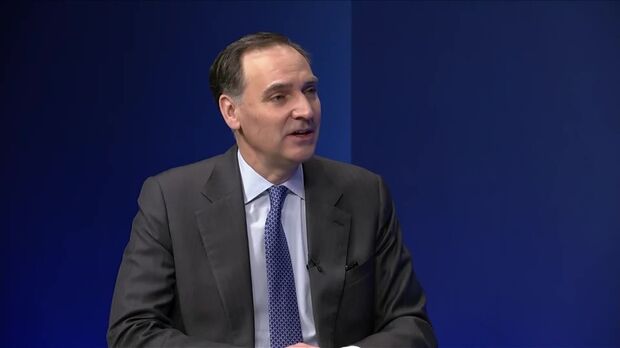
For cross-border sellers, this creates a dual-impact scenario: On the positive side, Deutsche Bank's record profitability and CFO James Von Moltke's optimism about 2026 growth—citing potential IPO pipeline expansion and benefits from German fiscal expansion—suggests the bank will maintain competitive payment processing rates and trade financing availability. The bank's exceptional performance in fixed income, currencies, and asset management (DWS unit) indicates strong FX hedging capabilities and favorable currency conversion pricing for sellers executing EUR/USD, EUR/GBP, and EUR/CNY transactions. However, the regulatory investigation creates immediate operational friction. Banks under AML investigation typically implement enhanced due diligence (EDD) procedures across all merchant accounts, resulting in 15-30 day account verification delays, increased documentation requirements (business registration, beneficial ownership verification, transaction history), and more rigorous transaction monitoring that can flag legitimate cross-border commerce as suspicious.
The timing amplifies seller impact: Deutsche Bank's previous April 2022 raid and subsequent assignment of a special AML compliance monitor by German financial supervisors (BaFin) indicates this is a pattern of enforcement escalation. Sellers relying on Deutsche Bank subsidiaries for payment processing in Germany, Austria, and Central Europe should expect stricter KYC/AML protocols affecting merchant onboarding speed. The investigation's focus on "delayed suspicious activity report filings" suggests the bank may implement more conservative transaction thresholds, potentially flagging high-volume cross-border transactions (€50K+ monthly) for additional review. This creates working capital friction: sellers accustomed to 2-3 day settlement may face 5-7 day holds pending compliance review. Conversely, the bank's strong capital position (CET1 14.2%, up from 13.8% year-over-year) and credit impairment below forecasts (€395M vs €408.3M predicted) indicate Deutsche Bank will maintain trade financing and invoice factoring programs—critical for sellers needing working capital acceleration. The bank's growth in private banking suggests improved access to supply chain financing products for mid-market sellers (€5-50M annual revenue).
問題 7
What payment corridors will face the most compliance friction from Deutsche Bank's investigation?
Germany, Austria, and Central Europe corridors face highest friction due to Deutsche Bank's Frankfurt headquarters location and BaFin (German financial supervisor) oversight. Transactions involving Russian entities, sanctioned jurisdictions, or high-value transfers (€100K+) face enhanced screening. The investigation's focus on "delayed suspicious activity report filings" suggests the bank will implement lower transaction thresholds for compliance review. Sellers shipping to Germany or using German payment gateways should expect 5-7 day settlement holds through Q2 2026. Western European corridors (UK, France, Benelux) face moderate delays (2-3 days). Non-EU corridors (US, Asia) experience minimal direct impact but may see indirect delays if transactions route through Frankfurt clearing. Diversify high-volume corridors to alternative providers during investigation period.
Will Deutsche Bank's record profits lead to lower payment processing fees for sellers?
Potentially, but with a 6-12 month lag. Deutsche Bank's €1.3B Q4 profit and CFO optimism about 2026 growth typically precede competitive fee reductions as banks deploy excess capital into merchant acquisition. However, the January 2026 investigation creates near-term pricing pressure in the opposite direction: compliance costs (additional AML staff, transaction monitoring systems, legal fees) typically increase merchant fees by 10-15 basis points during investigation periods. Expect fee stability through Q2 2026, then potential 5-10 basis point reductions in Q3-Q4 2026 as investigation concludes and the bank normalizes compliance costs. Lock in current rates through multi-year agreements now to avoid mid-investigation rate increases.