
Hearables Market Boom 2033 | $94.74B Opportunity & 20% Tariff Risk
- Market expands 10.24% CAGR through 2033; US tariffs up to 20% compress margins for Asian-sourcing sellers
概览
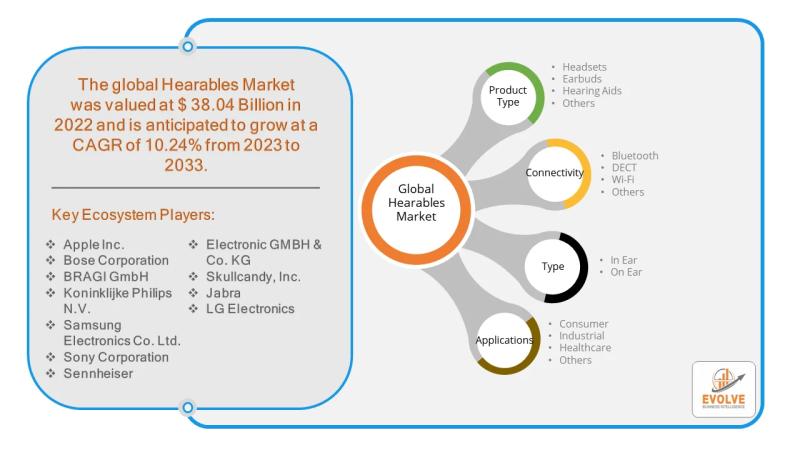
The global hearables market is experiencing explosive growth, projected to expand from USD 38.04 billion in 2023 to USD 94.74 billion by 2033 at a 10.24% compound annual growth rate (CAGR), according to Evolve Business Intelligence research. This 149% market expansion represents one of the fastest-growing consumer electronics categories, driven by wireless earbuds with advanced features including active noise cancellation, biometric sensors, and improved wireless connectivity. For cross-border e-commerce sellers, this presents a $56.7 billion incremental market opportunity over the next decade, but success requires navigating significant operational headwinds.
The tariff challenge directly impacts seller profitability. Recent US trade policies impose tariffs up to 20% on imported consumer electronics from Asian manufacturing hubs, directly increasing component costs for semiconductors, batteries, and sensors. For a seller importing hearables with a $50 COGS, this translates to an additional $10 per unit tariff burden, compressing margins by 8-15% depending on current pricing strategy. This tariff impact affects primarily Amazon FBA sellers, eBay merchants, and Shopify store operators sourcing from China, Vietnam, and Taiwan—regions accounting for 85%+ of global hearables manufacturing. Sellers with thin margins (15-20% net) face the most acute pressure, potentially requiring price increases that risk losing price-sensitive customers to competitors.
Market dynamics favor tiered product strategies and supply chain diversification. Manufacturers are addressing cost barriers through democratized feature sets at accessible price points, while innovating power management solutions including solar-charging cases and kinetic energy harvesting. For sellers, this signals opportunity in the budget-to-mid-tier segment ($50-150 price range), where demand is highest among remote workers and online learners. However, success requires strategic supply chain moves: diversifying sourcing to countries with favorable trade agreements (Mexico, India, Vietnam alternatives), exploring 3PL partnerships in tariff-advantaged regions, or considering domestic assembly for premium SKUs. Sellers maintaining single-source Asian supply chains face competitive disadvantage as tariff costs erode their ability to compete on price while maintaining margins.
Immediate actions focus on supply chain resilience and pricing strategy. Sellers should audit current sourcing by January 2025, calculate tariff impact per SKU, and model price elasticity scenarios. Consider shifting 20-30% of inventory to alternative sourcing regions or 3PL providers in tariff-advantaged zones. Monitor competitor pricing weekly to identify margin compression trends. Long-term, evaluate whether domestic manufacturing or nearshoring investments make sense for high-volume SKUs. Risk mitigation includes maintaining 60-90 days of inventory buffer before tariff increases take effect, and building customer communication strategies for potential price adjustments. The window to reposition supply chains before tariff impacts fully materialize is approximately 60-90 days.
問題 8
When should sellers make supply chain changes to avoid tariff impacts?
The critical window is January-March 2025. Sellers should complete supply chain audits by January 15, 2025, finalize alternative sourcing agreements by February 28, 2025, and place orders through new suppliers by March 31, 2025 to ensure inventory arrives before tariff increases fully take effect. Tariff impacts will accelerate as existing inventory depletes and new shipments arrive with higher costs. Sellers with 60-90 days of current inventory have the most flexibility to transition supply chains without stockouts. Those with lower inventory buffers should prioritize immediate action. Monitor US trade policy announcements weekly for tariff implementation dates and phase-in schedules. Delay beyond March 2025 risks being locked into high-cost inventory for Q2-Q3 selling season, when hearables demand peaks due to back-to-school and holiday preparation.
What are the key product features driving hearables demand that sellers should emphasize?
Active noise cancellation (ANC), biometric sensors, extended battery life, and improved wireless connectivity are the primary demand drivers. Remote work and online learning environments have positioned earbuds as essential daily consumer electronics, surpassing traditional hearing aids and headphones in market opportunity. Sellers should emphasize these features in product listings, especially for Amazon FBA and Shopify stores, as they directly address consumer pain points. Battery life is particularly critical—sellers should highlight innovations like faster charging speeds, solar-charging cases, and kinetic energy harvesting technologies. Biometric sensors (heart rate, sleep tracking) appeal to health-conscious consumers and justify premium pricing. Wireless connectivity improvements (Bluetooth 5.3+, multi-device pairing) address remote work needs. Feature-focused marketing can support price positioning and justify tariff-driven price increases to consumers.