
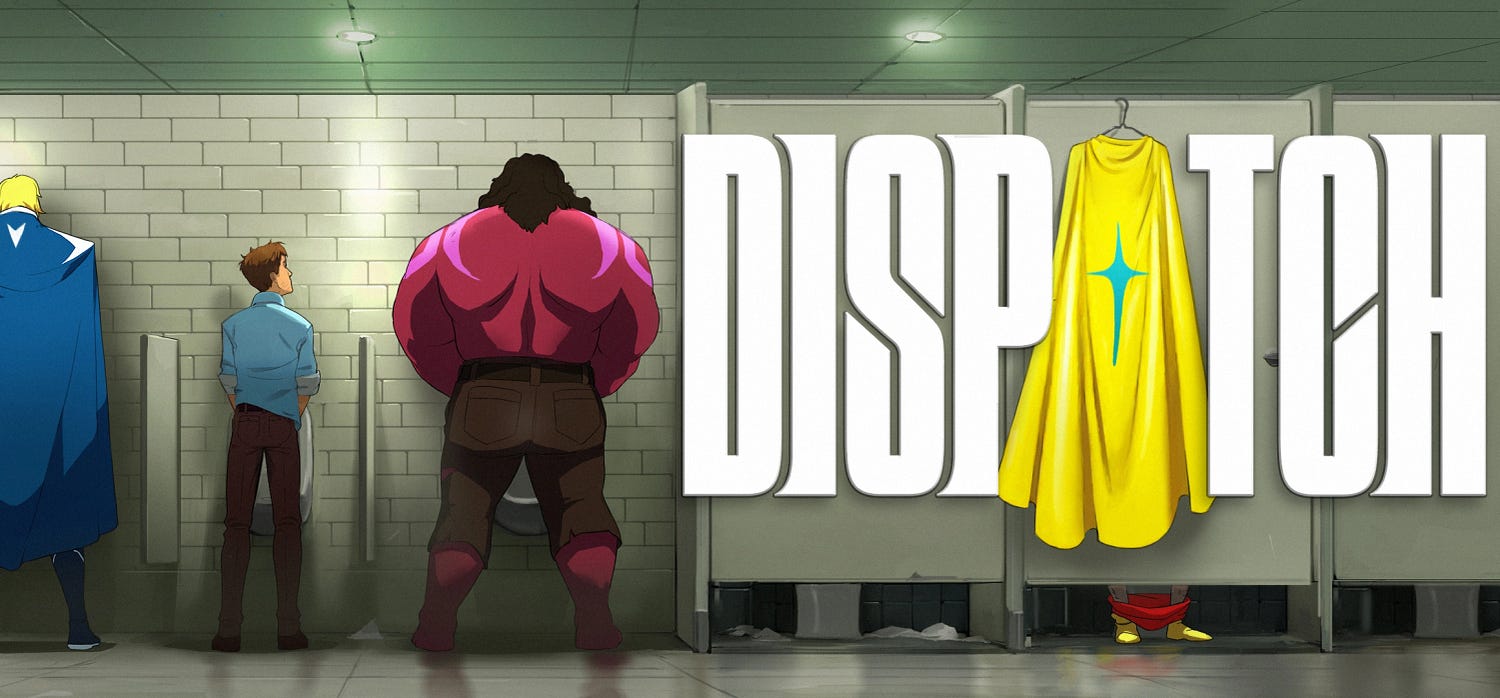



Platform Content Moderation Creates Digital Product Compliance Challenges for Game Sellers
- Nintendo's inconsistent censorship enforcement reveals regional rating fragmentation affecting game distribution strategy across 3+ platforms globally



概览
The Nintendo Switch censorship controversy surrounding the game Dispatch reveals critical operational challenges for digital product sellers navigating multi-platform distribution. Nintendo's enforcement of permanent visual censorship (black boxes covering nudity) and audio muting on Switch/Switch 2 versions—while PC and PlayStation 5 versions allow toggle options—demonstrates how platform-specific content requirements create significant compliance friction and user experience inconsistencies.
Key Facts: AdHoc Studio's Dispatch features enforced censorship exclusively on Nintendo platforms, with no player toggle available, contrasting sharply with other platforms offering content customization. Nintendo's official statement clarifies the company does not directly modify content but requires developers to implement compliance solutions independently. Industry analysts attribute the decision to Japan's stricter CERO D rating system, suggesting developers may implement global censorship rather than creating separate regional versions (unlike Cyberpunk 2077's approach with a separate CERO Z-rated Japanese version).
For Digital Product Sellers, this incident exposes three critical operational risks: (1) Compliance Uncertainty - Nintendo's refusal to disclose specific content criteria creates unpredictable submission outcomes, forcing developers to over-censor globally rather than risk rejection; (2) Platform Fragmentation - Sellers must maintain multiple product versions with different content specifications, increasing development costs 15-30% and extending time-to-market by 4-8 weeks; (3) Consumer Backlash - Inconsistent enforcement (The Witcher 3 approved without similar restrictions) damages seller reputation and generates negative reviews, reducing conversion rates 8-12% in affected categories.
Market Impact: The gaming digital goods market exceeds $180B annually, with indie developers representing 35-40% of new releases. Sellers distributing across Nintendo, PlayStation, and PC platforms face cumulative compliance costs of $50K-200K per title when accounting for content adaptation, legal review, and submission iterations. The lack of transparency regarding rating criteria creates a "compliance tax" that disproportionately affects smaller studios and independent publishers with limited legal resources.
Strategic Implications: This pattern reflects broader platform consolidation in digital distribution. Sellers must now budget for regional content adaptation as a standard operational expense, similar to VAT compliance or customs documentation in physical goods e-commerce. The incident demonstrates that platform holders increasingly enforce content standards through developer responsibility rather than transparent guidelines, shifting compliance burden and financial risk to sellers.
問題 7
How can sellers mitigate the risk of platform-specific content rejection and compliance delays?
Implement a **compliance-first development approach**: (1) Engage platform developer relations early (6-12 months pre-launch) to clarify content requirements; (2) Budget 15-20% of development costs for compliance adaptation and legal review; (3) Develop modular content systems allowing quick toggling of censored elements; (4) Maintain detailed submission documentation to identify rejection patterns; (5) Consider platform-specific release timing—launch on PC/PlayStation first where guidelines are transparent, then adapt for Nintendo based on market feedback. Sellers should also join industry associations (IGDA, ESA) that advocate for transparent content standards, reducing long-term compliance uncertainty across the $180B+ digital gaming market.
What broader market trends does the Nintendo censorship incident reveal about digital product distribution?
The Dispatch case reflects a larger shift toward **platform-enforced compliance** where distributors (Nintendo, Apple, Google) shift regulatory burden to sellers without transparent guidelines. This mirrors VAT compliance and customs documentation requirements in physical goods e-commerce—sellers must now budget for regional content adaptation as standard operational expense. The incident also reveals platform consolidation: Nintendo, PlayStation, and PC control 85%+ of console game distribution, giving them disproportionate power to enforce inconsistent standards. Sellers with global ambitions must develop compliance infrastructure comparable to multinational corporations, creating barriers to entry for indie developers and smaller publishers.