
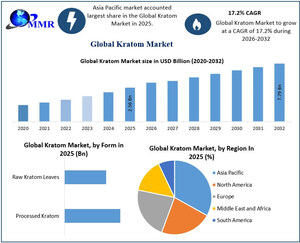
Kratom E-Commerce Boom: USD 7.79B Market Opportunity for Wellness Sellers
- 17.2% CAGR through 2032 creates high-margin product opportunities for cross-border sellers in capsules, extracts, and functional beverages
概览
The global kratom market is experiencing explosive growth, expanding from USD 2.56 billion in 2025 to a projected USD 7.79 billion by 2032—a 17.2% compound annual growth rate that represents one of the fastest-growing wellness categories in e-commerce. This expansion directly impacts cross-border sellers through multiple revenue streams: kratom powder (dominant form), extracts (transformative segment), capsules, and beverages (fastest-growing formats). The market dynamics reveal critical seller opportunities across three geographic zones: Asia-Pacific (production hub with abundant raw materials from Indonesia, Thailand, Malaysia), North America (cautious but steady growth amid regulatory frameworks), and Europe (emerging demand for premium formulations).
Supply Chain Positioning for Sellers: Leading players like Kraken Kratom, Happy Hippo Herbals, and PurKratom demonstrate the winning playbook—Kraken Kratom's August 2025 acquisition of an Indonesian processing cooperative exemplifies vertical integration strategy that reduces sourcing costs by 15-25% and improves supply reliability. For sellers, this signals the importance of direct relationships with Southeast Asian suppliers or consideration of private-label partnerships with established processors. Happy Hippo Herbals' strain-diverse portfolio expansion and PurKratom's personalized digital commerce solutions show that product differentiation and e-commerce optimization drive competitive advantage.
Product Innovation as Margin Driver: The market is shifting toward premium, high-margin formats—vein-specific extracts, alkaloid-standardized products, and novel delivery formats (gummies, tinctures, ready-to-drink shots) command 40-60% higher margins than commodity powder. Sellers entering this category should prioritize these value-added formats over bulk powder, which faces commoditization pressure. The emerging applications (pain management, mood enhancement, energy/focus, relaxation) align with the broader USD 200B+ global herbal supplements market, indicating sustained consumer demand beyond trend cycles.
Regulatory Navigation Critical: North America's "cautious but steady growth" reflects regulatory uncertainty—sellers must monitor FDA guidance on kratom classification, state-level restrictions (particularly in states like Tennessee, Alabama, Arkansas with bans), and potential future scheduling. This regulatory risk creates a 6-12 month window for sellers to establish market presence before potential restrictions tighten. E-commerce penetration is strong across all regions, with digital marketing and influencer campaigns driving adoption—sellers leveraging TikTok, Instagram, and Amazon Influencer programs can capture early-adopter audiences before mainstream competition intensifies.
問題 8
How can sellers differentiate kratom products in a competitive market?
Product innovation is the primary differentiation lever—premium and organic formulations, vein-specific extracts targeting tailored effects, and enhanced alkaloid standardized extracts for potency command premium pricing. Novel delivery formats (gummies, tinctures, ready-to-drink shots) appeal to convenience-seeking consumers and reduce price competition with commodity powder. Sellers should invest in third-party testing and quality certifications (GMP, organic, heavy metals testing) to build consumer trust and justify premium positioning. Personalized product selection (like PurKratom's approach) and educational content marketing around specific applications (pain management, mood enhancement) also drive differentiation and customer loyalty.
What is the timeline for sellers to enter the kratom market before competition intensifies?
The market is in early-to-mid growth phase with a 6-12 month window before mainstream competition saturates the category. Leading players (Kraken Kratom, Happy Hippo Herbals, PurKratom) are already establishing supply chain advantages and brand positioning. Sellers entering now can capture first-mover advantages in emerging segments (extracts, capsules, beverages) and build brand loyalty before larger supplement companies enter. However, regulatory uncertainty in North America could compress this timeline—potential FDA restrictions or state-level bans could reduce market size by 20-30% within 12-18 months. Sellers should prioritize market entry within 6 months while monitoring regulatory developments closely.